
Content warning: This article contains references to suicide and sexual assault. If you or someone you know are in need of help, you can call the National Suicide Prevention Lifeline at 988.
Editor’s Note: This article is a review and includes subjective thoughts, opinions and critiques.
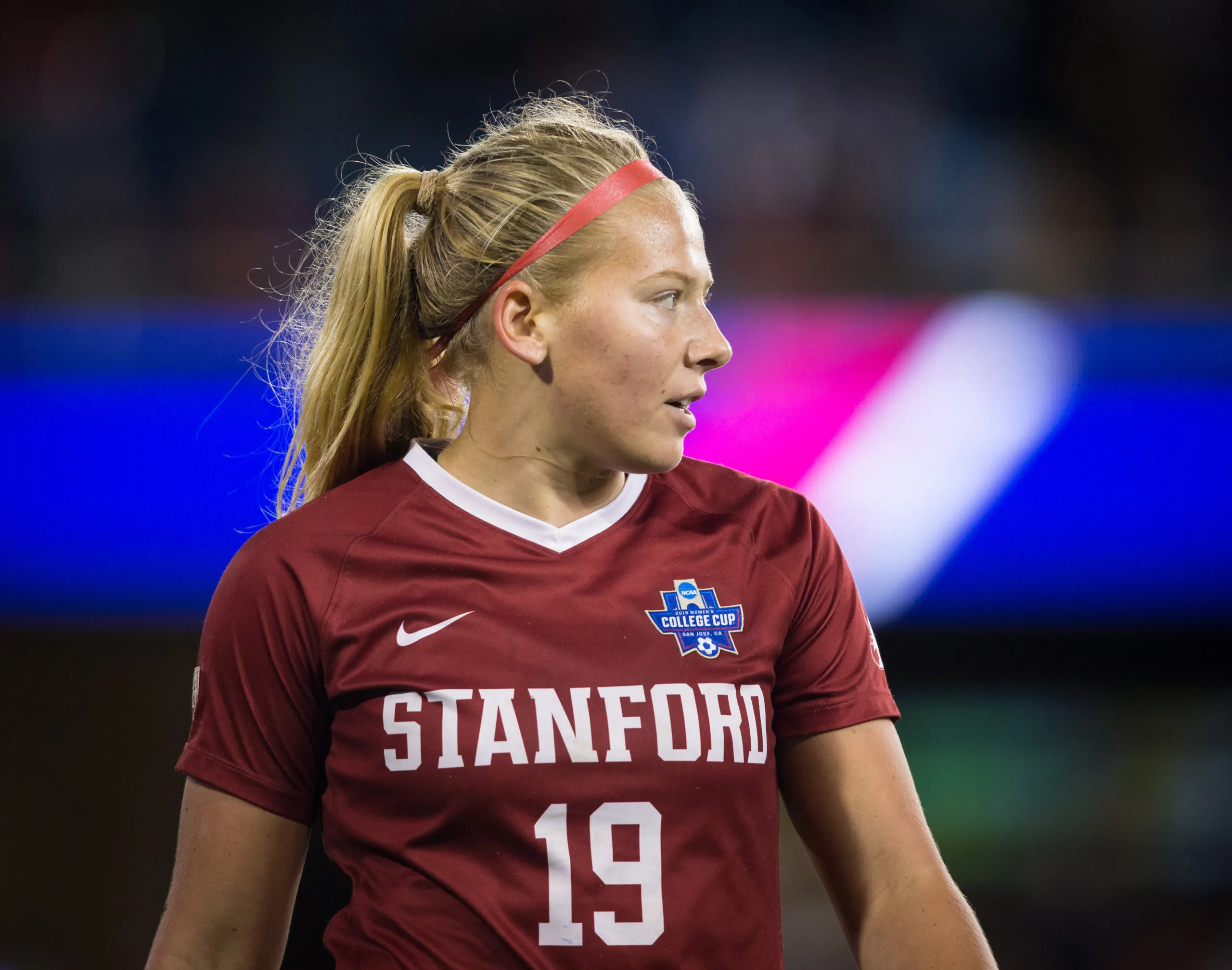
Less than an hour of meticulously compiled footage, and it wrecked me. So much feeling, heart and sorrow was packed into the 48 minutes of the E60 documentary, “Save: The Katie Meyer Story”. Katie Meyer ’22 was goalie and captain of the Stanford women’s soccer team in 2022, a Resident Assistant, daughter and friend. Tragically, just a few months before her graduation, she died from suicide.
“Save,” which premiered on May 10 on ESPN, stitched an amalgamation of interviews with Katie’s loved ones into a timeline of Katie’s life — chronicling her life through childhood (where she found her love for soccer), competing as an athlete at Stanford and being charged with an Office of Community Standards (OCS) violation.
The documentary began with the inaugural episode of Be The Mentality, a talk show Katie created focused on “sharing some of the most meaningful people, conversations, and challenges with anyone who will listen”. Her first — and only — guest was her father, Steve Meyer.
Watching “Save” transition from their cheerful smiles and hugs at the end of the episode to stark white text on a black background stating that Katie passed two weeks later was jarring — I had to pause multiple times to just sit with my feelings.
The documentary captured Katie’s early tenacity and talent. Katie grew up in Southern California playing soccer. In “Save,” her dad shared a memory of her playing goalkeeper in their backyard; when he kicked the ball a little too hard and she was knocked over and he ran over, worried if she was okay.
Instead, he remembered, she asked him: “Is that all you’ve got?”
Katie made the U.S. national team as a teenager and was recruited by several top programs, including the University of Oregon, Stanford and UCLA. When she visited The Farm for the first time, “she just felt like this was home,” said her mother, Gina Meyer, in the documentary.
One of her former coaches at Stanford, assistant coach Margueritte Aozasa — who was also interviewed for the documentary — remarked on how as a goalkeeper, a very pressuring position, she “ran right towards” these situations “that can cause anxiety” as a collegiate athlete.
As a redshirt freshman, Katie started in 16 games and led the Cardinal to the Final Four of the NCAA championship that year. After letting a goal through in the championship, the player who scored on her making a snide comment, but Katie rose above, saving a goal from that same player and helping her team make it to the finals. As Aozasa put it, “When things got hard, that’s when she really came alive.”
Besides excelling on the field, Katie was academically driven, aspiring to attend law school after her fifth year on campus. The last time her family spoke with her — the day before she died — Katie expressed excitement for spring break.
When a friend called her dad to tell him she was gone, he said he couldn’t process it. “It’s every parent’s nightmare,” her mom said through tears in the documentary.
Her dad recalled looking for “signs of darkness” in her room, or indications that she was struggling, but her room was “just like it always was, just like it was on the FaceTime call the night before,” he said.
As someone who has contemplated suicide before, I have imagined my own parents’ reactions countless times — how they’d pick up the pieces and move forward with their lives, what their day-to-day life might look like. Hearing Katie’s parents be so open and vulnerable with their raw emotions had me staring blankly at my laptop, my reflection prompting me to reflect on my own feelings. It felt like there was this storm of guilt, anger and sorrow clouding the skies of my mind and I was trapped within, the calm eye nowhere in sight.
Picking up the breadcrumbs, as her mom put it, her family discovered that Katie was charged with violating OCS standards. A hold had been placed on her degree, and failure to comply could result in her being suspended.
But what had happened? In August 2021, a freshman teammate came to Katie, disclosing that she’d experienced an unwanted sexual assault by a football player. When Katie came in contact with the player while riding her bike, she spilled coffee on him. He described it as intentional while she described it as an accident. He did not want to proceed with any claims against Katie for the incident, but the residential dean filed a complaint with OCS due to their differing stories.
As Katie met with OCS staff, she expressed fear for her future. Regarding the sexual assault case, since the freshman did not end up pressing charges, the Title IX office didn’t proceed with disciplinary action against the football player.
They did for Katie though. She didn’t hear from OCS until the final day Stanford could charge her, Feb. 28 — six months after the initial confrontation. Two hours after FaceTiming her family, Katie received an email disclosing the charging standard was met. She would be put on trial.
Katie’s browser history revealed she searched for ways to represent herself. According to her lawyer in the documentary, OCS and mental health services were closed when she tried to contact them. The dean on call was open, but why would she reach out to them — the people who had her in this stressful situation? It was at this moment her mom figures she panicked.
In “Save,” lawyer Robert Ottilie ’77 describes a power imbalance between students and OCS staff. Students “don’t know who to turn to, they don’t have resources,” and are afraid to talk to their parents because it’s “humiliating,” Ottilie said.
The Meyer family is currently pursuing a lawsuit against the University for the wrongful death of their daughter. The lawsuit, which was filed in November 2022, is set to go to trial in April 2026.
Ottilie also said that “folks who run that office and the folks who receive them take in cases and then act sort of as a prosecutor trying to drive the case towards a conviction. They’re supposed to be neutral administrators and process the case fairly.”
Following Katie’s passing, the Meyers created the “Katie’s Save Foundation” to support suicide prevention. The bill they formulated in her honor, AB 1575, requires that any student who goes through a disciplinary process gets a student advisor. After two years of work by the California state legislature and sponsorship from her district assembly member Jacqui Irwin, the bill passed unanimously.
Hearing her parents and siblings reflect on Katie, hearing snippets of her own voice — it truly brought her story to life. I felt like I was given an intimate look into her life. I felt her joy and pride in the way she described how the support from her parents emboldened her to do just about anything. I saw her determination in soccer in every video clip of her training — whether she was practicing with her teammates at Stanford or helping her team back home during the pandemic. And I sensed her kind heart with every anecdote shared by someone touched by her.
Today, the majority of students on campus were not at Stanford at the time of Katie’s passing. I wonder and worry if we are forgetting about Katie’s story, forgetting that Katie was the fourth Stanford student to pass away by suicide in just over one year’s time, forgetting the way the environment of this campus can push people past their limit to become different versions of themselves in ways both good and bad.
The release of this documentary, to me, feels like a call to action. But what to do? We can start by listening. Hosting a campus wide screening of this documentary next year, perhaps inviting someone from “Katie’s Save” to the screening to have a conversation on mental health and OCS transparency on campus would be instrumental in increasing awareness and fostering these conversations. We can start acting: Students can meet with university staff to talk about implementing “Katie’s Bill” on campus since Stanford, as a private university, is not held to the same standards as public universities.
Since witnessing her story, my head is swimming with questions and possibilities. As a recently elected member of the undergraduate senate, I wonder if we are able to meet with OCS and discuss how to make these policies more accessible and increase transparency — could Undergraduate Advisors (UADs) be required to familiarize themselves with OCS policy so they can walk their students through the OCS process? Could there be a committee of students that would be required to come with a student to their hearings?
I’m unsure. What is sticking with me is how brave and vulnerable her family is to share their lives with the world, painfully revisiting this point in their lives in order to prevent this tragedy from happening to more families. These are people I was not privileged enough to cross paths with, but deeply admire and respect for their commitment to telling their daughter’s story.