
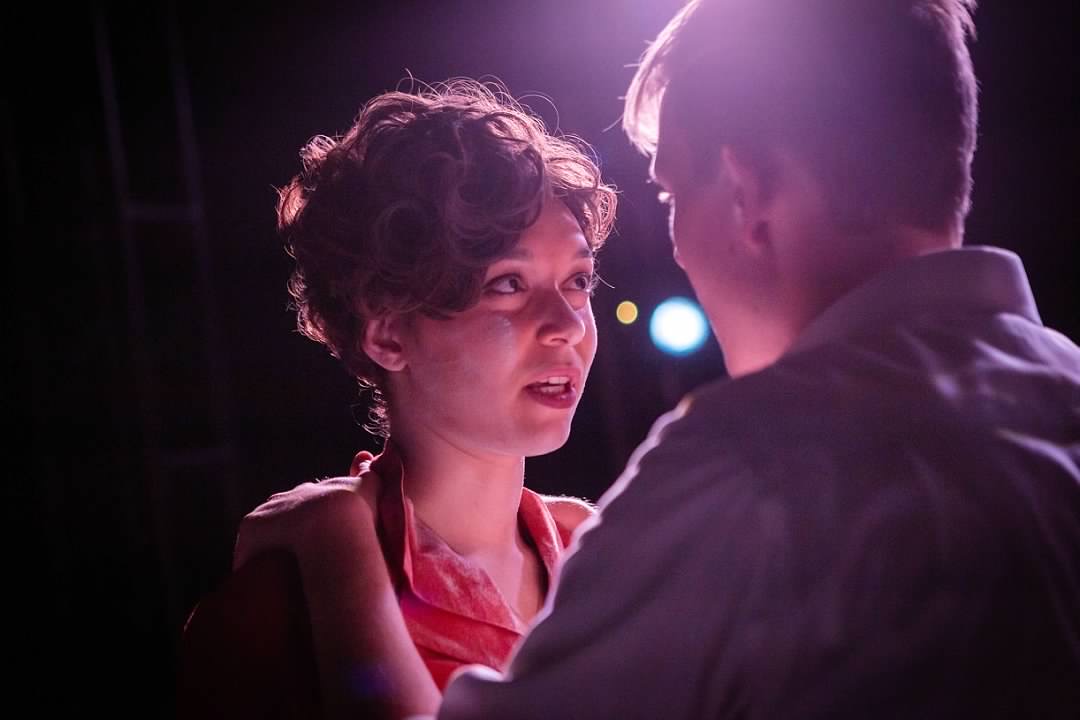
Sierra Corcoran ’25 plans to move to New York City to chase her dream — a career in acting — at a time when the arts are under attack on virtually every front.
“As someone who’s going into the job market right now, I’m really scared,” said Corcoran, who interned at a New York theater company last winter and witnessed a scramble to make up for the loss of National Endowment for the Arts (NEA) grants. NEA funding has been uncertain for national and regional theater companies since January, with even more cuts rolling out in May.
In February, President Donald Trump overhauled the board of the John F. Kennedy Center for the Performing Arts in Washington, D.C. and installed himself as chairman, leaving many in the arts community to question the reason.
“NO MORE DRAG SHOWS, OR OTHER ANTI-AMERICAN PROPAGANDA — ONLY THE BEST,” Trump posted about the center on his Truth Social platform.
In California, budget pressures led Gov. Gavin Newsom to propose a $11.5 million reduction in government support for small, nonprofit arts organizations.
“It’s just this time of uncertainty in a career that already was so uncertain,” Corcoran said.
Anna Zheng ’25, a theater and performing arts major, is especially worried about the theater industry, which relies on in-person audiences already diminished by the COVID-19 pandemic.
“Theaters are usually operating [on] a very thin, marginal sort of budget, so a lot of them went under during COVID,” Zheng said. “You’re already facing this depletion of resources, and the industry is trying to get back up in those years afterwards after shutting down. And then now you have this.”
Corcoran agreed, noting that theater productions are typically planned more than a year in advance. This makes adjusting to drastic changes difficult. “We don’t know what to do, because we don’t have the money we thought we were going to have a year ago, which is devastating,” she said.
To her, it’s clear that the Trump administration is targeting the arts “because the arts are a way of telling new ideas and telling stories.”
Corcoran credits the arts for helping her confront perspectives and worldviews vastly different than her own. When in New York, she saw the play “Eureka Day,” which tells the story of parental divisions emerging when a mumps outbreak overtakes a school. In the play, “woke” and “anti-vax” parents clash over how to best protect their children.
Corcoran began considering the perspective of the anti-vaxxers more seriously when a particularly likeable character in the play revealed her reasons for not trusting vaccines.
“In my daily life, I had not really had empathy for people that were anti-vax, because I’m like, ‘Just read science. It’s not that hard.’ But even though that is still true, I did have a bit more empathy for the fear that exists with people that are genuinely afraid of what these big pharmaceutical companies are doing to them, and it’s very real,” Corcoran said.
Zheng fears that similarly diverse and thought-provoking stories are threatened by budget cuts.
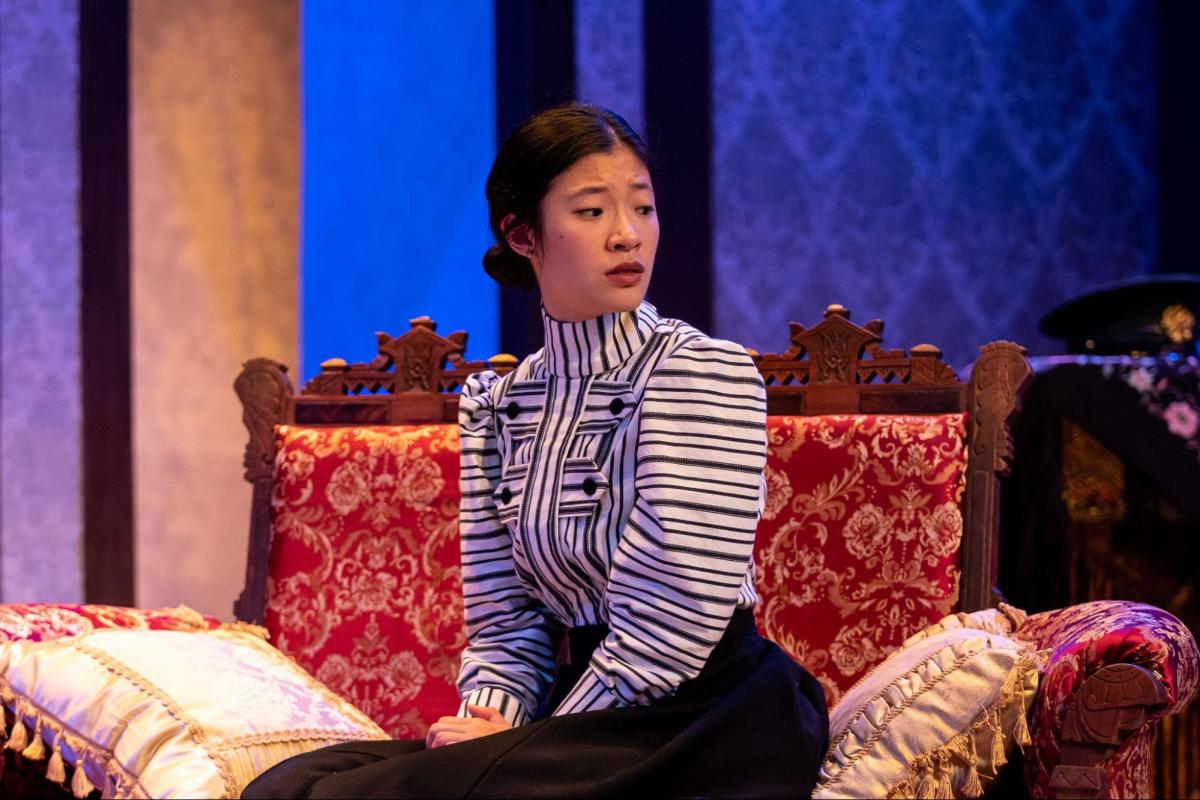
“[Funding] influences the kind of stories that are being told,” Zheng said. “If the theater company is about to go under, they’re not going to risk anything new and anything experimental. And of course, always when this kind of stuff happens, the first things to go are marginalized narratives, the stories that aren’t being told anyways, the stories that are a bit risky.”
Zheng is considering moving to Europe after graduation in hopes of finding more opportunities in the arts outside of the U.S.
Threats to the arts come not just with budget cuts, but with rapidly changing technology. To the alarm of Lily Kerner ’26, a member of the Stanford Shakespeare Company majoring in English, the first entirely AI-animated films emerged in 2024 with the release of “Where The Robots Grow” and “‘DreadClub: Vampire’s Verdict.”
“I think that AI can be super useful because I think it can edit, and I think that it can provide ideation, but I think that when AI takes over completely, that’s when we have a problem,” Kerner said.
Even if AI can eventually achieve the same technical prowess of humans in filmmaking, Kerner said, “I have a feeling that it will not have the same luster as that really great Pixar movie that you saw when you were six.”
Beyond her concerns about films losing their humanity, Kerner said she fears AI will eliminate jobs. “If you have AI even do a little bit of film, personal assistants won’t be hired, runners won’t be hired,” she said.
The performing arts are inherently interconnected, so threats to some artists are felt by many. But Corcoran said she also finds hope in the arts community.
“Something we’re really good at is community and organization, which I’m very grateful for, and so people are trying to help each other out,” she said.
“I have faith that the arts are resilient,” Corcoran added. “The arts have been resilient throughout all of history, and arts are so important in times of political turbulence, especially like this, when they’re trying to shut us up because we have something to say.”
Zheng recalled that even in the most trying eras of human history, art has endured.
“People are always going to make [art],” Zheng said, “It’s just about: What is the cost to them to make it? What will have to be given up in that process?”