
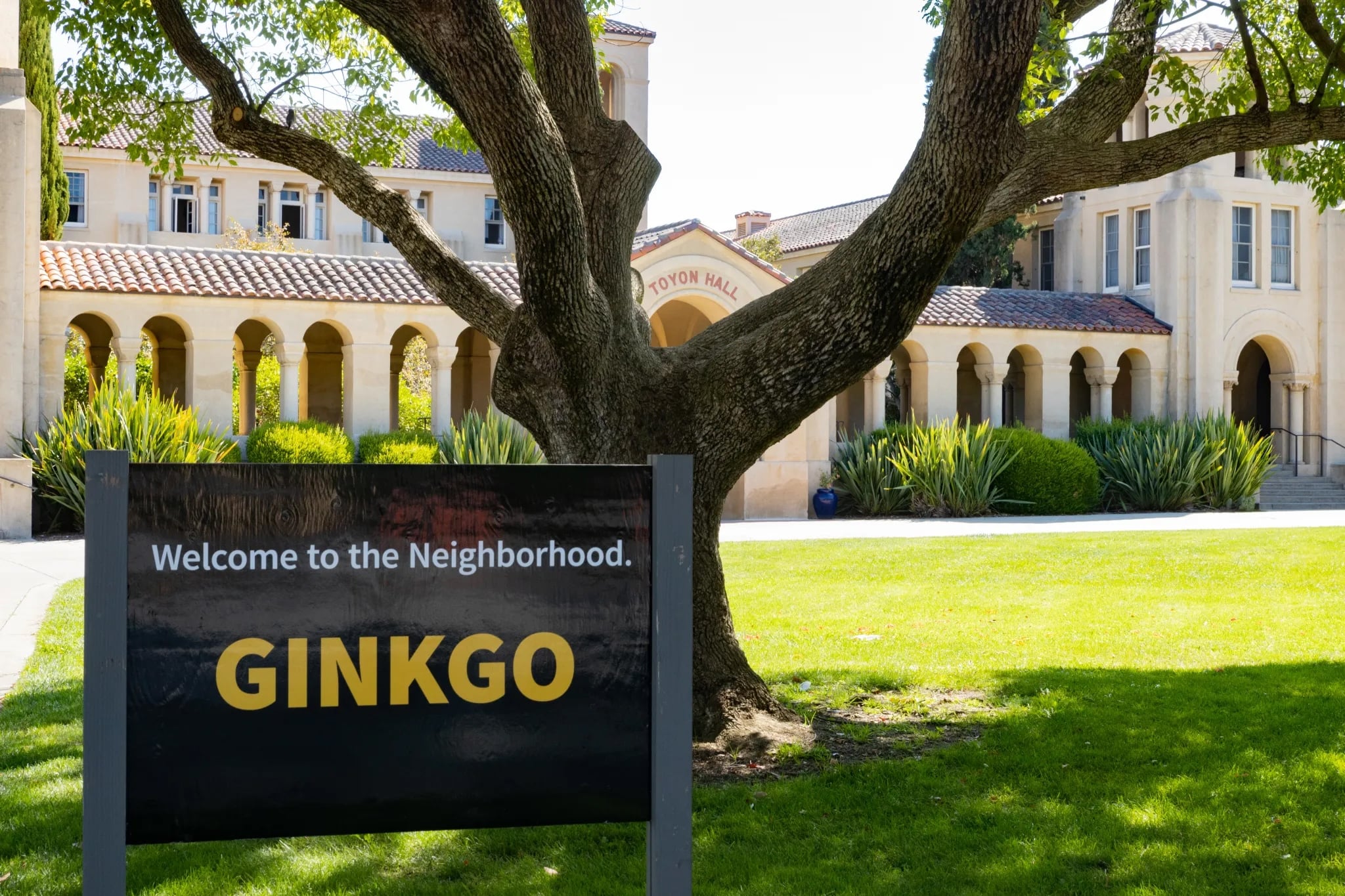
The neighborhood system will be discontinued as of the 2025-26 academic year, said Assistant Vice Provost for Residential Education (ResEd) Cheryl Brown in an email to ResEd staff, resident fellows (RFs) and resident assistants (RAs) on Aug. 11.
“[W]e are moving away from the neighborhood model to better support the variety of residential options available to students and to provide students agency in determining where and how they want to be part of residential communities,” University spokesperson Luisa Rapport wrote to The Daily on behalf of ResEd.
According to the email, the decision will allow residential staff to develop stronger communities within residences.
“One of the hallmarks of the Stanford undergraduate experience is the rich variety of residential options available to students,” Brown wrote in the Aug. 11 email. “To better support this signature element of the Stanford experience, we are moving away from the neighborhood model for programming and staffing so that resident fellows, residential student leaders, and student residents can focus on the culture, programs and communities within individual dorms and houses.”
Brown emphasized in the email that community-building will remain a priority of student residential life, including through residence collaborations.
She also announced that ResEd departments will be restructured into “Administration + Operations,” “Communication, Strategy + Project Management” and “Student Support.” To support this transition, ResEd will hire a new associate director for student support and two associate directors for program administration.
ResEd will also collaborate with ePluribus Stanford and the SHARE Title IX and Title VI office to update the curriculum for RA training. RAs will additionally have regular check-in meetings with a dedicated resident director (RD) and community coordinator (CC) during the year.
The neighborhood system, originally proposed in 2018 and launched in 2021, aimed to promote community and continuity for students during their time at Stanford.
The ResX Task Force, which established the neighborhood system, said at the time: “Each neighborhood will foster continuity during students’ four years at Stanford, allowing them to experience deepening friendships over time, as well as offering the creative challenges and rich learning opportunities that come from citizenship in a diverse community.” However, the Task Force acknowledged that the system would reduce student choice.
The well-funded program had a shaky start, struggling to gain student support — especially in its first two years.
ResEd addressed these challenges in the 2023-24 academic year by allowing students to reassign to different neighborhoods, establishing more robust programming and regrouping neighborhoods.
In 2023, ResEd established a Neighborhoods Task Force to recommend long term changes to improve the neighborhood system.
Rahul Ajmera ’24 M.S. ’25, an RA for Crothers Hall during the 2024-25 academic year, thinks the decision to remove neighborhoods is a “step in the right direction.”
“In theory, when the neighborhood system was announced my frosh year, it sounded awesome, but Stanford’s campus, like the physical layout of campus, is not conducive to it,” he said. “Stanford’s campus life will be most vibrant the more theme houses there are, so I hope this decision moves the campus conversation around housing options for students in future years.”
Shreya Komar ’26, an incoming RA for Branner Hall, said the neighborhood system never succeeded in building community. She thinks focusing on individual residences will be beneficial, since that’s where the majority of community is built.
“Students didn’t really like the neighborhood system so I don’t think it will affect anything or the community for frosh and sophomores,” Komar said.
But for Eliza Siebers ’26, an RA for Crothers Hall last year and an incoming RA in Durand, the neighborhood system allowed her to build a close relationship with members of her neighborhood during her freshman and sophomore years.
“This definitely helped foster community and solidify friendships where they may otherwise suffer in an upperclassmen dorm, so I honestly didn’t hate [the system],” Siebers said.
Komar is now interested in learning what will happen to neighborhood funding, which she said funded “a lot of cool events” in previous years.
“I wonder where that funding will go,” Komar said.
Siebers, who has been involved in planning the neighborhood formally known as Ginkgo’s student-run music festival Crochella, hopes neighborhood traditions like Crochella, Day N Mayfield and Drag Fest continue to exist.
However, she is optimistic that the dissolution of the neighborhood system will create an opportunity for dorm events to become more student driven.
“I hope that Stanford continues to fund events for students, by students, perhaps in an even more organic way than before,” she said.
She added that Stanford is not optimally built to support a residential college system like other institutions.
“I’m glad they’re not trying to force a Yale-shaped peg into a Stanford-sized hole anymore,” Siebers said.