
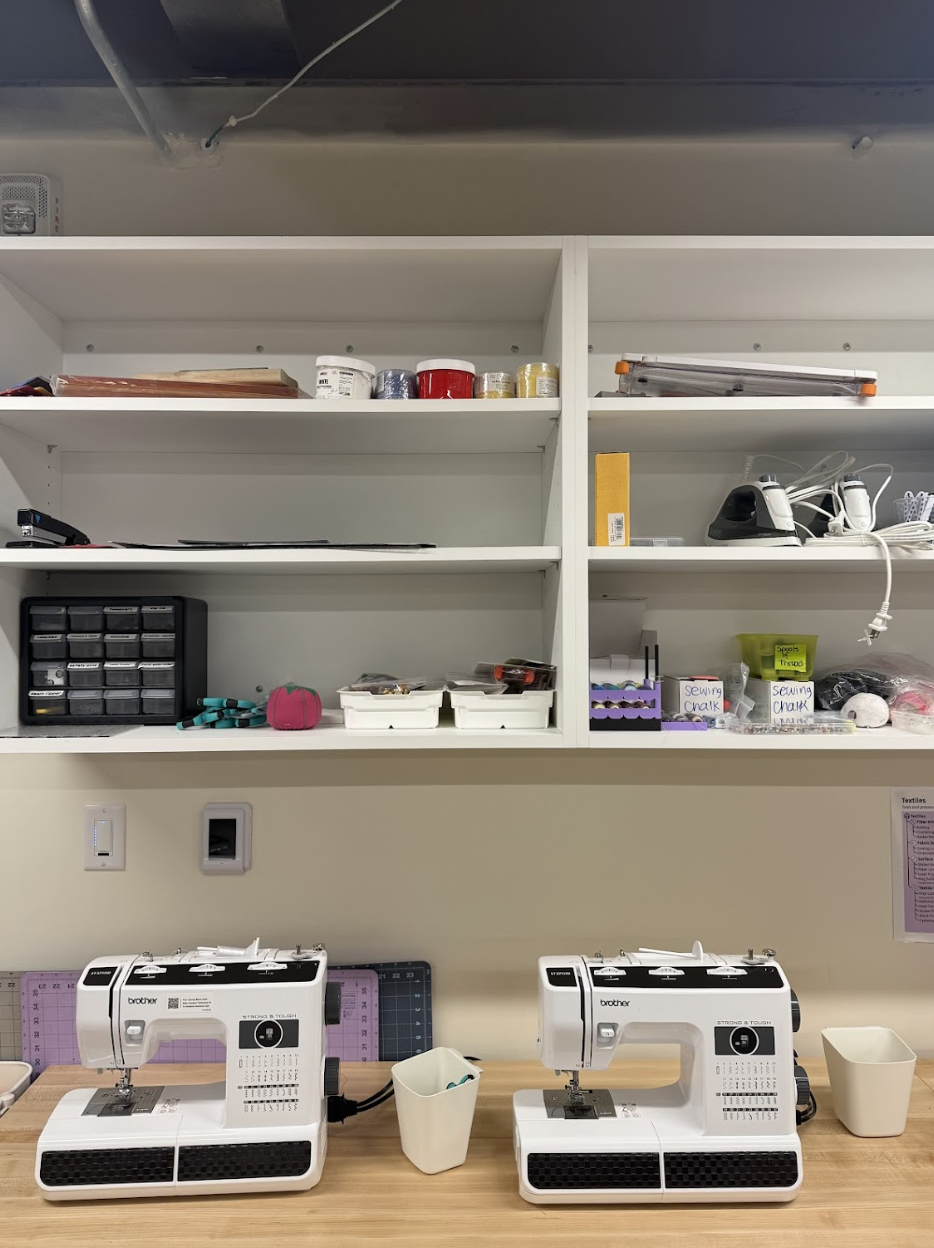
Two years in the making, the Graduate School of Education’s Makery is a brand new space located in the basement of the Angela Nomellini & Ken Olivier (ANKO) building and it is ready to help a wide range of students and faculty utilize hands-on learning in their time at Stanford.
The Makery, which opened one week before the start of this academic quarter, offers a vast range of free resources for design, including embroidery machines, a laminator, a button maker, woodworking materials and much more. Their most popular resources are their laser cutters, 3D printers and embroidery machines, according to Jacob Ramierez, the manager of Makery.
“It’s almost double the capacity of the old space with really nice, new equipment, with everything that we used to have and more,” Ramirez said.
The renovated Makery also includes a lounge area and a vinyl player to invite students to explore their creativity.
Denny Woong ’26, a student mentor at the Makery, said, “I think we are the only maker space that plays music.”
Another key aspect of what makes the Makery unlike any of the other 15 maker spaces on campus is its desire to welcome students with no experience at all. There are no prerequisites to participate in any part of the Makery, which allows students to have what Ramirez calls “productive failure.”
“My favorites are the projects that bring joy to their creators. I love it when people make something for the first time and say, ‘I didn’t know I could do that!’” Makery director Karin Forssell said. She added that learning is the foundational principle of the Makery.
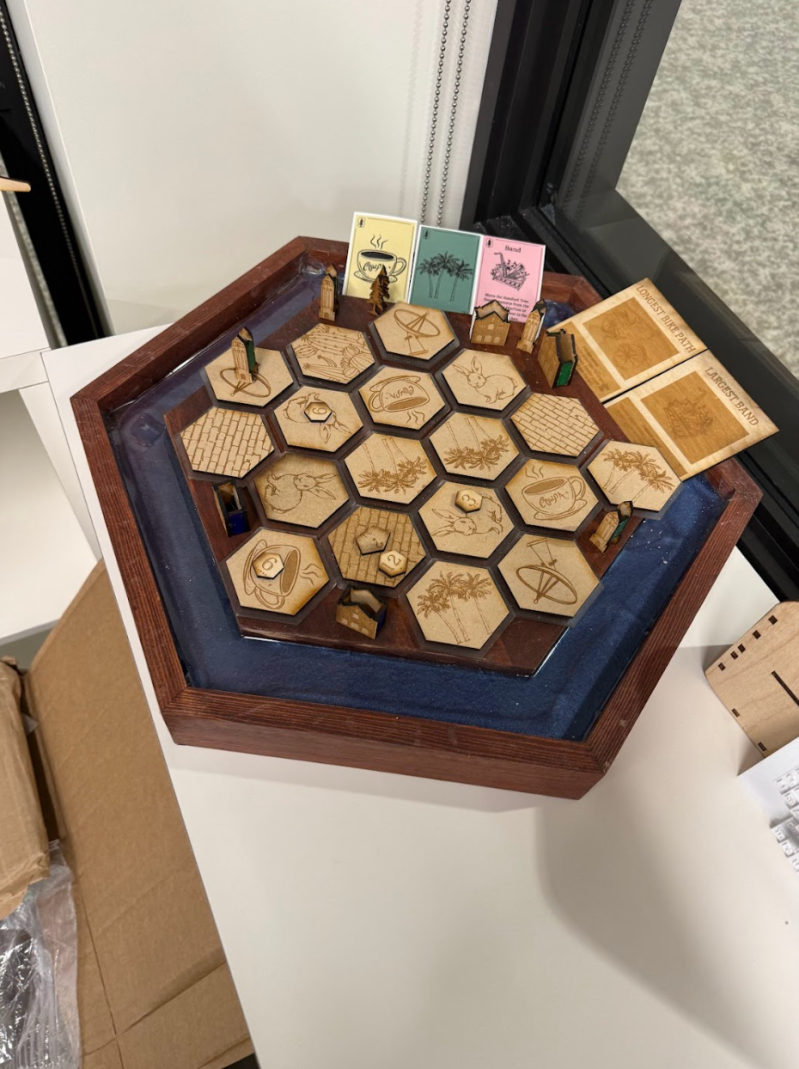
The range of projects students work on in the Makery is vast — past students have made a complete wooden Catan set, a stuffed duck, canoe paddles and even a whole dining table for their apartment. Most commonly, though, students make decor for their dorms or gifts.
In order to get involved with the Makery, students simply need to walk in. Makery staff and workshops are there to help them acquire the skills they need to execute what they want.
Past workshops included crafts like print making, wax melts and beaded silverware. Workshops at the new Makery location are expected to start next quarter.
Gigi Kanabel ’27, another student mentor at the Makery, learned how to do bookbinding through the Makery and is currently working on a collage book project. To make this, she printed out photos in the Makery and utilized the embroidery resources.
“We exist solely for the sake of people being able to come in and learn, to get hands-on with equipment, materials they may have never had access to, and to know that there are people that are in that space at all times who will be able to get them to where they’re trying to,” Ramirez said.