
Editor’s Note: This article is a review and includes subjective thoughts, opinions and critiques.
When the lights dimmed at San Francisco’s Chase Center on Sunday night, the air felt charged with anticipation. It was the second of Dua Lipa’s two Bay Area shows on her “Radical Optimism” Tour, and by the time the first bass notes pulsed through the arena with wave imagery flickering across the backdrop, the crowd was already on its feet, ready to move.
Opening the night’s show was CIL, a rising alt-pop artist whose hazy sound and understated confidence set the tone perfectly. Her voice floated over glimmering synths, filling the space without ever feeling forced. She was the kind of opener that quietly earned attention. The calm before Dua Lipa’s kaleidoscopic storm.
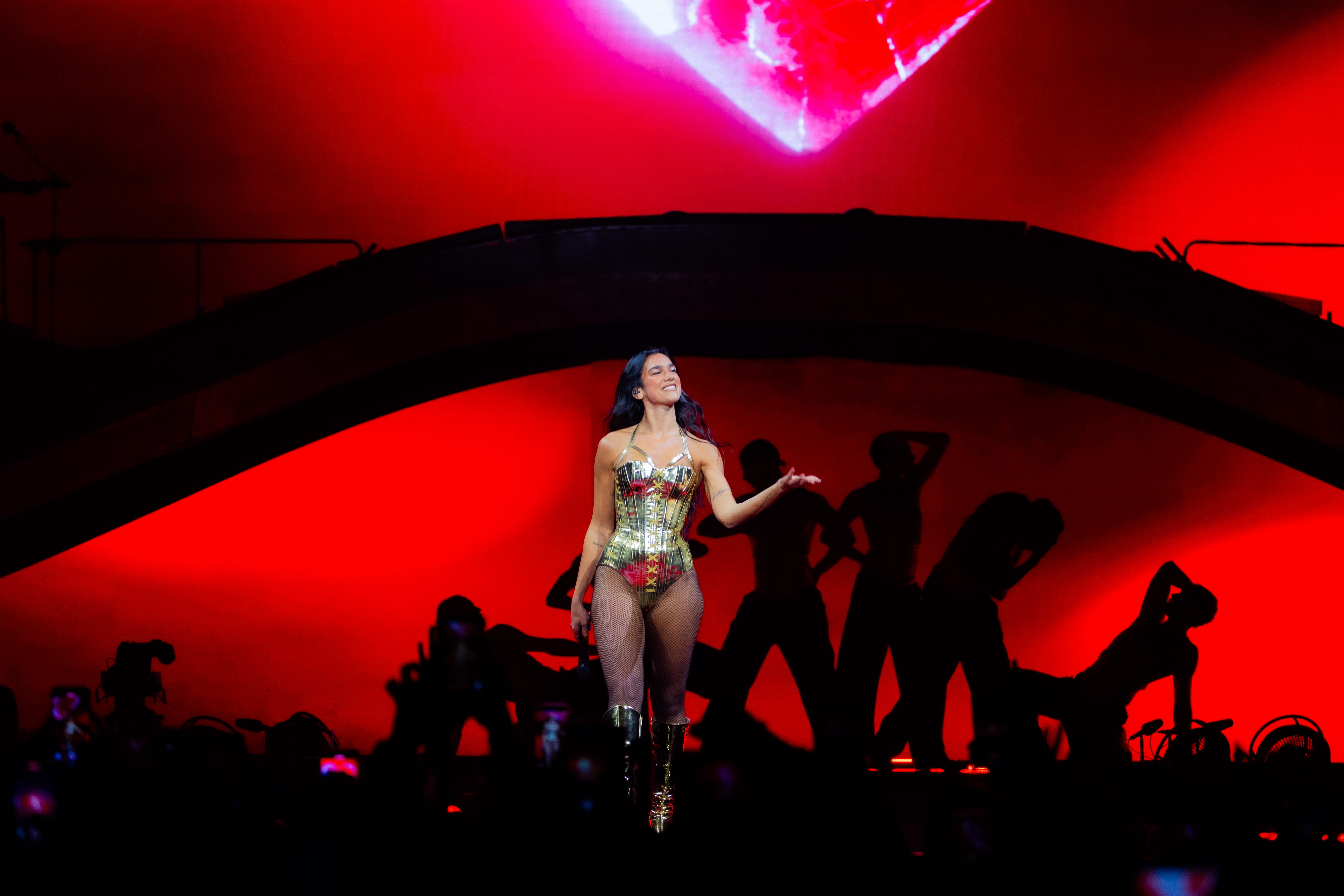
When Dua Lipa finally appeared, she stepped into a wash of light, sequins catching every glimmer as the opening notes of “Training Season” hit. From the start, she was in full command, choreography snapping in time, energy surging forward. “End of an Era” and “Break My Heart” followed in perfect succession, the crowd shouting every lyric with contagious joy. By the time “One Kiss” dropped, the show had found its rhythm: positively kinetic.
But it was the middle stretch that showcased how well “Radical Optimism” translates to a live performance. “Whatcha Doing” and “Levitating” (from “Future Nostalgia”) kept the energy high, but “These Walls” and “Maria” anchored the set emotionally. Both songs drew focus to Due Lipa’s voice: grounded, pure and unhurried. When she sang “Maria,” the arena seemed to exhale, her vocals filling the room with quiet power.
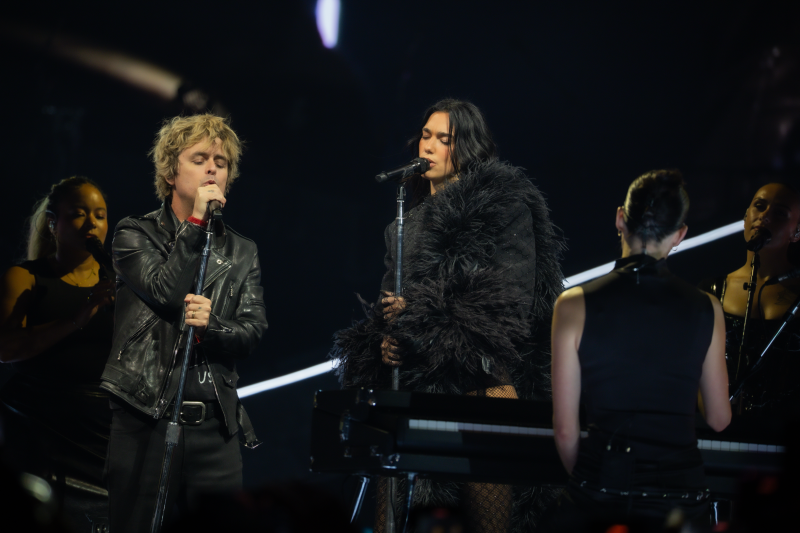
Then came the night’s unforgettable surprise. For San Francisco’s night 2 surprise song, Dua Lipa introduced Bay Area native Billie Joe Armstrong of Green Day. When Armstrong walked out, the crowd (myself included) erupted, disbelief dissolving into pure awe. Together, they performed “Wake Me Up When September Ends,” and the unlikely pairing somehow worked perfectly — Dua Lipa’s smooth, deliberate phrasing against Armstrong’s gritty rasp. It was nostalgic, surreal and unmistakably San Francisco.
Between acts, Dua Lipa took short breaks for outfit changes and staging resets. Those pauses sometimes stretched for several minutes, leaving the crowd unsure whether to sit or stay standing. When she went into the audience to greet fans and take selfies, it was sweet and personal, though the moment lingered past its spark. Still, those lulls were easy to forgive once the lights shifted again and she reemerged in full force.
The final acts leaned into full spectacle. “Falling Forever” revealed her full range, controlled yet vulnerable, rich with a tone that’s easy to overlook on the record. During “Anything for Love,” she even slipped into brief moments of a cappella, reminding everyone just how capable a vocalist she truly is. “Physical,” “Electricity” and “Illusion” hit with pulsing energy, while “Love Again” and “Be the One” gave the night a softer glow.
The encore hit all the right notes: “New Rules,” “Dance the Night,” “Don’t Start Now” and finally “Houdini.” Closing with the lead single from “Radical Optimism” felt intentional — the show fully encapsulated the album, with few moments alluding to her former eras. I’ll admit, part of me wished for the explosive finality of one of her older hits, but ending with “Houdini” was fitting. It’s her statement piece for this era: sleek, self-assured and forward-looking.
As fireworks and sparkle rained down and the final synth faded, what lingered wasn’t just the polish or precision — it was Dua Lipa herself. Throughout the show, she knew when to command and when to let a moment breathe. “Radical Optimism” isn’t just an album title — it’s the lens through which she moves, sings and connects. And on that Sunday night in San Francisco, under the bright lights and collective sway of thousands, Dua Lipa reminded everyone exactly why she’s one of pop’s defining stars.