
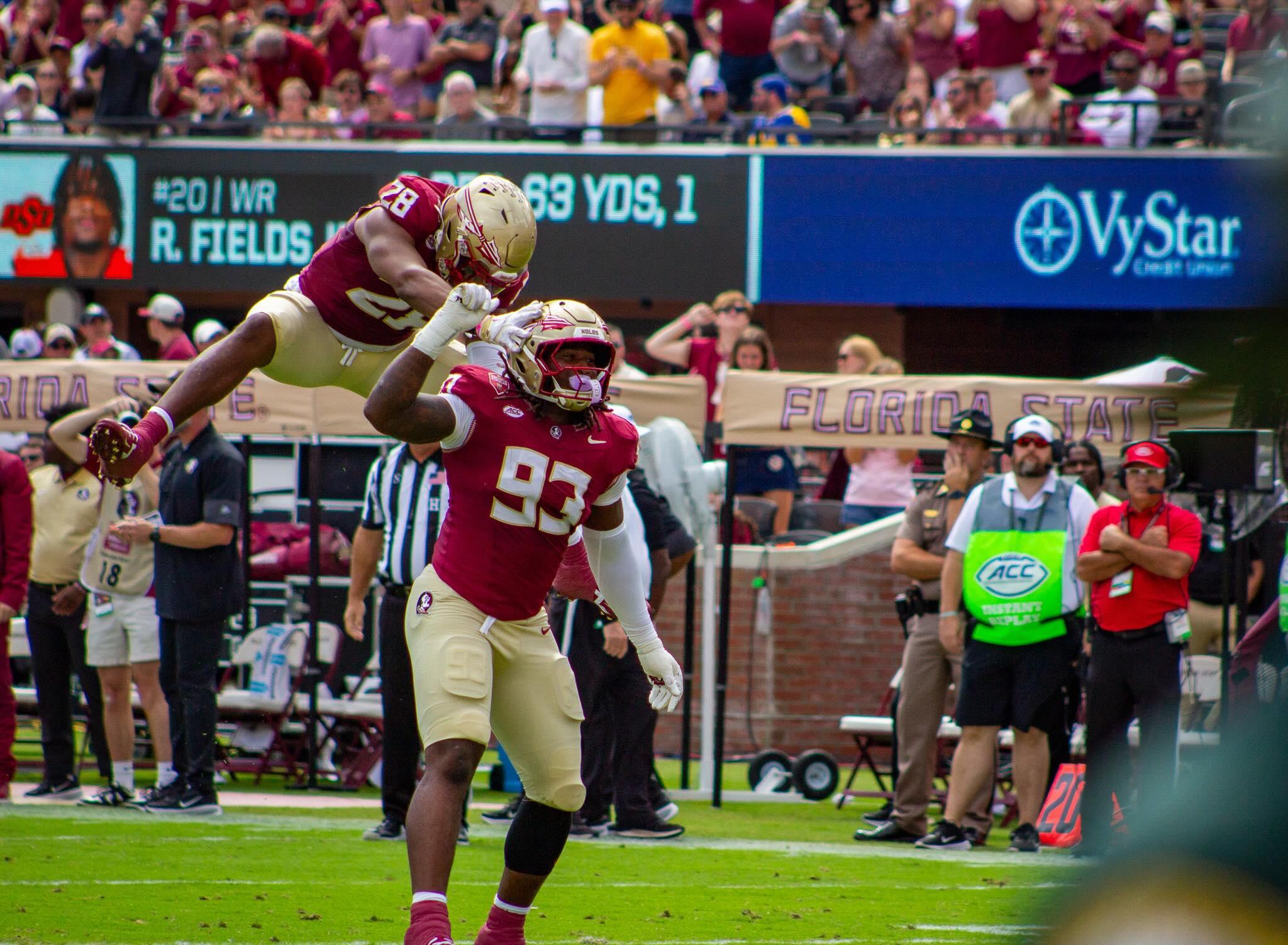
This article has been provided by the deputy sports editor of FSU’s student newspaper, the FSView, in collaboration with The Daily.
Florida State (FSU) football will visit the Stanford Cardinal on Saturday, Oct. 18 for the first-ever meeting between the two programs. The Seminoles enter 3-3 overall and 0-3 in Atlantic Coast Conference (ACC) play.
FSU’s three-game skid explains the stakes. The ’Noles have dropped three straight one-score ACC games — 46-38 in double overtime at the University of Virginia, 28-22 to the University of Miami after trailing 28-3 and 34-31 to the University of Pittsburgh after leading late in the third quarter. Each of these games was tilted by turnovers and red-zone errors.
Stanford is 2-4 overall, 1-2 in the ACC and coming off a 34-10 loss at Southern Methodist University shaped by similar issues. Drives reached the red-zone but were bogged down by strong defensive fronts, forcing field goals or empty possessions. In a matchup like this, clean drives and favorable field position often decide the outcome.
The Garnet and Gold’s identity is clear under head coach Mike Norvell and first-year offensive coordinator Gus Malzahn. Florida State plays fast and leans on a run-first spread, using motion to isolate the edge defender and mixing in runs with play-action passes.
Through six games, the Seminoles average roughly 75 offensive plays, more than 270 rushing yards and 500 total yards per game, with a third-down conversion rate above 50 percent. That identity produces long drives when the team is sharp but quick drives and punts when they’re not.
Redshirt senior quarterback Thomas “Tommy” Castellanos is the pressure point for the offense. He’s a true dual-threat, able to run on designated plays or scramble out of the pocket when his reads break down. When defenses play back, he keeps and accelerates; when they overplay the keeper, Castellanos throws over the top. When FSU stays on schedule, first downs stack quickly and momentum shifts fast.
The skill group around him is built for matchups. Junior wide receiver Duce Robinson is the contested-catch target who draws a safety in the red zone, while senior wide receiver Squirrel White brings jet-motion speed that stretches coverage horizontally. Last week, Robinson went out with an undisclosed injury in the first half, while White didn’t even suit up. Luckily, for the ’Noles, both are expected to be back for this matchup.
In the backfield, senior running back Gavin Sawchuk sets the tone between the tackles. Freshman Ousmane Kromah and redshirt senior Caziah Holmes share the rest of the reps, while both have fallen victim to back-breaking fumbles over the last three losses.
Redshirt freshman wide receiver Micahi Danzy is the flammable piece of the offense who only needs a bit of space to completely tilt a drive.
Up front, the offensive line bears watching. When starting redshirt senior right tackle Micah Pettus exited the Miami game and also missed last week’s matchup, redshirt senior right guard Adrian Medley slid to right tackle as a replacement. That shuffle can disrupt deep-shot timing and narrow the designed quarterback run package. With Pettus listed as questionable, if Stanford wins on Medley’s side of the line consistently, it can force Castellanos to throw off time and turn explosives into checkdowns.
Defensively, first-year coordinator Tony White leans on a nickel base out of his 3-3-5 line, tilting into four and five-man fronts to choke the run. The leader in sacks is junior safety Ashlynd Barker, as the Garnet and Gold are still searching for a true closer off the edge. White’s rush often needs a blitz, and third downs linger when spacing or communication slips.
Safety snaps have rotated as Barker ramps back to full speed, and younger corners have taken on larger roles. That is Stanford’s window if the pocket holds — stress the linebackers in space and stack routes at the corners instead of forcing low-percentage deep shots.
Stanford must set the edge on the quarterback run and force give reads; protect the ball and deny short fields and win first downs to push Florida State into long yardage. Stabilizing the right side up front, protecting the ball and moving up tempo is the recipe for a Seminoles win.
Kickoff is at 7:30 p.m. at Stanford Stadium. If the Cardinal use the blueprint set by Virginia and Pitt, the margin for error becomes slim for FSU. If the ’Noles play to their identity without the self-inflicted mistakes, the cross-country trip can serve as the reset the Garnet and Gold has been chasing.