
Editor’s Note: This article is purely satirical and fictitious. All attributions in this article are not genuine and this story should be read in the context of pure entertainment only.
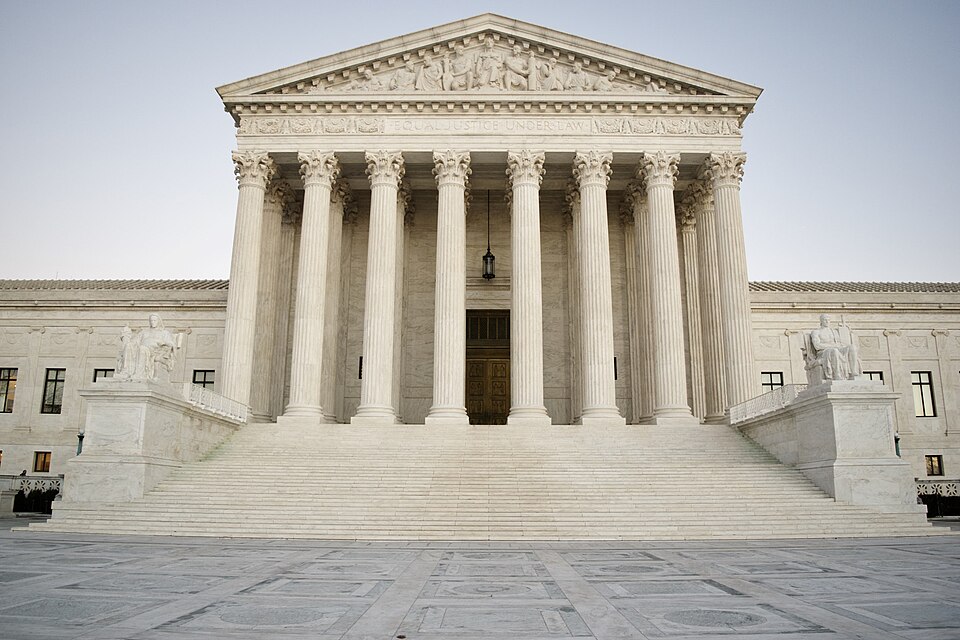
Last week, in the landmark 6-3 decision of Moms for Liberty v. Smith, the Supreme Court voted to void the Law of Conservation of Energy enacted in 1842. Moms for Liberty, a coalition of Texan parents, sued middle school physics teacher Ms. Smith for teaching about green “house” gases in school, as they argue the name of the topic implies that parents should have a say over how it’s taught at home.
In oral argument, Ms. Smith, who represented herself, clearly seemed caught off-guard by the high engagement from her audience. Asking far more questions than her usual middle schoolers, the justices posed several deeply insightful inquiries, including “What’s the difference between CO2 and carbon dioxide?” and “Is that why my car gets hot in the sun?” In line with his usual reticence, Justice Clarence Thomas didn’t ask anything but did have a vaguely dazed look on his face throughout the hearing.
Ultimately, the Supreme Court decided against Ms. Smith; however, their decision does not mention greenhouse gases at all, which suggests the justices might have had difficulty understanding the topic during oral argument.
On how the case led the Supreme Court to overturn the Law of Conservation of Energy, constitutional law expert Laurence Tribe commented: “Listen, I’m, uh, not really sure how this happened. The case wasn’t even related — they kinda just did it.”
Regardless, the plurality opinion identifies several weaknesses in the legal standing of the Law of Conservation of Energy. Justice Brett Kavanaugh commented that the Law has “no ground” in English Common Law dating back to the 1700s, and that on the principle of stare decisis, he cannot “in good conscience” allow it to stand.
Justice Thomas also expressed support of Kavanaugh’s point, providing: “If the Framers wanted us to believe that energy can neither be created nor destroyed, they would’ve put it in the Constitution.”
Later in the opinion, Justice Saumuel Alito highlights another weak point, stating simply: “The Supreme Court believes in the sanctity of the written word of law. But this law doesn’t have any words — it’s just numbers.”
Policymakers warn that the decision will have resounding impacts on higher education. Institutions still found to be teaching the former rules of energy will “lose all remaining cents” in their NSF grants, according to a White House official.
Likewise, many government departments are also facing major changes. The combined paperwork from both Loper Bright and the Moms for Liberty decision has forced the EPA to now fire their last scientist on staff in favor of hiring yet another lawyer. Unsurprisingly, the Department of Health and Human Services will not be required to make any policy changes in the aftermath of the decision, in line with their usual exemption from anything science-related.