
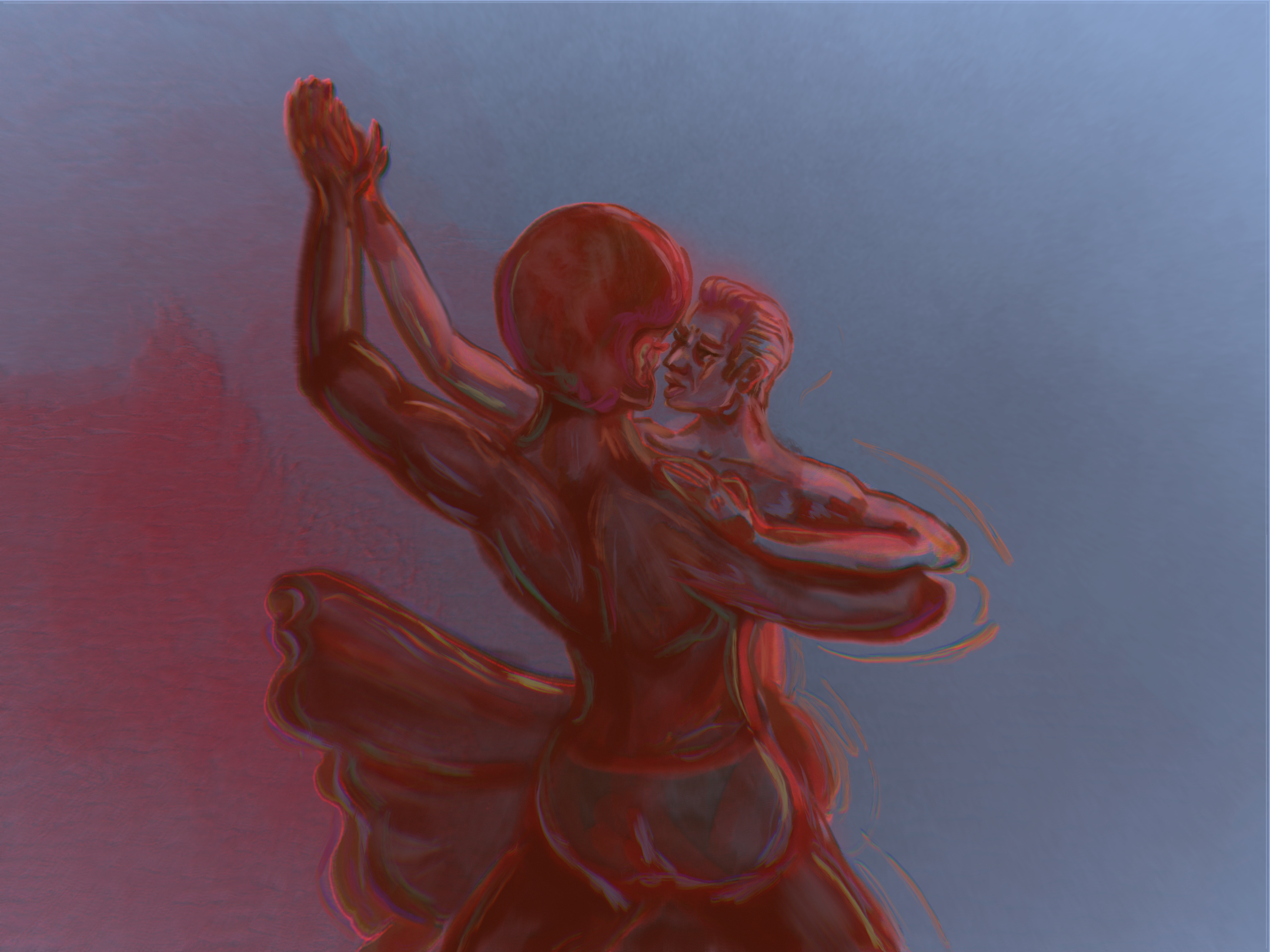
It was 1:30 a.m., at the end of my first Viennese Ball. Having been unexpectedly whisked off at 5 p.m. the previous day (lured in by free tickets), I entered the world of social dance, dizzy and giddy. The hours magically whizzed by. This was my last dance before leaving, and here I was in the Latin room, doing the salsa. Then, with the last note, I was dipped, all the way to the floor.
That is when I fell in love.
I recounted this experience to my starry-eyed frosh hallmates immediately upon returning. My La La Land-loving friends were convinced that this dip was a sign, irrevocably, that this lead was smitten with me. For all of us, it was a scene straight from a movie. And who can blame us? I did fall in love that night – but amid the dizzying spins, I had misplaced my attraction.
Many have uttered that love is a dance. I say, social dance is a love.
After taking my first social dance class, I quickly realized that the salsa dancer was not my personal Prince Charming; he was merely a fantastic lead. He did make me feel like I knew what I was doing; he was very playful; he did make the night magical. My friends weren’t wrong to conflate it as romance, especially when related through my rose-tinted storytelling. All these characteristics are components of flirting … but also critical to being a fantastic lead. Little did I understand, good partnering in dance is like good flirting:
- You listen to your partner deeply, noting details, call & response. They go, I go … It is a good conversation, dynamically flowing.
- You let loose — have a good time — act playful! Tension hinders enjoyment … expressing individuality and creativity engages your partner!
- You are physically considerate and aware. You (attempt to) clearly express your intentions and then listen to see if your partner takes it another direction or declines! Psychologically, we link attraction with body language mirroring, eye contact, and open postures. Incidentally … all these are keys to good partnering.
Now, there is also a cultural element at play here: the romanticization of dancing. Many Stanford students come to the social dance scene with this media-based understanding of dance as romance. Media, songs, and literature portray dancing as an inherently romantic activity, exclusively for couples or soon-to-be couples. There is no escaping the stretch of this narrative, as it ranges from Leo Tolstoy’s Anna Karenina dancing with Count Vronsky, to Dirty Dancing’s Johnny teaching Baby how to mambo. Some might argue, sure, that Penny, Johnny’s life-long dance partner, was “like a sister” to him … but that was not the movie’s focal story. We bought tickets for a romance … to be swept off our feet and flown high. There simply are not many movies that emphasize social dancing as purely for sport, undramatized and de-romanced.
But of course we love love! Platonic love is rarely the story we want to be told. The audience is drawn to dance as a vessel for a happily-ever-after with our OneTrueLove™. As an art form rooted in partnership, permeated with both physical and eye contact, any engagement is presumed to be a narrative stepping stone to romantic coupling. Slow dancing equals love, right? This works in stories, but what happens once we return our novels to the shelves (or, rather, X out of our Netflix account)? Can we have the same shorthand logic about dance in real life?
As we may surmise, this way of thinking can quickly turn problematic. On an academic level, we can analyze these dance-romances for their anthropological implications. Our cultural psyche has onion layers to peel back: our storybook fantasies of romance, our gender biases against inter-gender platonic intimacy, and our interpretation of art (a dance) as the artist (a dancer). But why else is fantastical romanticism concretely harmful? If students expect lovey-dovey passion with each Lindy-Hop or waltz, then they will be guaranteed disappointment. Much worse, they could engage in unwarranted and unwanted amorous advances. This harms everyone’s enjoyment of Stanford’s social-dancing shindigs, and that’s no way to build community.
Luckily, we can change this culture around social dance by setting expectations for a completely platonic sport, guaranteeing the emotional safety of dancers everywhere. The community at Stanford and the greater Bay Area is one of the most advanced I’ve seen in terms of communication around gender equality, mutual appreciation between follows and leads, harassment, and inclusion of LGBTQIA+ folks. The rest of the world still exists, though, and the romantic media narrative ain’t going anywhere — as far as I can tell — so we have a duty to educate newcomers to the community here, and an opportunity as we disperse the world over.
Social dance is still an act of love. But rather than being romantically attracted to one another, partners collaborate on a love letter to dance itself, working together to guide the pencil across the page, tracing figures onto the floor. What works in flirting works in dancing, as these are universal methods of interacting confidently, considerately, and collaboratively. Now, let’s cut a rug and find the happiness we seek!