
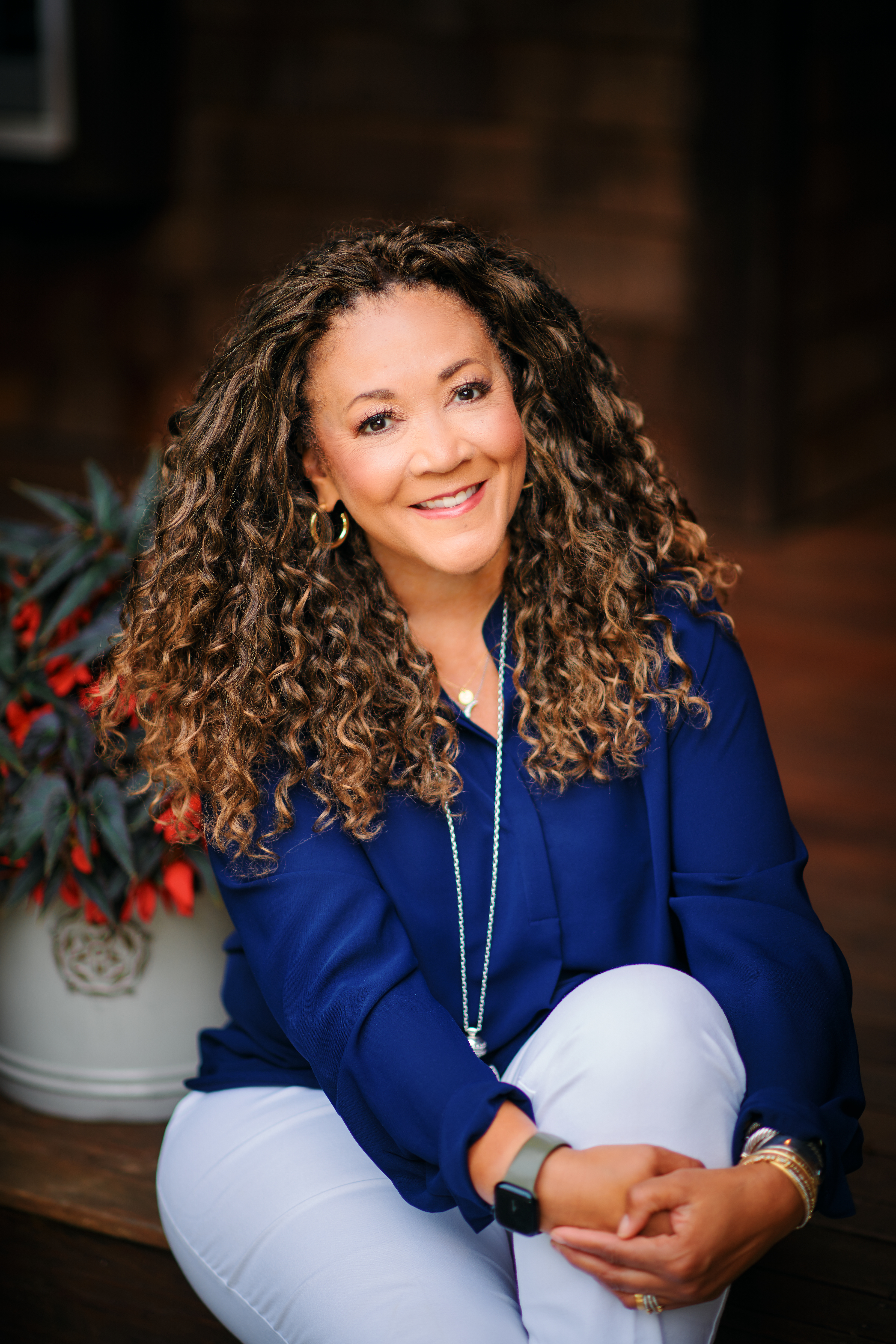
Journalist Michelle Norris spoke about her new book “Our Hidden Conversations: What Americans Really Think About Race and Identity” in an event hosted by the Stanford Humanities Center on Nov. 17.
Norris’s book grew out of “The Race Card Project,” an initiative that invites people to reflect on the word “race” in six words of their own. In addition to founding the project, Norris served as a news correspondent for ABC, where she won an Emmy and a Peabody award for her coverage of 9/11 and its aftermath. Later, she moved to NPR, where she co-hosted the evening news program “All Things Considered” from 2002 to 2011.
In a conversation moderated by English professor Michele Elam and hosted by the American Studies department, Norris emphasized the importance of speaking about race, especially in regards to individual lived experiences.
“[I was] conditioned to believe that Americans didn’t want to talk about race,” she said.
The Race Card Project was Norris’ response to that assumption. At the project’s inception, Norris would print postcards as an homage to her parents’ decades-long work at the post office, with six words on them: “What do you think about race?” She would leave these postcards in a variety of locations, tucking them in backseat plane pockets and between the pages of other people’s books in libraries.
Thousands of responses and follow-up phone calls later, Norris has digitized the process, with an online form making the Race Card available to anyone with an internet connection. The results presented an alternative narrative to the race-averse narrative Norris had long believed.
“People were saying things that I wasn’t hearing,” she said. “That has allowed me to understand American in a very different way, because these stories are coming from people who are expressing their own truths.”
Norris likens the project to Walt Whitman’s poem “Song of Myself,” which she interprets as a collision of the different melodies that America sings. “[Imagine] if you had a chance to roam through America’s byways and corridors, and the windows were open, and you could hear those conversations,” she said. “People lived out loud.”
In addition to making remarks of her own, Norris also introduced a series of guest performers that included students, faculty and non-Stanford affiliated individuals, who each read a series of race card submissions.
“Suit, degree, still afraid of me,” read one speaker.
“Our untold stories keep us different,” read another.
“Sorry Grandma. The camps are back,” read a third.
Jayne Abraham ’26 was one such speaker. “As someone who performed, it is definitely an exercise in stepping out of yourself, and imagining what it could be like to possess a different racial, gender, sexual [or other] identity,” she said.
Abraham credited Norris, who organizes similar Race Card readings in schools across the country, for championing this approach. “We were really encouraged by Michelle to lean in and use our bodies and project and say the statements as we interpreted them, which I thought was very interesting,” she said.
English and American Studies professor Shelley Fisher Fishkin, a former president of the American Studies Association, also emphasized the value of the performance. “The unexpected dimension of performers reading lines that don’t apply to them personally was particularly engaging and interesting,” Fishkin said. “And it reminded us of the fact that everyone has an identity, and in fact, everyone has a racial identity. But we don’t normally talk about it. And that’s precisely what this project is about.”
Afterwards, Norris reflected on the evolution of both her book and the project.
“It humbled me,” she said. “As a journalist, I thought I had an understanding of America. This is a far greater experience.”
Norris spoke about how reading Race Cards reshaped her initial perception of race as a binary construct. In addition to writing about race, many submissions focused on other characteristics, such as the sexualization of women or the “exotic” perception of red hair.
“[There were] people traveling across the world, and being seen as a deity in one country and a demon in another,” she said.
If she had to do it all over again, however, Norris believes that she would choose a different title for the project. ‘Playing the race card,’ in Norris’ view, is too often associated with trying to stop instead of stoke conversation.
“In America, race is coded to mean a conversation about people of color, and maybe more broadly Black and White People,” she said. This opposes Norris’s personal beliefs, and also what she championed in her talk and “Our Hidden Conversations.” In the book, she emphasizes the necessity of building bridges — which she defines as protecting and acknowledging the value of each individual — especially when those individuals are at odds.
“The ability to manage people who do not agree with each other is a skill,” said Norris. “And [that’s] more important than ever when people are doing the work to keep us divided.”
She likened that bridge-building to the role of a football coach. “They figure out how to go to someone’s house and talk them into letting their boy join their team, and all fly the same flag on game day,” she said.