
Alana Yamat ’29 spotlights undergraduate thoughts on campus culture through her column, “Stanford students ask”.
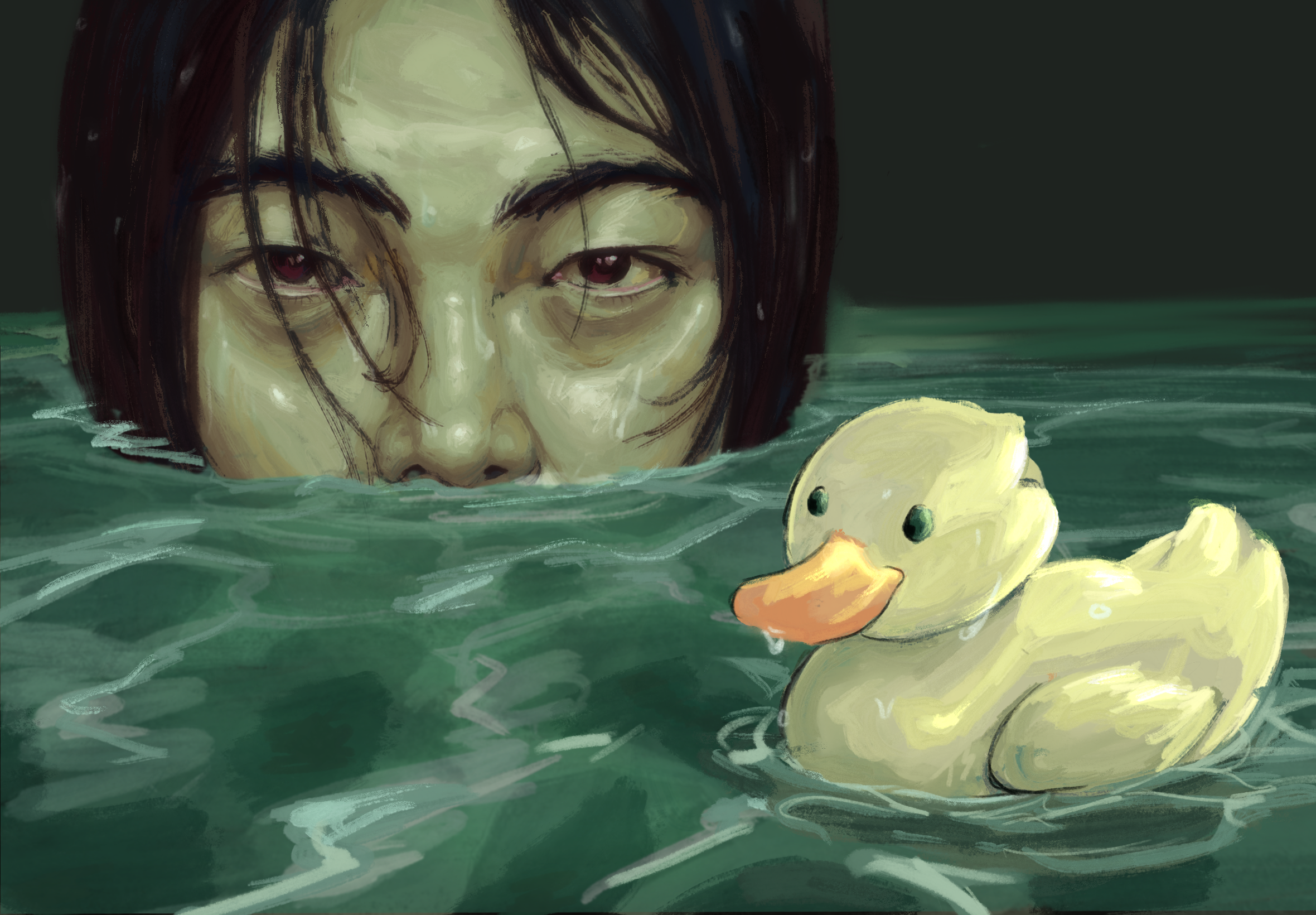
“Imposter syndrome” and “duck syndrome” are two of the most uttered phrases in freshman dorms (beside the ubiquitous “DAHA,” short for “does anyone have a ____”). The idea of being a lucky admit grabs hold of many Stanford students at one point or another and begins just as the elation of opening your admissions letter ends, in my experience.
The pervasive culture of duck syndrome at Stanford is one that’s lasted longer than most start-ups. And yet, we often overlook the human, personality-based aspect to admissions, according to admissions messages. It’s our humanity and relationships with each other that Stanford students encounter on a daily basis, contributing to our moods and sense of belonging in such a diverse student body.
This human aspect is what I value most about Stanford, the different experiences we’ve had and ones we’re navigating through. To highlight exactly that, I spoke to three frosh about their experiences at Stanford so far — and how they strive to answer the question: “Why me?”
Emmeline McLean ’29
Emmeline McLean ’29 is a long way from home. She hails from Bragg Creek in Alberta, Canada, a city over 1,300 miles away with a population of only 500. McLean chose Stanford because her love for Earth Systems and sustainability “matched” with the Stanford Doerr School of Sustainability.
The frosh noted that the campus weather and population size differ greatly from Bragg Creek, making her no stranger to imposter syndrome, or feelings of not belonging in a community much larger than that at home. This began during week 1, in classes like CS 106A, where McLean was learning to code for the first time among peers who’ve spent years learning programming, creating AI start-ups and dedicating themselves to the craft.
As McLean pointed out, everyone deals with imposter syndrome in one way or another — but it tends to look radically different from person to person.
For McLean, reminding herself that everyone has had different journeys to get to this same point, and will have different journeys beyond here, keeps her grounded.
Both McLean and her peers are feeling out Stanford as a new home, environment and community — and doing their best to pretend they aren’t struggling.
“[Imposter syndrome] is not as talked about because we’re all expected to be these, like, Ivy League students,” McLean said.
Coming into Stanford, McLean wanted to meet as many people as possible. She said she found her people and community by overcoming the awkward hesitation and just introducing herself to the people around her. Sometimes you just have to dive in. In class, in her dorm (Donner) and at Gaieties rehearsal, imposter syndrome, for McLean, abates as students get to know each other better. Now, McLean’s goals are focused on joining more clubs that cater towards her specific interests, like jump rope (which she’s done for 10 years!) and flag football.
Saqib Saiyed ’29
Saqib Saiyed ’29, too, finds the community fostered by freshman dorms to be key in both the Stanford experience and fighting imposter syndrome. Saiyed noticed the tech-focused environment in and around Stanford was similar to his home in Fremont, Calif. This parallel environment, combined with an attitude focused on taking it one step at a time, means Saiyed deals with little to no imposter syndrome at all, he said.
“I just see that there are people smarter than me, which is inevitable at such a great college,” Saiyed said. “But I just take everything one step at a time by myself, and as long as I’m doing the most I can, I feel satisfied.”
Using the uncomfortable feeling that others are “smarter” to strive for improvement allows Saiyed to keep moving and succeeding.
Saiyed’s goals have stayed consistent throughout the first few weeks of college: dive deeper into his academic interests (data science and economics) and form strong friendships and a community that will last beyond freshman year. He finds this purpose in his dorm community and friendships he found as early as NSO. For Saiyed, the adjustment is exciting, not frightening, since he gets to spontaneously hang out with friends he’s making in his dorm.
Norah Nguyen ’29
Although Norah Nguyen’s ’29 hometown of Tracy, Calif. is geographically closer than McLean’s in Canada, Nguyen also finds Stanford incredibly different. Compared to her tight-knit rural community, Nguyen’s experiences at Stanford (so far) have shown a community that’s more diverse in both culture and perspective. People around Nguyen have occasionally pointed to her as a “diversity admit,” claiming she was accepted to Stanford because of her rural background. This notion has only fed her imposter syndrome upon arriving on campus. To combat this, Nguyen said she leans on simple emotional vulnerability.
“Being open with one another and being vulnerable about the things we’re insecure about lets us realize we aren’t struggling alone,” Nguyen said.
Since arriving at Stanford, Nguyen’s plans for the future have shifted. Initially planning on a neuroscience major as a pre-medical student, the frosh has grown more open to difference academic interest. Currently, she’s trying to take advantage of every resource that Stanford has to offer through trying new courses, new clubs and envisioning the future as something waiting to be seized. The possibilities are endless right now, and as Nguyen put it, “every new flyer or table by Tresidder is an opportunity to make a difference in somebody else’s life.”
Alana Yamat ’29
All of our experiences, from the degree to which we experience imposter and duck syndrome to how we overcome it, differ from one another in one way or another. These differences, too, are why we’re at Stanford, each adding our own contributions to a unique and dedicated student body.
Personally, I’m still a firm believer that the most important thing you do at Stanford will never be just getting accepted. The decisions we make about how we choose to spend our time, the people we support and extracurriculars that distract us from lecture deign us worthy of our acceptance, far more than an arbitrary resume or personal statement.
A previous version of this article reported that members of Nguyen’s local community pointed to her as a “diversity admit,” and that Nguyen was “undecided” as opposed to exploring academic options. The Daily regrets this error.