
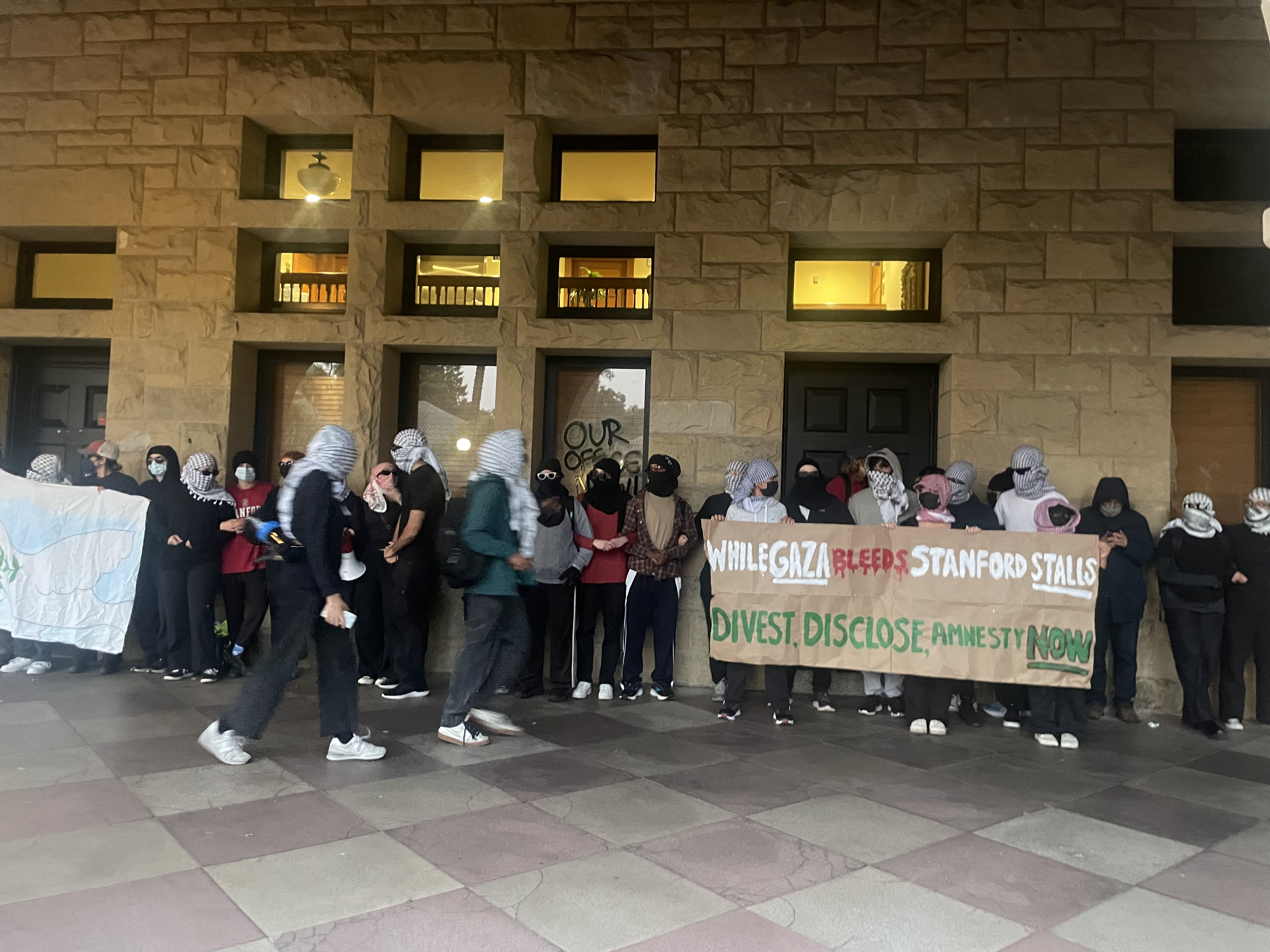
On Nov. 17, the 11 Stanford student protestors recently indicted by a Santa Clara County grand jury on felony vandalism and trespassing charges chose their ultimate courses of action for the court proceedings to follow. Three sought plea deals and five plan to proceed to trial. The other three already accepted alternative paths.
The incident is one of only two 2024 cases related to pro-Palestine protests at Stanford that have resulted in criminal charges, according to court documents filed by District Attorney Jeff Rosen.
The charges originated on June 4, 2024, when twelve pro-Palestinian protesters barricaded themselves inside Building 10, the president’s office, demanding that the University consider a divestment bill, disclose finances from the previous fiscal year (2022) including endowment investments and drop all disciplinary and criminal charges against pro-Palestinian students at Stanford.
Three defendants will plead guilty to misdemeanors in January.
Another three accepted alternative paths that may include community service instead of jail time, according to Rob Baker, an attorney for the prosecution. One of the three received youth deferred entry of judgment, an alternative that allows eligible youth to have their cases dismissed and records sealed if they successfully complete a court-ordered probation program. The other two were ordered to undergo mental health diversion, in which they can receive treatment instead of facing traditional criminal penalties.
The remaining five are continuing through to the trial.
While the protesters are being charged with felony vandalism and trespassing charges, the defense is framing their actions as political rather than criminal.
“The plea agreements in the Stanford 11 case lay bare how extreme and unfounded the felony charges were,” Stanford Students for Justice in Palestine (SJP) wrote in an email to The Daily.
Pretrial motions will be heard on Dec. 9 at 9 a.m. in apartment 38 of the Hall of Justice by Judge Hanley Chew. Jury selection will occur the week of Dec. 15, and evidence will be heard beginning the week of Jan. 5.