
A hot pink trash can, a baby blue toilet and a yellow safety floor sign rest on a patch of green grass. Each item is plastered with faces and designs that captivate passersby. Together, these items tell the story of international student Kostadin Kostadinov Hadzhiivanov ’26 and the world of imaginary friends he’s left behind. “My Playground, My Dreams, My Trash” is one of many works of art that highlighted the passions, fears and experiences of Stanford student artists in the annual Undergraduate Juried Exhibition.
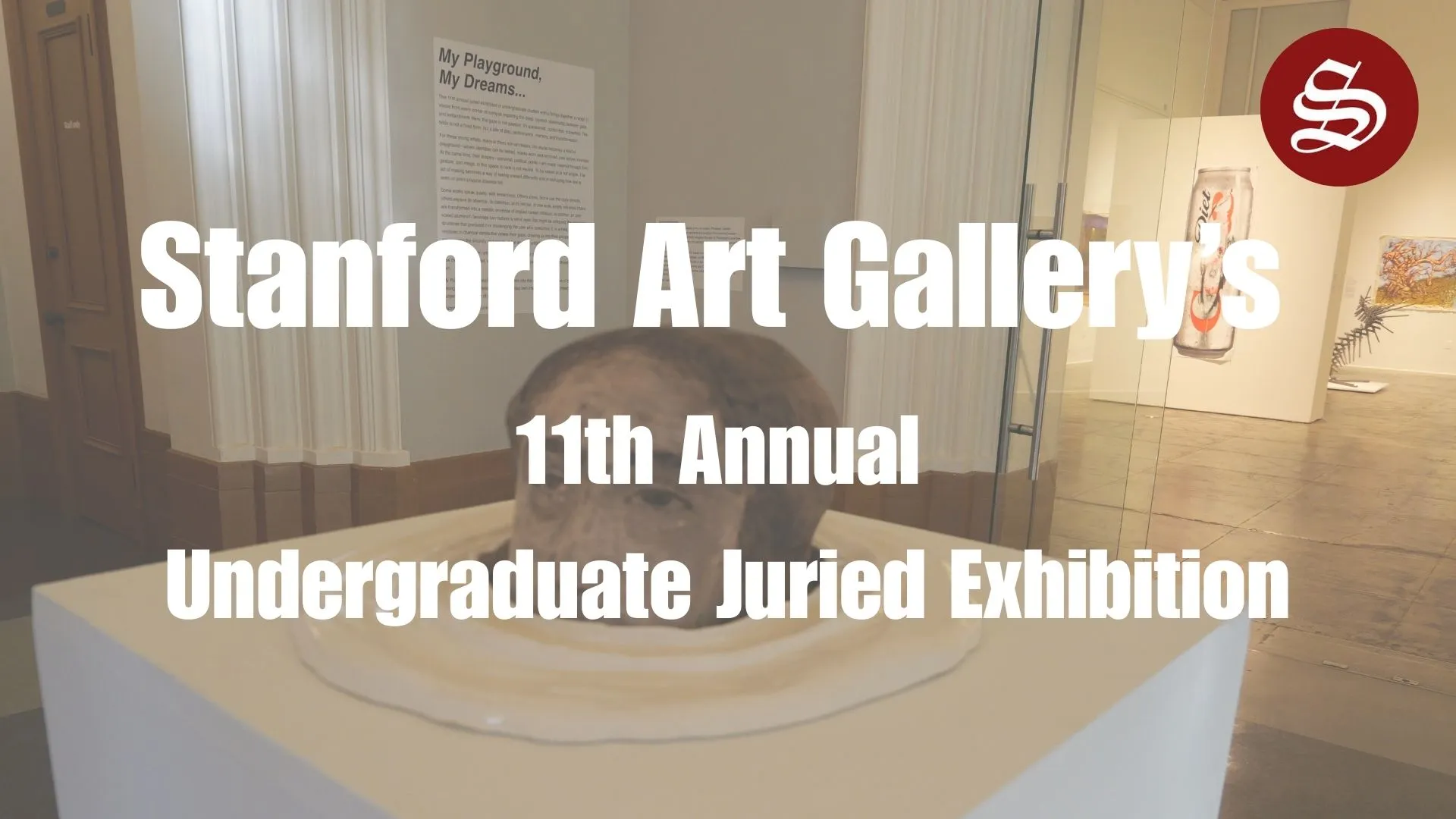
The Stanford Art Gallery hosts the exhibition every fall quarter. Undergraduate students across campus, studying any subject, are given the opportunity to submit works of art to be showcased. This year’s 11th annual exhibition consisted of works from 22 Stanford undergraduate students, including Hadzhiivanov.
All of the artwork this year centered around the theme “My Playground, My Dreams…” Many of this year’s pieces connected with viewers through the gaze of the subjects depicted.
Gabriel Harrison, the associate director for galleries and exhibitions, served as a co-curator for the exhibition along with Camille Utterback, associate professor in the department of art and art history. In selecting artwork for campus exhibitions, Harrison compared his role as that of a midwife.
“We have this tremendous rally moment where we bring the art in,” Harrison said. “We help the students finish it, talk about how to lay it out… Ultimately we give birth to something new and original.”
He explained that the grouping of student works “elevates everyone’s artwork” by creating dialogue between the different pieces within an exhibition. It fosters an original experience, allowing “each person to sort of see their work in a new light in relation to another person’s work,” Harrison said.
Each spring quarter, the art and art history department invites students to submit artwork for the fall exhibition. The department accepts submissions of any art medium including painting, sculptures and multimedia. The number of works selected from each category varies from year to year.
A small team of art faculty and staff from various parts of the campus judge the artwork and pick around 30 works to appear in the gallery. As co-curator, Harrison then worked to identify the commonalities of the artwork and articulates a theme.
One intentional decision the curators made to ensure the student’s voice reaches its viewers was utilizing the students’ words to create the labels for the artwork.
“You’re not only gazing at their painting, but you’re also listening to their voice coming back to you,” Harrison said. The open-call model of the exhibit ensured that the direction of the exhibit was largely impacted by the student’s vision and the stories they chose to tell.
Prior affiliation with the department was not a prerequisite for submission to the exhibition. In fact, the department looked to gather works from a wide range of Stanford students. Harrison estimated that typically around half of the students selected for the exhibition are non-art majors. This year, that number exceeded more than half.
Oftentimes, a student’s pre-college arts background is buried within the work they do for their major. “This exhibition is the opportunity for them to pull that [artistic side] out again and shine,” said Harrison.
This was the case for Iris Qu ’27, a biology major. Being selected for the exhibition served as a catalyst for getting involved with the art and art history department. Qu started practicing art heavily during the pandemic, when she found herself drawing on her iPad. Her piece, titled, “Steady Hands, Shaky Mind,” was originally created for a healthcare related art competition. Only later did she decide to submit her piece to the exhibition.
Qu’s work for the exhibition is a digital print created using the software Procreate. While making her piece, she used digital sketching techniques before transitioning to digital painting. The surgery room lights resembling bloodshot eyes and the tense huddle of the surgeons are just two artistic elements within her piece that highlight the toll the healthcare industry can have on the mental health of healthcare workers.
“I want to show that these feelings are normal and to encourage healthy habits and protective measures for the people exposed to such situations in healthcare,” Qu wrote in her piece’s introduction.
Prior to submission, she hadn’t directly engaged with the arts department at Stanford. After her piece was selected, she was inspired to enroll in Painting I to learn techniques for creating oil paintings. “I feel connected to more people because of this exhibition,” Qu said.
For other artists, this exhibition was also a chance to learn more about themselves. Hadzhiivanov’s pieces were both featured in the promotional graphic for the exhibit. Hadzhiivanov, a design major, created this work for a class before submitting his piece to the exhibition.
For years, Hadzhiivanov had been drawing faces like the ones that adorn his artwork for this exhibit. He found that drawing these characters from his mind came more naturally than painting using real life objects as a reference. Initially, he said he wasn’t sure exactly where the characters came from, but was “really attached to expressing ideas through them.” It wasn’t until last year that he realized these characters were his artistic expression of his imaginary friends from childhood.
“My Playground, My Dreams, My Trash” featured these characters on various colorful everyday objects. While working on this piece for his class, he faced personal struggles, which helped him realize how much support he was receiving from the people in his real life. Previously, he said, he would use art to escape his mind and process his feelings, but through this process, he started to make the connection between the real world and his imaginative one.
“I started to, for the first time in my life, dedicate the characters to very specific people in my life,” said Hadzhiivanov. In another piece, “Imaginary Friends,” he assigned the names of friends and mentors to his imaginary friend characters.
For many, the Undergraduate Juried Exhibition is a stepping stone for further art practice.
“I think it’s important for artists, especially on campus, to be able to see their work in that type of setting,” said Hadzhiivanov, who added that the Exhibition “gives you a sense of recognition.”