
Tell me how this ends.
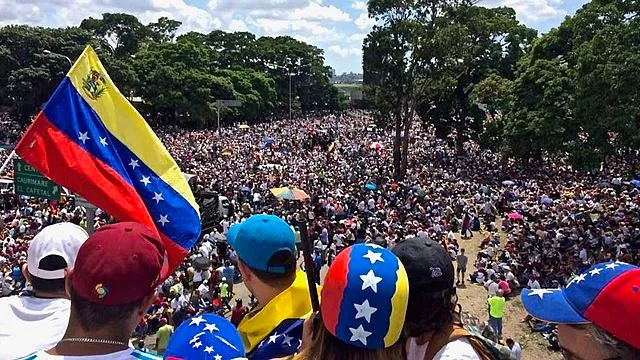
In an opinion piece published Tuesday in The Daily, Adam Langshaw ’29 cautiously endorsed the Trump administration’s recent capture of Nicolás Maduro, the longtime dictator of Venezuela. I understand Langshaw’s sympathy for Venezuelans who have suffered far too long from repression, corruption and economic collapse. But I fiercely disagree that a humanitarian crisis is sufficient cause for a U.S. military response.
As Langshaw acknowledges, catastrophes in recent U.S. expeditions in Afghanistan and Iraq have shifted American public opinion to train a skeptical eye on foreign interventions. In both instances, humanitarian-minded people, Democratic and Republican alike, supposed: what could be worse than the Taliban or Saddam Hussein, these brutal, inhumane rulers? These public servants led their country into war with plans that were, as it turned out, ineffective. American strategists underestimated their adversaries, especially guerrilla forces. They mistakenly assumed that once they created a power vacuum, it would be filled by a democratic government, not anarchy.
These lessons should inform the way we think about Venezuela today. There will be no watershed moment. Because the Venezuelan opposition has no military forces of its own, any future government will rely on collaboration with elements of the Maduro regime. While lower ranks of the military are not all supporters of the regime, the military leadership will undoubtedly prop it up as long as possible to hold onto their social status, genuine convictions and even personal safety. The armed forces, combined with colectivos (paramilitary groups), the National Intelligence Service (secret police) and the Ministry of the Interior can and will fiercely resist any attempt to strip them of power, and as long as they remain intact any concessions they might make are but empty promises.
One proposal published in Foreign Affairs suggested that the U.S. should pressure the regime to negotiate with the opposition, but it is difficult to imagine that such pressure could be applied without even greater U.S. involvement, even assuming that the opposition, led by the hardliner María Corina Machado who has (for understandable reasons) repudiated all negotiations with what she sees as a criminal regime, would come to the table. For a true transition to democracy, these authoritarian groups that have long reaped the rewards of allegiance to Maduro must lose their privileges.
Those who want democracy in Venezuela should not celebrate the Trump administration’s actions. To create a path to liberalization, the U.S. would have had to invade Venezuela and destroy its security apparatus on its way to capturing Maduro, as it did in Panama in 1989. The Venezuelan opposition recognizes this uncomfortable truth, which is why they have embraced greater U.S. intervention every step of the way. Of course, that would exacerbate dangerous possibilities for civil war, as remnants of the Maduro regime would likely sabotage the newly created democratic government, and drug cartels and insurgent groups such as the ELN (National Liberation Army) near the Colombian border would exploit the precarious situation to expand their activities.
Given the constraints, the U.S. should approach Venezuela as a risk to be mitigated, not an opportunity to be seized. Secretary of State Marco Rubio is correct to have scaled back his rhetoric on regime change and to place stabilization and recovery as first-order objectives, not transition.
What frustrates me about perspectives such as one that Political Science Professor Michael McFaul posted on Substack is the lack of strategy: a specific mechanism to connect means to ends. They state that the Trump administration should promote democracy in Venezuela, and they state that the seizure of Maduro is a step toward democracy, but they fail to articulate the intermediate steps that would take a Maduro-less Venezuela and produce a transition to democracy. In the absence of dramatic escalation, that pathway does not exist. We are flying blind.
Ultimately, Venezuela hawks commit the cardinal analytical sin of emotive thinking. Langshaw writes, “The world must choose between imperfect action and the quiet comfort of doing nothing.” However, I would contend that Langshaw pursues the comfort of having done something, regardless of whether or not it turns out to help. We feel guilty if we are bystanders to someone else’s oppression, and we want to prove our righteousness to ourselves by taking bold actions that prove we care.
When it comes to policy, we should be guided by impact, not intent. No matter how much we want democracy, if we take actions that make no difference even as they undermine important international norms on sovereignty, we are promoters of instability, not democracy.
I would like to conclude with an interrogation of what Langshaw might mean by “imperfect action.” If we accept damage to our global reputation created by a flagrant violation of the United Nations Charter to successfully bring democracy to Venezuela, I might agree. If, by contrast, we take bold steps in the vague hope that some viable path forward will emerge, then what Langshaw calls “decisive” I instead label “reckless,” and what he denigrates as “inaction” I endorse as “restraint.”
President Donald Trump has a democratic mandate to pursue an “America First” foreign policy that keeps Americans out of foreign entanglements, a mandate that was reaffirmed by a congressional resolution with respect to Venezuela. I do not contend that all military actions are impermissible, but the burden of proof for an intervention should be high — there must be a precise, realistic plan to accomplish precise, realistic objectives, something that did not exist, no matter how much Secretary Marco Rubio tries to improvise one. Only when American policymakers internalize this important lesson will they be able to avoid wars like Vietnam and Iraq, fueled by utopian dreams that clouded out clear-eyed strategy. I will renounce all my qualms if and only if supporters of intervention can answer one request, a dare if you will:
Tell me how this ends.