
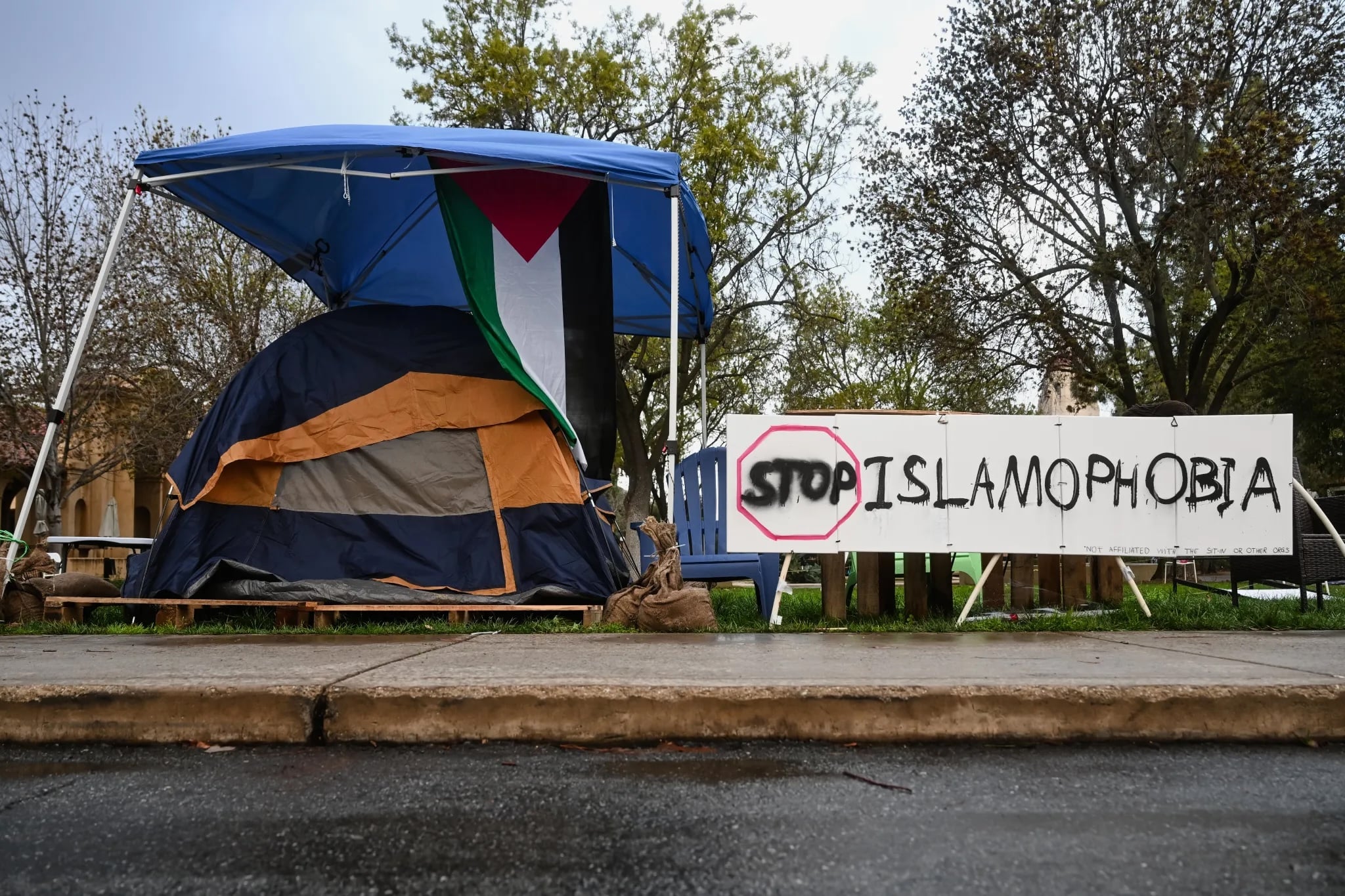
Recently, American political forces have used the word “terrorism” to describe those they oppose. The U.S. Department of Justice (DOJ), for instance, is investigating the work of Columbia University’s pro-Palestine dissenters as potential “terrorism crimes.” Immigration and Customs Enforcement (ICE) targeted a Palestinian immigrant who merely transferred money to her suffering family members in Gaza as if she materially supported terrorist groups. Texas Gov. Greg Abbott branded the Council on American-Islamic Relations (CAIR), one of the nation’s leading forces for civil rights and Muslim advocacy, as a terrorist organization and is expanding all efforts to shut it down in the state.
The “terrorism” designation — increasingly abused by government officials — bears significant consequences and is neither an accident nor a recent creation. It exists within the broader national memory of the Sept. 11 attacks, serving as a sweeping invocation of that horrific day. The tragedy of so many American lives being taken comes back to the national consciousness. Shock, confusion, anger and fear remain, keeping the memory alive and forever reminding the nation what it lost at the hands of terrorists.
The nation’s approach to terrorism leaves no room for either restraint or humanity. In his response to the 9/11 attacks, President George W. Bush deployed the rhetoric of terrorism as a way to justify invasive, practically unrestrained surveillance policies. Also known as Bush’s War on Terror, the policies became the permission structure for equating all Muslims with Al Qaeda, ushering in an era of persistent Islamophobia. The dogmatic hatred it perpetuates in our politics would have us believe that Muslims, perceived Muslims and our civil liberties themselves are the barbarous enemies we need to destroy before they destroy us.
Our response to all things “terrorism” has done so much harm, manufacturing consent for monstrous policies, bringing violence upon innocent people and fanning the flames of xenophobic hatred. We must make the nation’s terrorism framework a thing of the past, and a key step in doing so is shedding light on its demonstrable inconsistencies.
Let us be clear on how hypocritical it is for the U.S. to deploy the “terrorism” label against certain groups and pursue unconscionable policies while aligning with actual terrorists in the Middle East. President Donald Trump, for example, is cozying up to Syrian President Ahmed al-Sharaa, who had a $10 million bounty from the U.S. government placed on him less than a year ago and previously fought alongside Al Qaeda.
Trump also had a joyous meeting in the White House with Saudi Crown Prince Mohammad bin Salman. He defended the Saudi ruler, who according to a U.S. report verifiably approved of the 2018 murder of a Washington Post journalist with a bone saw, the kind of fundamentalist barbarism repeatedly committed by the Islamic State of Iraq and Syria.
Trump even lifted sanctions against Israel’s settler-terrorists in the West Bank and did nothing to prevent Itamar Ben-Gvir — Israel’s national security minister who is himself a settler and convicted terrorism supporter — from entering the U.S. and championing Israeli supremacy over Palestinians.
I grew up near a U.S. military cemetery and am the proud son of an Army veteran, so I am absolutely disgusted by the commander-in-chief closely aligning himself with Syrian, Saudi and Israeli terrorists. That is happening at the same time that retired four-star Gen. David Petraeus, who led U.S. troops in Iraq after Sept. 11, had a friendly conversation with the Al Qaeda-linked Syrian president. In less than a generation, the nation’s military elite went from declaring terrorists and their supporters as an “axis of evil” to welcoming them with open arms.
I cannot help but view that, alongside the war crimes we committed, the lies we told and the lives we lost, the terrorism designation isn’t what we’ve been led to believe. Instead of being a consistent metric by which we judge who the barbarians of the world are, the White House position on terrorism excuses the formation of unholy alliances overseas and turns the clock back on our humanity at home.
If the treatment of our politicians and students of conscience is any indication, it is that support for Palestinian humanity and self-determination is a particular, deliberate target of contemporary terrorism rhetoric. Comparing advocates for the Palestinian people to the likes of the Syrian, Saudi and Israeli governments, I believe that the differences couldn’t be more clear. The hypocrisy of our terrorism orthodoxy is real, and only by freeing ourselves from it will we see who the real terrorists are.
Going forward, the Stanford community can do better to rid ourselves of the nation’s terrorism trap by challenging the nation’s terrorism orthodoxy.
We ought to push for campus speakers like Rep. Ilhan Omar and Rep. Rashida Tlaib, courageous Muslim-American politicians that have been targeted by Islamophobic language over their faith and opposition to the U.S. partnership with the Israeli government. Doing so would show the country that the days of branding Muslims as terrorists over their faith and humanitarian convictions are numbered.
We ought to donate to groups like CAIR and the American Civil Liberties Union, steadfast legal advocates for the sorts of student activists that get smeared as terrorists for their opposition to the settler barbarism, apartheid regime and broader human rights abuses Israel commits against the Palestinian people.
We should incorporate the work of outlets like Breaking Points and Drop Site News into our assignments and everyday conversations — widening the audience of those telling the truth about the barbarous oppressors that the U.S. fraternizes with.
Stanford can lead the way in showing that we no longer need to fall for the terrorism trap. By setting the example for others to follow, we can stand up to the White House and set the record straight.