
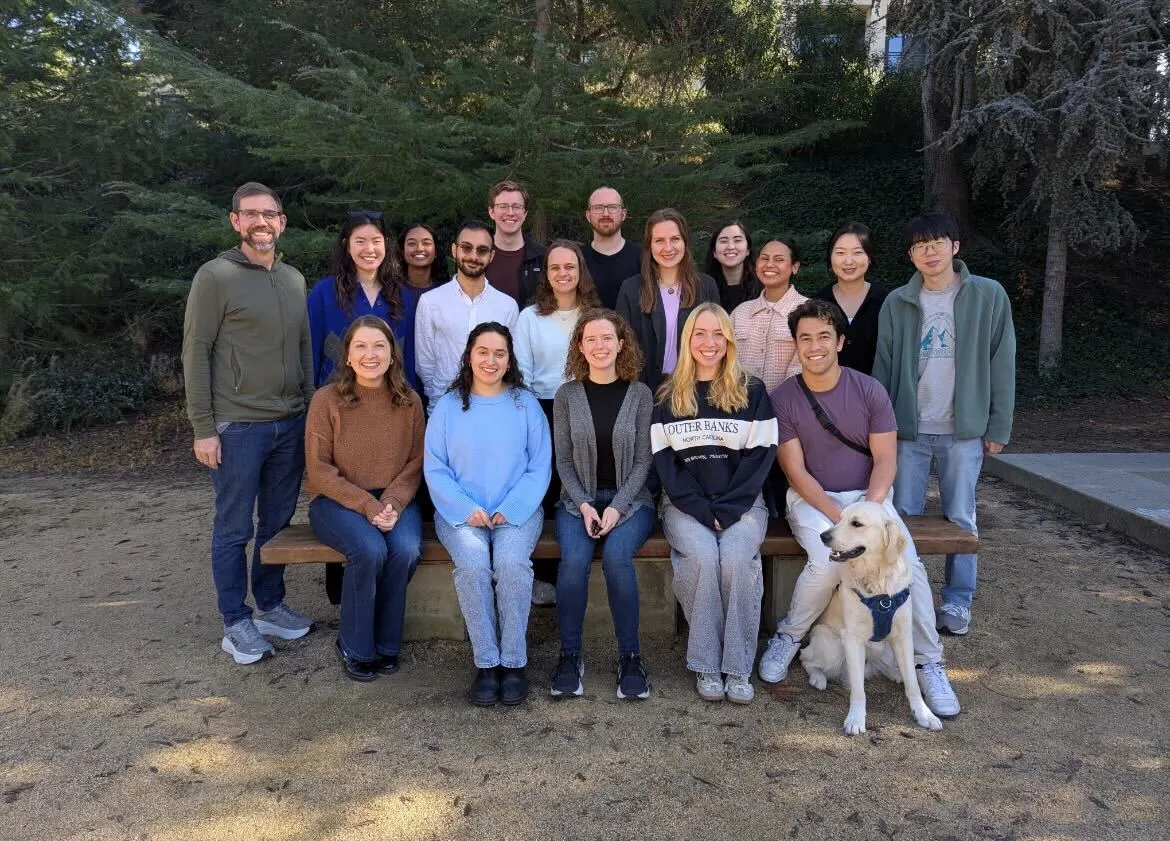
Michael Jewett Ph.D. ’05, bioengineering and chemical engineering professor, has long been interested in how the living world works — and helping it work better. His lab’s most recent project, ReForm, aims to curb the effects of climate change by transforming wasteful carbon into acetyl-CoA, an essential biological building block.
“It’s just like thinking about how we build with Lego to construct something. We love to think about how we can build with biology to make something useful to advance people and planet health,” Jewett told The Daily.
In the past, he and his team have engineered biological solutions to issues such as climate change, antibiotic resistance and lack of clean water.
The Jewett Lab has been working in conjunction with Northwestern chemical and biological engineering professor Ashty Karim to develop ReForm.
Karim said that while nature has evolved to productively fix carbon, it mainly generates biomass as a result. Jewett and Karim are working to re-engineer the process to produce natural substrates, as opposed to less useful biological products, through cell-free systems.
“We sought to use biological enzymes to convert formate derived from CO2 into more valuable materials,” Karim wrote in an email to The Daily. “Because there isn’t a set of enzymes in nature that can do that efficiently, we decided to engineer one.”
The scientists describe ReForm as a process in which one natural and five unnatural enzymes transform formate from carbon dioxide into acetyl-CoA, a naturally occurring molecule. In creating ReForm, Jewett and Karim built upon an already-discovered process — the transformation from carbon dioxide to formate — to engineer a more productive system.
To engineer the enzymes necessary for the process, Jewett and Karim tested combinations of amino acids to determine a shortest linear pathway to acetyl-CoA.
This scientific discovery is “a way to rethink the paradigm of synthetic metabolism and push the concept to new limits,” Jewett said. Jewett and Karim are still working to make this concept economically viable in the long term.
Right now, they aim to improve space-time yield, which would increase the ability to produce acetyl-CoA by multiple orders of magnitude. They plan to do this through stabilized enzymes that can work faster, reducing the process’s overall length.
The lab’s past research in antibiotic resistance and tools to understand water contaminants equips them to investigate the problem of carbon pollution. Brenda Wang Ph.D. ’25, a former researcher in the Jewett Lab, said the lab makes biology applicable to today’s problems.
The lab’s “cell free system” uses broken-open, non-living cells to reduce structural barriers and system complexity. These low-maintenance cells allow for the activation of biochemical networks that scientists can use to experiment on metabolic processes.
“The majority of the lab now focuses on using the cell-free system as a tool, as a platform to be able to do whatever application we want,” Wang explained. The Jewett lab is currently employing the versatility of this cell-free system across a broad range of projects, including to curb antibiotic resistance.
According to Jewett, antibiotic resistance could be as common as cancer by 2050, which may have dramatically negative implications for global health. The Jewett Lab is working to create conjugate vaccines that have a “bacteria fingerprint” that can teach the immune system to fight antibiotic-resistant bacteria.
“This work shows how biological processes can be coupled successfully with electrochemistry or other technologies, merging the best the research in each field has to offer,” Karim wrote.