
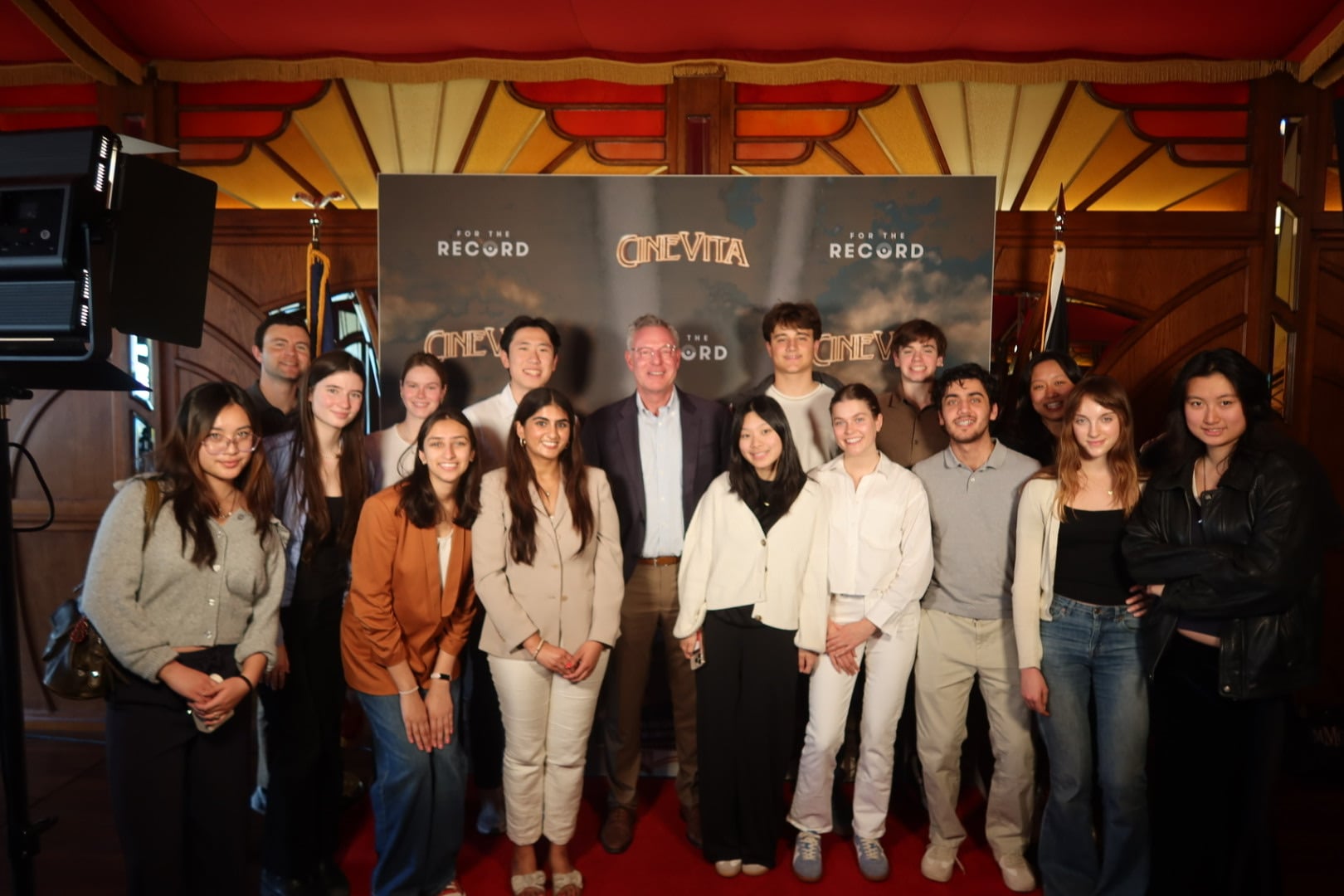
Stanford Abundance, a student group focused on increasing access to basic needs such as housing, healthcare and transportation, attended a Los Angeles conference focused on affordability and infrastructure this past weekend.
The Abundance movement, popularized by Ezra Klein and Derek Thompson’s book “Abundance,” aims to reduce bureaucracy to allow the efficient delivery of goods and services to citizens. At the Festival of Progressive Abundance, Stanford Abundance members heard from representatives, authors and entrepreneurs within the movement.
Victoria Ren ’26 founded Stanford Abundance in January 2025 after learning about the movement at a Washington D.C. conference. She felt that student organizations at Stanford were either partisan or focused on general skills relating to policy and politics, rather than realizing a set of principles for government.
“There wasn’t really a group [at Stanford] for something more ideological and something ideas-based, first and foremost, that was interested in improving people’s lives,” Ren said.
Stanford Abundance has focused on education about the affordability of basic needs and government efficiency. Last year, they hosted a speaker series and taught a course through the Political Science Department on the “Law & Politics of Growth.” The group also introduced a reading fellowship to offer students a structured introduction to the Abundance Agenda, which seeks to revive American institutions.
Now, the organization has shifted to action-oriented initiatives, collaborating with nonprofit organizations to conduct policy research and working on Stanford’s General Use Permit, the University’s 10-year plan for campus development. Ren said the group was “trying to apply reforming government ideas to reforming higher education and the broader set of institutions that make up a liberal democratic society.”
Ren first resonated with the Abundance Agenda based on her experience as the daughter of immigrants who had become disillusioned with the United States’ political system and both major parties. When she came to Stanford, she observed that tech companies in Silicon Valley were able to operate smoothly compared to government programs.
“Those two factors motivated me to think about a set of new ideas that political parties could align around,” Ren said.
Stanford Abundance co-president Shreya Mehta ’26 sees the movement as “reorient[ing] us around the basics. When we can’t even offer the opportunity to get basic goods at an affordable price, it’s very difficult to even imagine government delivering on any kind of bigger problems.”
Co-director of the Abundance Fellowship, Robert Liu ’28, who planned the conference trip, highlighted debates within the movement, including whether abundance should be publicly or privately led, and the role of organized labor in abundance.
“One of the challenges going into a festival is that there are going to be perspectives that you don’t agree with,” Liu said. He particularly enjoyed hearing from U.S. congressmembers Laura Friedman and Scott Peters.
Weston Benner ’29, an Abundance Reading Fellow, described the festival as “an amazing opportunity” to speak with policymakers about their views on California’s crises in housing, transportation and healthcare.
Former mayor of Stockton and candidate for Lieutenant Governor, Michael Tubbs ’12, who discussed the universal basic income he implemented while in office, was an especially influential speaker for Benner. “It was a once-in-a-lifetime opportunity to sit down with someone who might shape California politics as we know it and to really understand what goes into his day-to-day thought process and decision-making,” he said.
According to Liu, more liberal party members often dismiss abundance because of its association with ideas perceived as conservative, such as deregulating the government.
“Even though it seems like a conservative idea, it’s also been used by notable Democrats like FDR, who experienced limited restrictions and was able to get a lot done,” Liu said. He hopes that Stanford Abundance can help advance bipartisan work across the aisle on affordability and infrastructure issues.
For Benner, the festival and Stanford Abundance have introduced him to a political world he didn’t know existed before he arrived at Stanford.
“Abundance is part of this trend about making politics more accessible to the average person,” he said. “That’s ultimately going to lead to more participation and more student and youth engagement across the political spectrum.”