
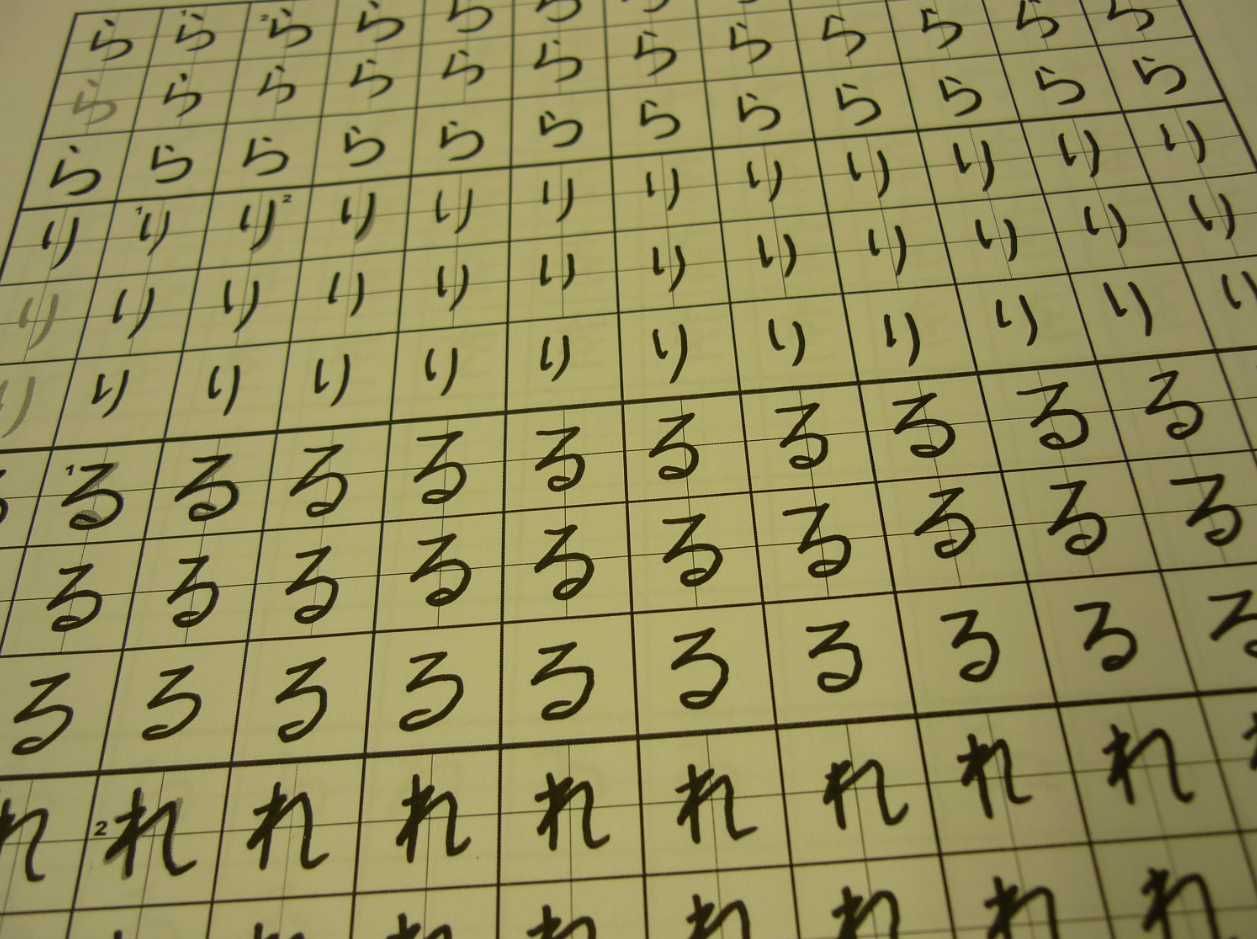
Bright-eyed and eager to learn, my passion for anime and manga fueled an unquenchable desire to gain mastery of the Japanese language. I had fallen in love with the intricate, thought-provoking plot of Death Note, the deep, psychological themes in Attack on Titan, and the vivid, immersive world of Frieren: Beyond Journey’s End. Thrilled at the prospect of enjoying my favorite shows and graphic novels without English subtitles, I swiftly enrolled in Stanford’s first-year, first-quarter Japanese course.
The first few weeks of class passed like a blissful dream. I felt myself gaining knowledge at an exponential pace, learning hiragana, katakana and kanji all rapidly, one after another. I had never experienced such a fast-paced language class in my life, feeling overwhelmed and excited in equal measure. A new world had opened up before me. Finally, I could make sense of characters which had seemed incomprehensible only a month before and express myself in a basic, yet satisfying, manner.
Exhilarated by my progress, I decided to commit to the entire first-year Japanese sequence. Winter and spring quarters were predictably more difficult, yet I worked diligently and eventually gained what I felt was a solid foundation in elementary Japanese.
Not wanting to lose momentum, I eagerly registered for JAPANLNG 21, smugly envisioning myself approaching fluency within the next year (if the pace of the second year was anything like the first). I even fantasized about daily productive self-study over summer break: reviewing Japanese vocabulary, getting ahead in reading my textbook and tirelessly practicing my kanji handwriting.
Yet, over summer quarter, without the pressure of a class or urgency of its impending deadlines, my motivation to study Japanese stagnated. Perhaps I was burned out from the bootcamp-like experience of first year Japanese. The weekly quizzes, frequent homework assignments and deluge of grammar points may have taken its toll, after all.
A simple step away from the language for four months would surely be harmless, I reasoned. In fact, it might be fully rejuvenating, allowing me to return motivated and ready to conquer second-year Japanese.
Ultimately, this decision proved to be a grave error, naively ignorant as I was of the monstrous task that lay ahead.
From the outset, JAPANLNG21 flung me into a turbulent sea, accosting me on all sides by the demands of hundreds of complex characters and niche words, challenging grammar and extreme rustiness from my lack of practice. The language textbook, now intermediate, presented with a slightly more subdued and intimidating appearance (in contrast to the elementary level textbooks’ bright covers and cartoon illustrations).
For the first time, I even began to struggle with on-the-spot speaking assignments. I often painted myself into a corner, beginning a sentence and realizing midway that I was using the wrong grammatical structure. I would pause awkwardly and frantically attempt to reformulate the thought in my head before restarting the sentence anew.
I will also never forget the time we recorded ourselves speaking Japanese. When I returned home and listened to my recording, I realized, to my mortification, that I had uttered the word “etto” (the Japanese equivalent of “um”) every five words.
I recognized immediately, and with a fair degree of alarm, that I needed to review the entire first-year Japanese curriculum just to keep myself afloat.
The giddy excitement of first-year Japanese had utterly faded.
Whereas previously, I had felt my knowledge increase two-fold every week, now I found myself progressing at an imperceptible snail’s pace. I was oppressed by an undeniable frustration. If I was laboring so arduously, why did it feel like I was hardly improving?
I soon discovered that this state of frustration and stagnation was called the “intermediate plateau,” which eager and naive language-learners encounter after progressing past the more exciting, “beginner” phases.
Yet this discouraging realization did not stop me from trying to converse with native Japanese speakers during my winter break trip to Tokyo. Prior to every interaction, I would silently rehearse the sentences I wished to utter in my head, then approach someone and attempt to communicate in halting Japanese. In each case, my conversation partner would respond in fluent, machine-gun fire Japanese, which was completely unintelligible to me. I was struck, as I had never been before, by the immense mountain I would have to traverse before I could truly carry myself in a conversation. I went home deeply humbled and rather shell-shocked.
One positive outcome did arise from my clumsy attempts at communicating in Japan. The locals that I approached were consistently warm, friendly and patient, regardless of how much I looked like a deer in the headlights. For example, when I nervously asked one employee at the train station for directions, he exclaimed warmly, “Are you learning Japanese?” and walked me to the platform, inquiring whether I was from America.
Ultimately, while my adventure in Japan forced me to confront just how little I actually knew, I returned to California with a newfound sense of purpose and determination. The road to fluency is long, winding and arduous, rife with setbacks and frustrations. However, as I continue to set my feet firmly on this path, I will strive to take one small step every day, advancing slowly yet steadily toward my goal of fluency.