
Imposter syndrome would have us doubt ourselves, our successes and our fundamental sense of belonging on the basis that we are not enough and that there are those more deserving of a Stanford education. Duck syndrome would have us present the facade of peacefully floating through life in spite of the real difficulties associated with balancing our academic, social and professional lives. The frequency at which we work in fields like technology, finance and consulting after graduation would have us believe in the highly coveted six-figure salary above all else. Rather than doing more of the same, we ought to tread new ground on what “success” looks like.
This prevailing wisdom of all things “success” at Stanford tells us a few things. The idea that there is always someone “better” than us means we don’t deserve to take up the space to embrace our successes. The dogma around looking like we’re on top of it all means that neither our appearances nor our vocabulary leave room for even the slightest of perceivable flaws. Professional orthodoxy would present a zero-sum game between professional success and humanitarian values.
A broad array of Stanford students have expressed themselves on the ways in which success and humanity are, according to conventional norms, at odds with each other. It is a tension that, from the days spent crafting our applications to putting our “best” selves front and center at every job interview pushes us to set aside so much about ourselves. To the extent that we are willing to defy this “check-the-boxes,” “suppress-the-self” style of conformity and success, I believe we could all be inspired by Alysa Liu’s convention-shattering Olympic success.
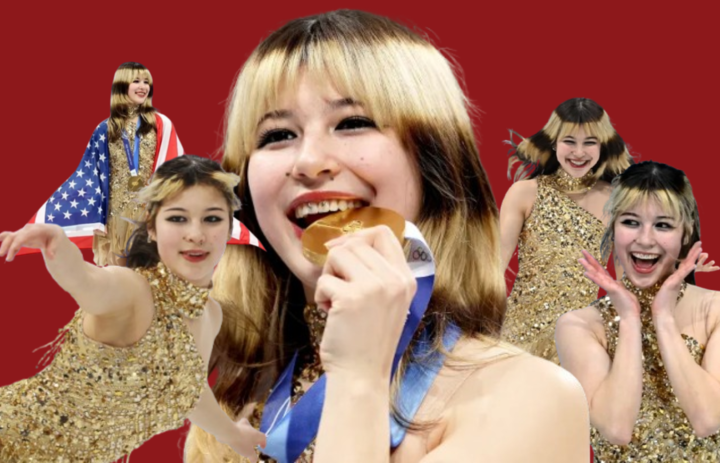
Alysa Liu won two gold medals in figure skating at the Milan-Cortina Winter Olympics. She made history as the first woman from the U.S. to individually win gold in Olympic figure skating since 2002. The excellence in her skating was matched by the awe-inspiring beauty and vibrancy in her appearance — dawning a dyed, three-halo hairstyle and a frenulum piercing she added herself. In a sport that has strictly adhered to neat, gendered norms of appearance and performance, Liu’s success went hand in hand with her alternative expression — ditching the classical music that skaters have chosen ad nauseum in favor of Laufey’s “Promise.” Her decision to celebrate her win by proclaiming, “That’s what I’m f—ing talking about” defies the Western expectation of female submission and silence.
Liu’s performance reflects the places her Olympic success comes from. She never had to set aside her non-traditional life story to succeed. The daughter of a man who fled China at 25 years old over his participation in the 1989 Tiananmen Square protests, she made it into the 2022 Beijing Games before her junior prom. She briefly retired after Beijing to experience more of life beyond skating and improve her mental health.
Off the ice, Liu studies psychology at the University of California, Los Angeles (UCLA). An East Bay native, Liu has been a vocal advocate on social justice issues numerous times. She explicitly invoked her own immigrant background as she came out in support of immigrants’ rights. She attended a pro-Palestine demonstration at UCLA and proudly supported the LGBTQ+ community online.
Liu is an Asian American woman, the proud daughter of a political refugee and a steadfast believer in what is right. There is much to be said about how her life story of alternative self-expression, diverse community and conscious advocacy didn’t keep her from success. Going forward, the Stanford community can look to her as an example.
By following Liu, we could admit more often in conversation with one another when things are not going swimmingly — showing our peers that no one is alone in what they are feeling and making it easier to take the scary step of stepping back for a change.
We could double down on alternative self-expression — showing our peers that we are indeed capable of forcing the different kinds of music, clothing and hairstyles out of the margins of society and into the mainstream.
We could double down on our community’s broad advocacy on issues ranging from divesting from the Israeli military to protesting Immigrations and Customs Enforcement — showing our peers that even the most successful people in the world need not shed their values at the first sign of a massive opportunity in life.
As Stanford students, we are capable of defying the success orthodoxy. Alysa Liu’s golden performance at the Olympics is proof that, to succeed in life, we don’t always have to hide our best, most authentic parts of ourselves from the world.