
The 1960s were the inflection point that birthed much of modern Western culture. Many influential movements and figures both rose to prominence and faded within the same decade. Take our very own Bay Area hippies and their Summer of Love of 1967: tens of thousands of Kerouac-reading flower children gathered in Haight-Ashbury to turn on, tune in and drop out; the Mamas & the Papas played their hit “California Dreamin’” at the historic Monterey Pop Festival as audience members opened their minds with LSD. The future was bright, technicolor and trippy.
Two years later, fifty miles northeast of Palo Alto at the Altamont Speedway, a young man was murdered in the audience as The Rolling Stones played “Sympathy for the Devil,” a tragedy commonly symbolized as the end of the hippie dream. But this account only loosely holds within the confines of California.
Let us rewind to the very same Summer of Love: the summer of 1967. While idealism flourished on the Pacific coast, Detroit was burning. Riots erupted in late July after increased racial tensions in the city, resulting in 43 people dead, 1000 injured and 7000 arrested. Black families were confined to overcrowded neighborhoods after being denied loans and mortgages, and police brutality intensified the environment of violence. Despite strong local efforts in political organization, Detroit burned, with the ravages of deindustrialization around the corner. What happens next when collective action and appeals to those in power fail?
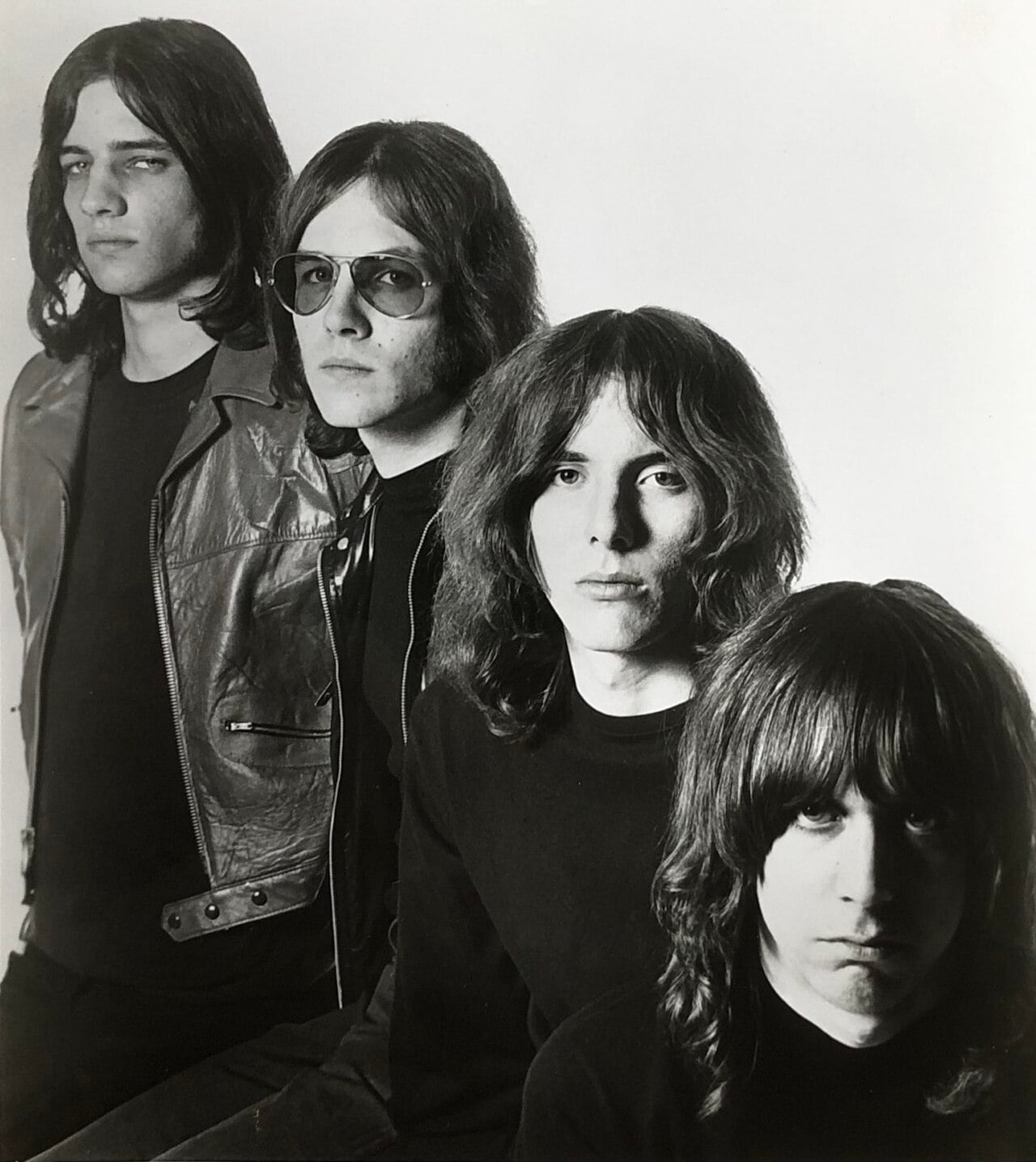
From the late 1960s Detroit scene emerged the rock ’n’ roll band The Stooges. Influenced by witnessing the lack of progress in the Detroit area, four boys from nearby Ann Arbor displayed the emotions of collapse rather than utopia. Listen to “Not Right,” off of The Stooges’ 1969 debut album.
One can quickly hear the sonic differences from “California Dreamin’” or “San Francisco (Be Sure to Wear Flowers in Your Hair).” Vocalist Iggy Pop sings demandingly and antagonistically. The guitars are distorted, dry, staticky and without harmonic quality, consisting only of power chords and chaotic, aimless soloing. The rhythm section starts and stops, comes back and drudges on, almost ignoring the leads. There isn’t a consistent danceable beat or melody.
Compared to the sing-along anthems of the Summer of Love, the Stooges seem sloppy, disorganized and dazed. The lyrics reveal why: “I want something alright, but she can’t help because she’s not right. No no no no. And it’s always, and it’s always this way.” Sonically and lyrically, Iggy and every member of his band are isolated, alienated, paranoid.
Now listen to “Search and Destroy,” the opening track of 1973’s “Raw Power.”
The band is tight: the lead guitar now commands in clear sentences as the rhythm section ebbs and flows, perfectly repeating one-two punches of sound. Iggy’s paranoia has been melted and forged into a blade: “Look out, honey, ’cause I’m using technology, ain’t got time to make no apology… I am the world’s forgotten boy, the one who’s searchin’, searchin’ only to destroy.” Here, Iggy identifies with an anonymous soldier in the Vietnam War, surrounded by new technologies of napalm, the M16 and a Huey with shark teeth.
Gone is the isolation of a cold Detroit bedroom — he is now an instrument of jungle warfare. Iggy feels his tools of destruction fuse into his soul: “I’m a street-walking cheetah with a heart full of napalm.” The Stooges disbanded soon after this album, but not before numerous freak shows of live performances from Iggy, involving self-mutilation, violence with the audience and tons of hard drugs.
In the end, The Stooges were a proto-punk band that transformed disillusioned angst into “raw power,” an unrelenting force that defined the band’s sound and later lent its name to their 1973 studio album. This transformation from angst to action would later become the basis of the new “punk rock” genre in the U.K. and U.S. alike during the decades following. At the philosophical root of this new movement was a distrust of institutions, a focus on individual identity and a destructive edge born in opposition to hippie peace.
It’s no wonder so many Silicon Valley founders are described as “punk rock.” “Search and Destroy” is not too far a slogan from “move fast, break things,” the defining tech industry mantra that embodies Stanford’s spirit. Few hippies congregate in San Francisco anymore, but there are many unbounded individuals now “using technology.” Disruptions in markets mirror prior disruptions in culture; the Bay Area, too, evolved from idealism. But a question I would ask Iggy if I could: Did you ever imagine Raw Power at scale? When amplified and naturally distorted, does the force of Henry Rollins truly share no DNA with Henry Kissinger? And what of me, an Ohio boy with my Stanford degree and your album poster on my wall?