
In sports, many injuries are obvious: Broken arms come with casts, and torn ligaments come with crutches. However, others — like concussions — are harder to spot.
CrashCourse, a concussion education program developed by Stanford students and education nonprofit TeachAids, is designed to address widespread ignorance of concussion symptoms — a recent survey found that over 70% of Americans seem to be familiar with the concept of concussions, yet only half are able to correctly identify its symptoms. Instead of relying on lectures or pamphlets, the program uses engaging storytelling combined with video-game-like visuals to educate young athletes about common symptoms, treatment options and misconceptions.
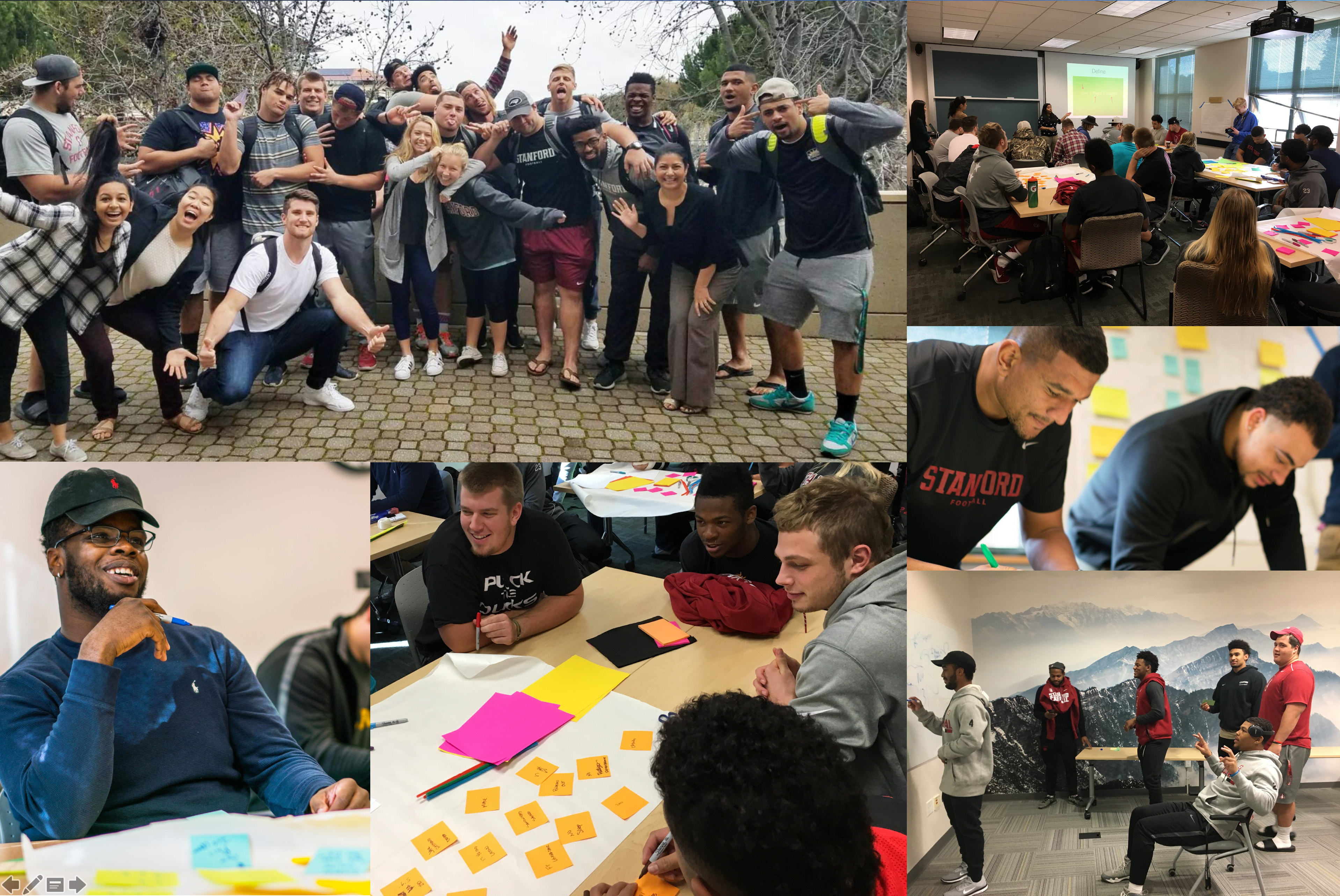
The curriculum grew out of Stanford classes taught by TeachAids founder Piya Sorcar M.A. ’06 Ph.D. ’09, where student-athletes worked alongside researchers and high school students to co-design a form of concussion education they believed athletes would actually listen to.
“When young people are involved in designing something for themselves, the result is very different from what happens when adults try to guess what will work,” Sorcar said.
When looking back at her class, MED 235: Designing Research-Based Interventions to Solve Global Health Problems, Sorcar remembers that the room was very quiet at first because concussions were “the kind of injury you didn’t talk openly about.”
Athletes often face a difficult choice under pressure: step out of the game or keep playing through concussion symptoms that teammates, coaches and even the athlete themselves may not immediately recognize. Sorcar said that hesitance to report concussions is not just medical, but cultural.
“It was all these youth hiding their injuries,” Sorcar said. “They want to feel tough, and they may be told to tough it out… and so they continue to play and just don’t tell.”
Sorcar and her teaching team used an anonymous poll to help students realize that they actually shared similar opinions about concussions as their peers.
Once the ice broke, the class began to get to work designing the curriculum. The discussion moved beyond personal experiences to a bigger question: What would the athletes want concussion education to look like for their younger selves?
Student-athletes were consulted during the course’s development and involved throughout the production process. Many helped shape the scripts, offered feedback on how sports scenes should be portrayed and even appeared on camera in the final videos.
“When it comes to reenactments of sports, sometimes you can miss the mark on making it look real,” said Brandon Simmons ’18, a former Stanford football player who participated in the class and acted in the CrashCourse production. “Athletes are really quick to call out when something doesn’t look real.”
In a later iteration of the class, Sorcar even incorporated middle school and high school students as part of the design process. Simmons remembered “interact[ing] with… middle school kids and talk[ing] to them about their experiences,” because even “what would resonate with us as college kids may not resonate with them.”
One early surprise from these discussions, Sorcar said, was that when students were asked who they wanted to hear concussion education from, the answer wasn’t doctors or celebrities.
“What they kept coming back to,” Sorcar said, “was that if you want young athletes to engage with something, they need to see themselves in it.”
For this reason, CrashCourse does not feature successful professional athletes, but rather “near peers” — someone one step above where the audience is in their life.
“This is someone you look up to but who also has been in your shoes,” Sorcar said.
Treyvion Foster ’17, a former Stanford football player who helped develop the early curriculum and later interned with TeachAids, echoed this sentiment. “When you add this layer of a slightly older peer who’s in a position that you want to be in, it’s really effective,” he said.
To keep its audience engaged, CrashCourse combines its narrative videos with immersive virtual reality simulations such as a “brain fly-through” developed with Stanford neurosurgery researchers to show what happens in the brain during a concussion. More recently, the team added a Concussion StoryWall, featuring over 4,000 individuals and their family members with personal concussion experiences.
The goal, Sorcar said, was to make an invisible injury visible.
“Concussions are difficult because you can’t see them,” she said. “It’s not like a broken bone where everyone understands immediately that something is wrong.”
Designing the program also required balancing medical accuracy with content that would resonate with young athletes. Sorcar said the team often found itself navigating differences between how scientists described concussions and how athletes actually talked about them.
Dan Daneshvar, a physician-scientist at Massachusetts General Hospital and Director of the Institute for Brain Research and Innovation at TeachAids, said the program’s design was grounded in behavioral science from the beginning.
“The perceived cultural norms [surrounding concussions] is one of the core areas that need to be addressed to actually affect behavior change,” Daneshvar said, referencing the theory of planned behavior, a framework used to study how social environments influence decision-making.
For Daneshvar, another challenge was understanding how concussion reporting changes within social context.
“Too much of the literature is focused on the abstract and not what really happens on the field,” he said.
Researchers working with the program found that the approach helped shift how athletes thought about reporting injuries. Daneshvar himself has led several studies to show that CrashCourse improved athletes’ intention to report concussion symptoms and was more engaging than many existing education programs.
“When you experience CrashCourse, you have a preferential and extra persistent benefit that lasts for months,” Daneshvar said.
Daneshvar’s team has already found some results in short-term follow-ups and are currently working to determine whether those shifts persist over longer periods of time. These proven results have helped the program expand far beyond the Stanford classroom where it began.
Today, CrashCourse has been adopted by major athletic organizations, including 25 U.S. Olympic and Paralympic Committee (USOPC) National Governing Bodies and Pop Warner, the world’s largest youth football, cheerleading and dance organization. Its curriculum has also been integrated into coaching and athlete education programs across the country.
At least two states have incorporated the program into official concussion education requirements for student athletes. In North Carolina, for example, state legislation now requires high school athletes to complete concussion education before participating in sports, according to Sorcar.
Due to these partnerships, the curriculum now reaches millions of young athletes across the U.S. and beyond.
To keep the program accessible, TeachAids has made the curriculum available for free online and developed 22 toolkit versions that organizations can integrate into their own training systems. Schools, clinics and sports leagues can choose versions with quizzes, certifications or different technical formats depending on their needs and scale.
For some of the athletes who helped build the program themselves, its impact has come full circle. Now a father and youth football coach, Simmons was required to complete coaching certification before the season began. What made it surreal was that he wasn’t just watching the module, he was in it.
“CrashCourse was one of the courses that we had to take for the certification,” he said. “I just wouldn’t have thought that seven years later I’ll be watching myself go back through that course to be able to coach my son, so it was a cool moment for me.”
The experience also reinforced for Simmons that he was part of a legacy that would outlast his athletic career.
“Everybody stops playing at some point,” he said, “but the contribution still lives on.”
Correction: This article was corrected to note that Sorcar’s MED 235 course led to the Crash Course program’s development.