
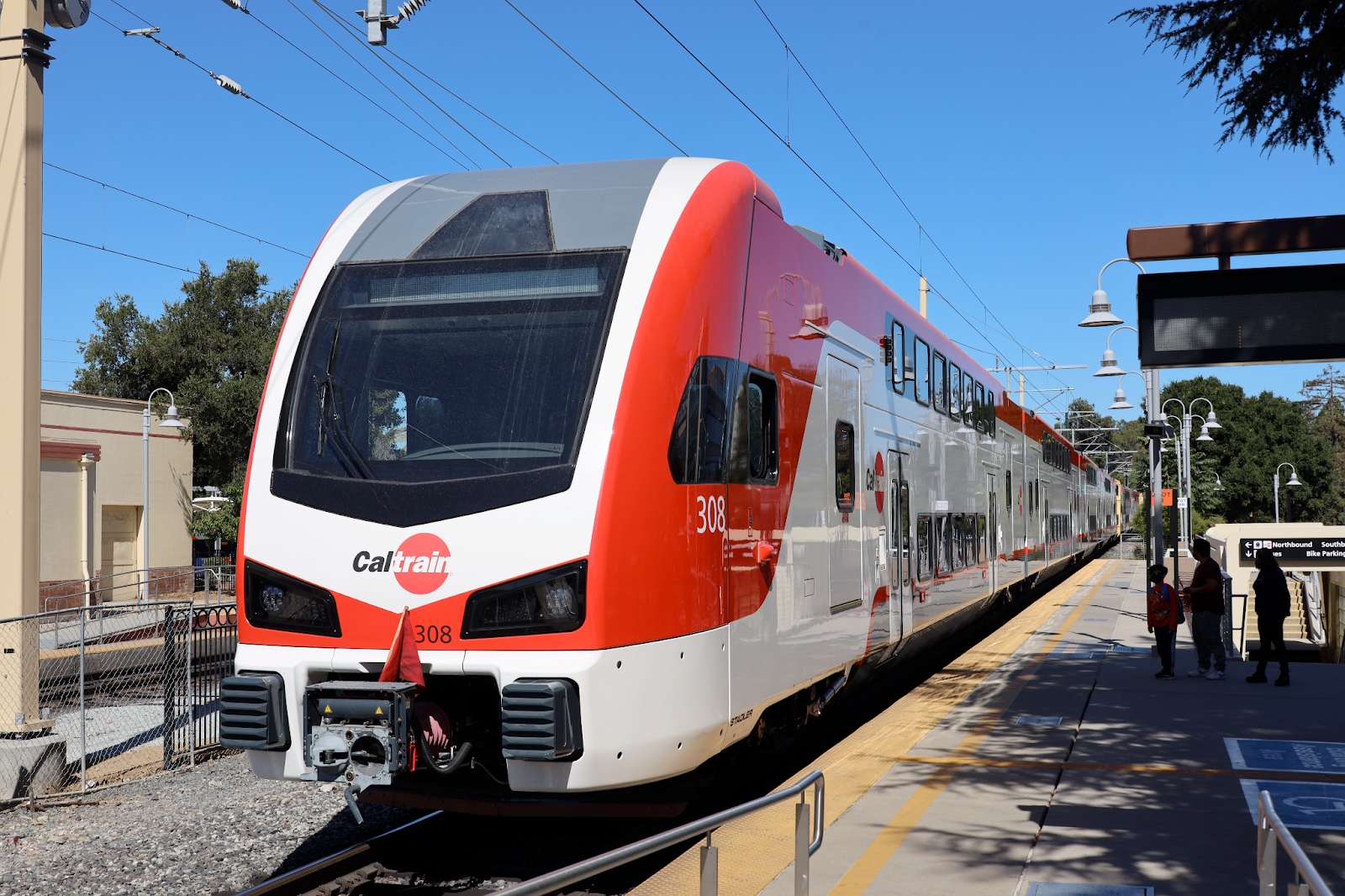
California Governor Gavin Newsom signed a bill loaning $590 million from the California State Transportation Agency (CalSTA) to Bay Area transportation services BART, Muni and Caltrain on Feb. 19.
The loan aims to combat recent financial struggles for the services, who are experiencing a combined $800 million annual deficit. After the COVID-19 pandemic, the train systems have faced a steep ridership decline, resulting in economic turmoil and threats of service cuts.
According to the San Francisco Bay Area Planning and Urban Research Association (SPUR), a nonprofit policy organization, the loan will last the transportation companies approximately six more months, at which time they will have to enact severe service cuts. This loan had been long anticipated by Bay Area residents.
“There are a few things that directly impact all students on campus, but I think Caltrain in particular does,” said Juliana Lamm-Perez ’25 M.A. ’26. Lamm-Perez worked with SPUR over the summer, researching the potential impacts of transportation loss in the area.
BART, for example, is projected to face a $376 million operating deficit for 2027. This would force BART to cut 70% of service, end service at 9 p.m. and close 20% of stations. Caltrain faces similar financial difficulties and threats — the closing of 10 stations, eliminated weekend service and the termination of service after 9 p.m., along with other cuts. Muni would also face significant service cuts.
Lamm-Perez has engaged in advocacy work at Stanford to promote the Connect Bay Area regional transit measure (SB 63). The act presents a regional sales tax on train fares to combat the funding crisis and would appear on the ballot in Nov. 2026. The tax would affect the five surrounding Bay Area counties — Alameda, Contra Costa, San Francisco, San Mateo and Santa Clara — including stations local to Stanford’s campus.
Advocates for the ballot measure affirm its importance in providing a lasting solution to the funding problem. They also recognize public transportation’s integral role in the Stanford community.
“Packing in with your friends on Caltrain for Frosh scavenger hunt, ‘Bay to Breakers’ or to just explore San Francisco is such an important part of that experience that it’s difficult to imagine Stanford without it,” wrote Eegan Ram ’28 in a message to The Daily. “Some of the best memories I have of my time in the Bay Area have been going places with or having conversations on Caltrain and BART.”
Stanford Abundance, a student organization focused on promoting accessibility to basic needs, has also backed the ballot measure and supported advocacy efforts on campus. Alongside Lamm-Perez, the organization hosted a teach-in to highlight the importance of transportation in the area and gather student signatures to get the act on the November ballot.
“The potential transit cuts are going to impact so many people, and sort of already put pressure on a system that’s struggling, and on a set of agencies that are trying to do their best to be able to provide ridership to folks across the bay,” said Victoria Ren ’26, founder of Stanford Abundance. “[Stanford Abundance] wanted to get involved and do something around [transportation].”
Lamm-Perez said the service cuts would be detrimental because of the broad role public transit plays in the Bay. She noted that trains provide essential transportation for lower-income communities who commute long distances, decrease road congestion and protect the environment. Through her research with SPUR, she found that service cuts would threaten all of these benefits.
“Even though many people might not choose to use BART or Caltrain themselves, not having them as an option will make every trip they do choose to take even longer,” Ram wrote.
According to Ram and Lamm-Perez, the service cuts will result in more cars on the road, affecting drivers and train riders alike.
“We use [transportation] and need it as a way to be able to connect to other people and groups and events that help us grow students and also contribute to the broader community,” Ren said.