
In her column “Nostalgic Thoughts,” Alaina Zhang ’27 reminisces on the past and reflects on why we miss it at all.
I’ve visited Wuxi a lot in recent years. Every summer, every break, when people around me travelled as tourists to other countries, I simply wanted to go home, to lie under the spring sun of Yuan Tou Zhu (Turtle Head Isle) and feel the cherry blossoms fly across my face on a windy day.
I have never liked the feeling of being a tourist. It is inherently an ostracizing experience because it implies you never belonged and never will belong to this place. It becomes illegal to call this place your home. It splits you from the place, like splitting one’s shadow from oneself.
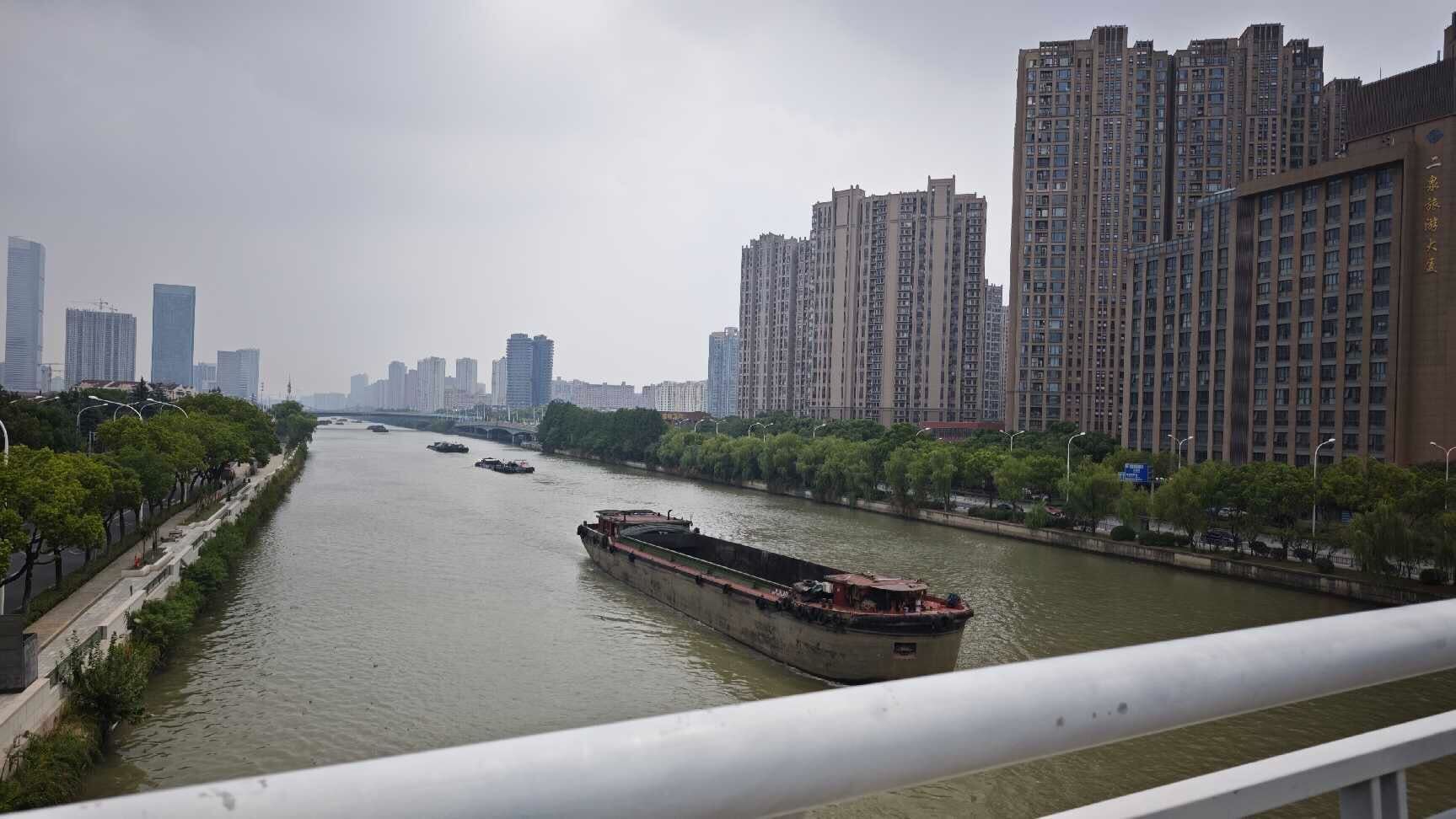
Wuxi has never greeted me as a tourist, but I always had this fear that one day it might. The Wuxi I returned to each time was never the same. China changed so fast that every time I went back, I was struck by the foreignness of my hometown, how few remnants of the old Wuxi I recognized. The apartments my parents had grown up in were mostly gone. Those buildings used to be inhabited by friendly neighbours who would gift each other fruit baskets on New Years, children who would press the doorbell excitedly to play with their friend next door and entire families crammed into just a few rooms, living happily. But today, residents who still live inside these few remaining buildings stand in front as tractors arrive to tear down their home, trying to defend a generation of memories and history.
My own memories got challenged each time I visited. Wuxi sometimes felt unfamiliar to me, a different unfamiliarity from how Canada felt on a daily basis. It wasn’t just the new landmarks, but the people. Wuxi had always been a middle-sized city with a significant population of Wuxi residents, but more than half of the current Wuxi population are made up of non-Wuxi born residents. Wuxi dialect could no longer be heard all the time on the streets. Even my former classmates told me they stopped speaking a long time ago when all the schools made Mandarin the official teaching language.
Returning to Wuxi never fully alleviated my immigrant nostalgia. Each time I returned home, I saw the Wuxi of my childhood fading, like a whale drawing its last phantom breath.
Now, when I go back, I spend most of my time riding the subway from station to station, an endless loop of staring at the tunnel and hoping that one of the stops, just one, might be a door into the old Wuxi I’ve come to mourn. I try to speak as much Wuxi dialect as I can even as my relatives laugh at my poor pronunciation, but then I remind them that their own kids who have grown up on this very soil, an experience I will forever envy, cannot speak the dialect at all. I’m always trying to prove that I’ve never left, but I’m always waiting for the moment when I will slip, finally spotted as an imposter for the version of me that never left.
What does this mean for me? I’m slowly becoming someone without roots to return to, haunting the streets of a foreign place looking for traces of a past that only lives fondly in my memory. The more I think about it, the more I am a shadow puppet playing a show that ended a long time ago, limited edition.
The Wuxi of my childhood and of my imagined childhood; the Wuxi of my parents’ childhood and their almost mythical stories; the Wuxi of a bygone era; the Wuxi of my dreams; the Wuxi of my endless yearning and nostalgia —
I miss you, as I listen to your last, shivering, exhalation.