
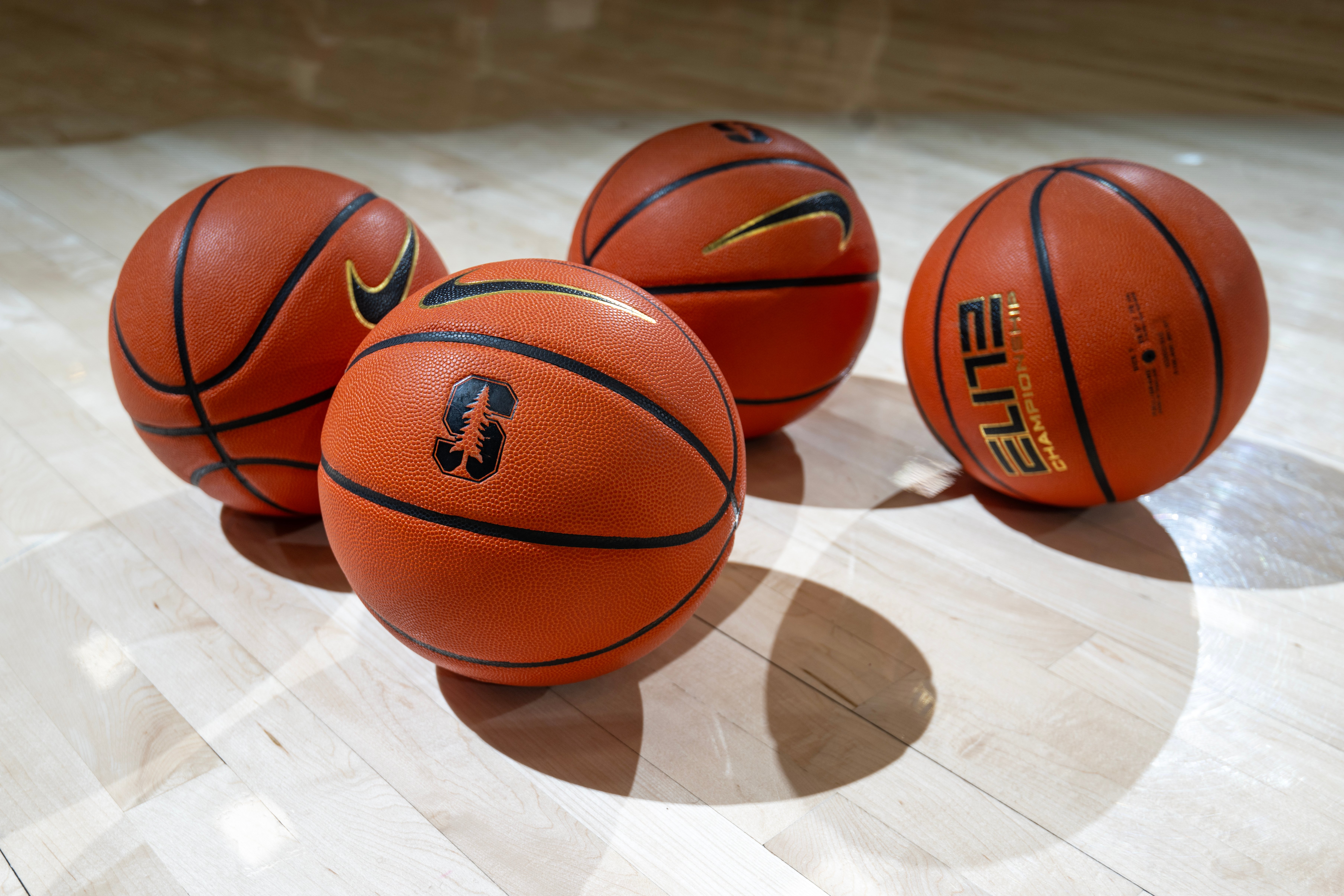
The reward for winning a Stanford intramural championship isn’t a trophy or cash prize.
It’s a T-shirt, and everyone really wants one.
Each year, about 5,000 undergraduates, graduate students, postdocs, faculty and staff take part in Stanford intramural sports, according to Josiah Riley, who runs the University’s program. The most popular sports annually are volleyball, basketball and soccer. From former athletes to newcomers, the leagues are designed to give everyone a chance to play, no matter their experience.
For busy students, intramurals serve as a place to unwind, take a break from their studies and get some exercise.
“I feel like it’s a release. Stanford is not a school that is to be taken lightly in terms of what you guys do,” Riley said. “You guys are overworked a lot, and to provide this space and opportunity to just relax adds to your experience as students.”
Even former professional athletes can find themselves drawn back to the game through intramurals. Chad Kanoff, a former NFL quarterback for the Arizona Cardinals, Detroit Lions and Tampa Bay Buccaneers, has played intramural flag football for the past three years. Kanoff, who also played Division I football at Princeton, is now a graduate student at Stanford.
“I stopped playing during COVID, which was the end of my career. With football, you don’t get to play much after you retire. I barely threw a football for four or five years,” said Kanoff. “Then I heard they had flag football here. I ended up messaging people and found a team that had seven guys signed up. I emailed them and luckily they let me join.”
Despite playing at the highest level of professional sports, Kanoff finds intramurals to be uniquely rewarding.
“I think intramurals are sports at their best. Division I athletics now are basically professional sports — there’s money, pressure, stress. Intramurals are just friends getting together to play. It’s like what kids do on a playground,” Kanoff said.
Kanoff says this atmosphere is rare to find.
“It’s a privilege to still have that environment where you can enjoy sports in such a joyful way,” he said. “You get relaxation, exercise and competition all at once.”
One unique part of the Stanford intramural experience is the chance to play in the same venues as varsity athletes. The flag football championship in the fall takes place inside Stanford Stadium, home to the football team. In the winter, teams chasing a basketball title play inside Maples Pavilion.
“People get to play in the stadium and under the lights — they really go above and beyond. It’s honestly one of the highlights of being at Stanford,” Kanoff said, who won his third intramural championship this fall, this time as a member of the 7v7 flag football league’s “Black Mambas.”
For many students, the chance to play in top-tier venues adds extra motivation during the season.
“I think we’ll make several trips to Maples over the next few years,” said freshman Pavan Farrell, a former high school athlete. His team, the “Balleaterz,” was knocked out in the first round of this winter’s Open Comp B playoffs, the second division of intramural basketball at Stanford. Farrell said that forming an intramural team this year helped him find an additional community at Stanford.
“One thing you don’t realize in high school is how easy it is to stay active and spend time with friends outside of class. I’d really been missing that,” Farrell said. “Intramurals help you stay in shape, meet a lot of people and build a strong community.”
Although winter quarter is often defined by heavy workloads and quieter campus life, intramural basketball allowed Farrell and his friends to continue having fun.
“Winter quarter can be tough,” Farrell said. “You can get too caught up in schoolwork, and it’s cold and dark outside. Being involved with the Balleaterz helped keep that sense of community going and brought a lot of joy into the quarter.”
For those dedicated to their teams, intramurals can also set the groundwork for other outlets of creative expression.
“We created an Instagram account for the team where we tracked our wins and losses, though there were definitely more wins. A few of us managed the account and had a lot of fun making posts after our games,” Farrell said.
Intramural basketball has provided Farrell and his friends with something to look forward to in the coming years.
“I hope everyone in our league knows we’re coming back and we’re not backing down from anyone,” he said. “We’ll be healthy next year, we understand how the league works now, and I’ve got two words for everyone: watch out.”
Even those who have never played the sports that intramurals offer can jump into the action.
“I’d never played football before. I was a total novice,” freshman Sauram Vasanawala said, who played intramural flag football during the fall. “Even though I didn’t have much experience and some of the other players did, it was really fun. It was really inclusive, and everyone was invited. Overall it was a great experience. I made a lot of new friends and had a lot of fun going to the games.”
Few activities on campus bring together as diverse a crowd as intramural sports. Other than conventional undergraduates and graduate students, teams are also made up of members of the Stanford community such as department staff or hospital personnel.
“There’s a team of doctors and nurses from the hospital that play volleyball and sometimes they’ll show up in their scrubs and play,” Riley said.
This spring, students, faculty and staff will all have the opportunity to participate in intramurals once again. The sports being offered are 3v3 basketball, 7v7 soccer, sand volleyball, softball and ultimate frisbee. Students can sign up through the IMLeagues website.
“The main thing for me is that intramurals aren’t always about winning,” said Riley. “Winning is fun. Everybody wants to get the T-shirt, right? But there’s more to life than just the T-shirt. It’s about the connection that you make with your peers and just having fun with them.”