
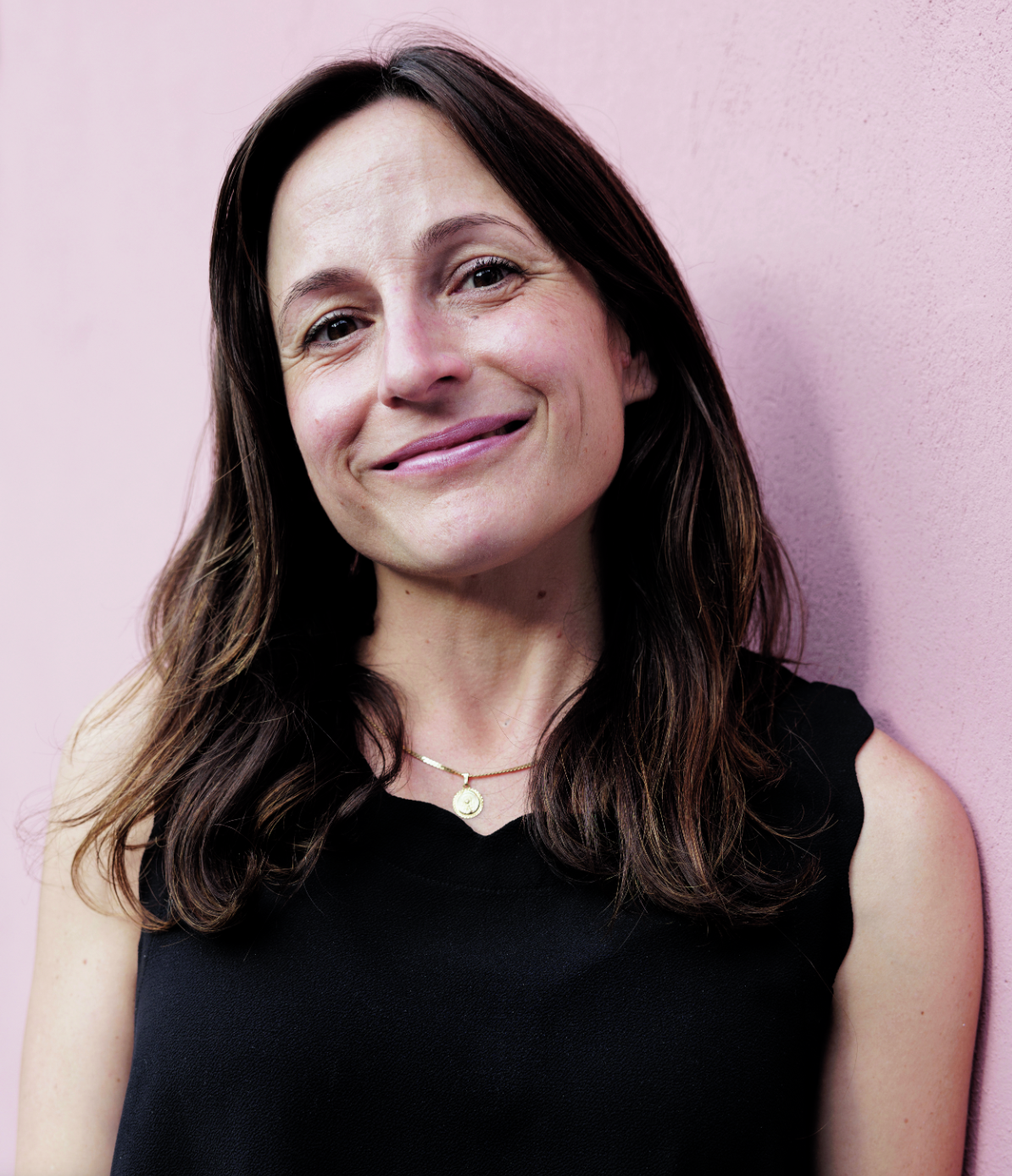
Karen Russell, the New York Times best-selling author of six novels and a finalist for the Pulitzer Prize for Fiction, was named a tenured English professor on Jan. 1. This quarter, she is co-teaching ENGLISH 390: Graduate Fiction Workshop, a course open to fellows in the Wallace Stegner program, which funds biannual cohorts of writers in fiction and poetry.
Russell was previously the visiting professor in the MFA program at the University of California, Irvine, before joining the Stanford faculty this year. Her first novel, “Swamplandia!,” was one of three finalists in an unconventional tie for the Pulitzer Prize for Fiction and follows a young girl whose family runs a failing theme park in the Everglades.
Russell’s latest novel, “The Antidote,” a historical-fiction and fantasy novel about a prairie witch who stores memories, was a finalist for the National Book Award and is currently long-listed for the 2026 National Book Critics Circle Award and the PEN America Jean Stein Book Award.
Russell, whose honors also include a MacArthur Fellowship and a Guggenheim Fellowship, said in an interview with The Daily that she hopes to help students at Stanford understand their own idiosyncrasies.
Russell cited Potawatomi botanist and author Robin Wall Kimmerer, who “has this beautiful quote about how an educated person knows what their gifts are and how to give them to the world.”
“And Stanford seems like a place that’s really built to help people identify what their gifts are and how to give them to the world,” Russell told The Daily.
Russell’s distinct literary voice, according to faculty members in the English department, made her a familiar figure for Stanford faculty before she arrived on campus.
“I knew [Russell] as a voice on the page, a dazzling, fantastical storyteller… that uses language at once fiery and subtle to probe into realms of experience that plainer, realist prose could never access,” English professor Nicholas Jenkins wrote in an email to The Daily.
During her evaluation for the professorship, Russell visited an undergraduate creative writing workshop taught by assistant English professor Molly Antopol.
Antopol’s class of writers, who were also engineers, visual artists and pre-med students, represented Stanford’s particular “intellectual biodiversity,” bringing together people with “very idiosyncratic, utterly singular ways of seeing and moving through this reality,” Russell said.
Russell also led a workshop for Stegner Fellows, which other English professors attended as part of her evaluation.
“To be a lucky fly on the wall of a class given by Professor Russell… is to feel like you have alighted for a moment in a brighter world,” Jenkins wrote to the Daily. “She combined wild intellectual power with patience and humility, extraordinary off-the-cuff metaphorical insights with a deep, gentle empathy for the struggle of a fellow writer to articulate their vision.”
Since her first three months in the English department, Russell has already “thrown herself headlong into community life” at Stanford, according to English department chair and Creative Writing Program director Gavin Jones. She has introduced visiting writers like Viet Thanh Nguyen for the Lane Lecture Series, learned the bureaucratic complexities of department committees and planned undergraduate courses.
Having taught creative writing and literature at Columbia University, Williams College, Bryn Mawr College and the Iowa Writers’ Workshop, Russell sees the act of instruction as one of guiding students towards self-realization.
“A writer I really admire, George Saunders, talks about teaching creative writing as helping someone to learn more about what kind of writer they are,” Russell said. “It’s helping people learn what is idiosyncratic and singular about their own consciousness… instead of trying to push people into any kind of mold of expressing themselves.”
In addition to her values in allowing mentees to grow in their writing style, Russell exhibits writing versatility, according to Jones. He noted that the department’s decision to select Russell for the role stemmed not only from her abilities as a writer and a professor but also for her capacity to work across genres and disciplines — an instructor who would embody the values the department aims to cultivate in students through its new Critical-Creative Studies initiative, which is aimed at combining students’ creative interests and academic potentials.
“Karen Russell exemplifies this fusion in the way her work romps through the upper reaches of the imagination but is then also grounded in historical research and in a critical sensibility,” Jones wrote in an email to the Daily. “I can see Karen teaching both creative courses, and literary courses — and, more [importantly], combining the two. I have a secret desire to team teach a course with her, but don’t tell her that!”
Apart from the genre-bending style that has characterized much of her celebrated writing, Russell is also known for her collaborations with performing artists. She has worked with composers, choreographers and directors to deliver ballets and operas; her latest collaboration with Mazzoli and Vavrek, an original opera named “The Galloping Cure,” will debut in the San Francisco Opera next year. Russell hopes to collaborate with other faculty members, such as English and theater and performance studies professor Peggy Phelan, to create ekphrastic learning experiences for undergraduates.
English professor Aracelis Girmay wrote in an email to the Daily that not only was Russell’s work “daring, alive and transdisciplinary,” citing the “political imagination and wing(time)span” of Russell’s novels and her collaborations of the stage, but also that Russell’s regard for the “intellectual lives of others is so apparent in [their] encounters and, more generally, the way she moves in the world.”
Jenkins and Jones similarly cited Russell’s warmth and generosity as uniquely engaging students from across disciplines. Humor, Russell said, is also a big component of her teaching philosophy.
“I never think of playfulness and seriousness as separate in any way. There’s a real interplay there, and it’s always good to laugh in a classroom,” Russell said. “With writing, especially, a certain kind of stakes needs to be reduced so that you can create a safe environment for people to take risks.”