
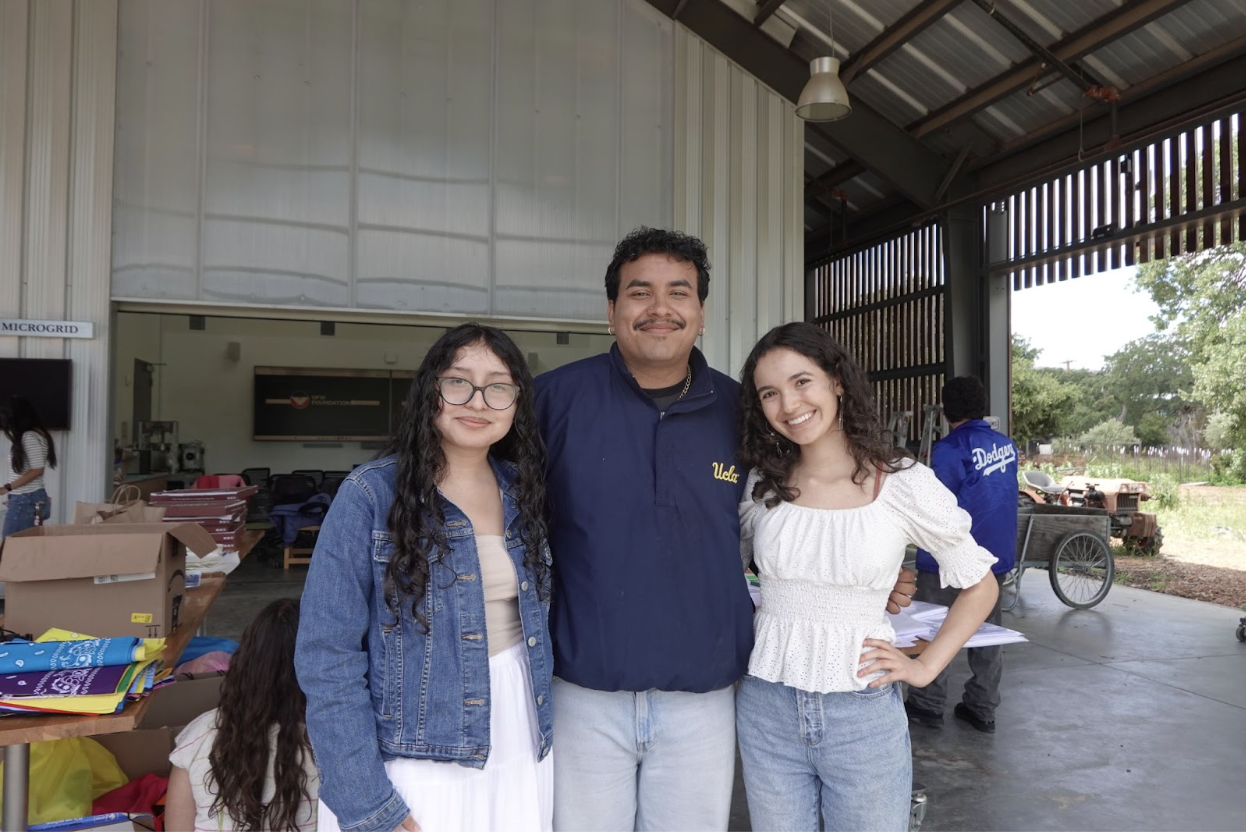
After a morning of rain on Friday, dozens of student organizers gathered for Stanford’s first annual farmworker symposium.
Held at the O’Donohue Family Stanford Educational Farm, the two-day symposium highlighted the continued struggles of farmworker communities and ongoing efforts to organize California laborers.
The symposium hosted representatives from a variety of different groups, including the United Farmworkers (UFW) Foundation, Tierras Milperas and the Coalition of Immokalee Workers, and was funded by a grant from the Vice Provost of Undergraduate Education (VPUE).
Volunteers also packed heat-resilience kits for farmworkers and wrote letters of appreciation to workers.
On Saturday, students traveled to Half Moon Bay to volunteer with Ayudando Latinos a Soñar (ALAS), a nationally-recognized food bank and community center that provides targeted support to farmworker and working-class families in the area.
Ava Acevedo ’26, who co-organized the event alongside Maria Rueda ’28 and Angel De Dios López ’26, helped plan the volunteer event because she hopes to advance labor protections.
Acevedo, who comes from agricultural cities Lodi, Calif. and Stockton, Calif., was reminded of her own family’s struggles throughout the weekend. She had previously heard from her grandpa about “how his family had no choice but to work in the field for wages that were not sustainable for them.”
During the symposium, “especially seeing the wildfires and how [the farmworkers] had no choice but to work, I couldn’t help but think of my family,” Acevedo told The Daily. In recent years, journalists have reported on the increasingly harmful consequences of wildfire smoke on farmworkers in Acevedo’s hometown.
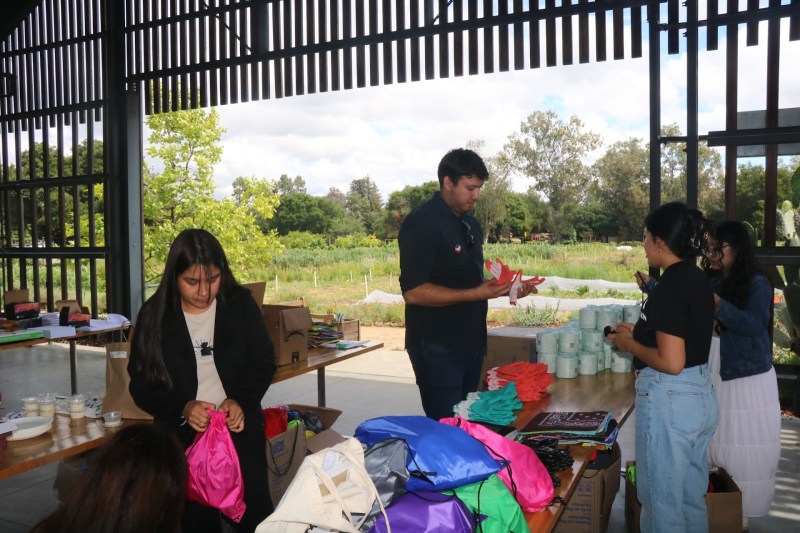
UFW Opportunities Coordinator Jackie Sernas began her presentation by asking participants about the costs of various agricultural products, prompting them to consider the interconnectedness of low prices and farmworker wages.
“Usually we walk into a grocery store, and we think about it from the consumer’s perspective… what we don’t ask ourselves is how much of the profits are going to the people who are producing this food,” Sernas explained. “It’s not because their work lacks value… the value of their labor is not reflected in what they are paid.”
Participants also raised renewed fears about U.S. Immigration and Customs Enforcement (ICE) raids, which have discouraged farmworkers from speaking up about labor rights abuses or reporting wage violations.
“Right now with Trump’s administration, there are a lot of wage cuts that farmworkers are experiencing… farmworkers are facing a lot of issues, and we are here to bring awareness to that,” Sernas said.
Sernas originally started as an emergency coordinator for the UFW Foundation during the pandemic, distributing personal protective equipment (PPE), COVID-19 tests and more. “This is about the ‘si se puede’ attitude,” Sernas said in reference to the famed chant attributed to civil rights leader and UFW leader Dolores Huerta.
The symposium began just one day after Huerta’s 96th birthday.
In recent weeks, Huerta and two other women, Ana Murguia and Debra Rojas, had come forward about experiencing sexual abuse by Cesar Chavez, another well-known leader of the farmworker movement. In a public press release, the UFW Foundation called the allegations “shocking, indefensible and something we are taking seriously.”
Attendee Dulce Angele Soto ’29, who is from Napa Valley, has a personal stake in the farmworker movement. “My dad works in the vineyards and it’s always been a big part of my life… all of my friends, parents work in the field,” she said. “It’s so important to recognize the dignity of the people who put the food on our plates.”
De Dios López resonated with the presentation by Tierras Milperas, another organization present at the symposium.
“They spoke about their model of collective assembly that derives from the Mexican Revolution, and how they’ve managed to… center food sovereignty, and most importantly Indigenous Latin American food systems like the milpa,” De Dios López said, referring to a traditional Mesoamerican agricultural method.
Soto left the symposium feeling “really inspired.” “I want to see how I can volunteer with [the UFW Foundation],” she said.
As Sernas wrapped up her presentation, the sun was finally shining. Volunteers gathered to perform the “unity clap,” a rhythmic, accelerating clap that has been used by farmworker organizers for decades. After the clap, smiles were glowing and participants were energized, embodying the “Si Se Puede!” attitude.
“Being at Stanford, you tend to be removed from the processes that allow for the university to function in the first place, which is through workers,” attendee Jorge Ramos ’28 told The Daily. “Having workers and activists come to this campus to share their personal stories and struggles was powerful.”