
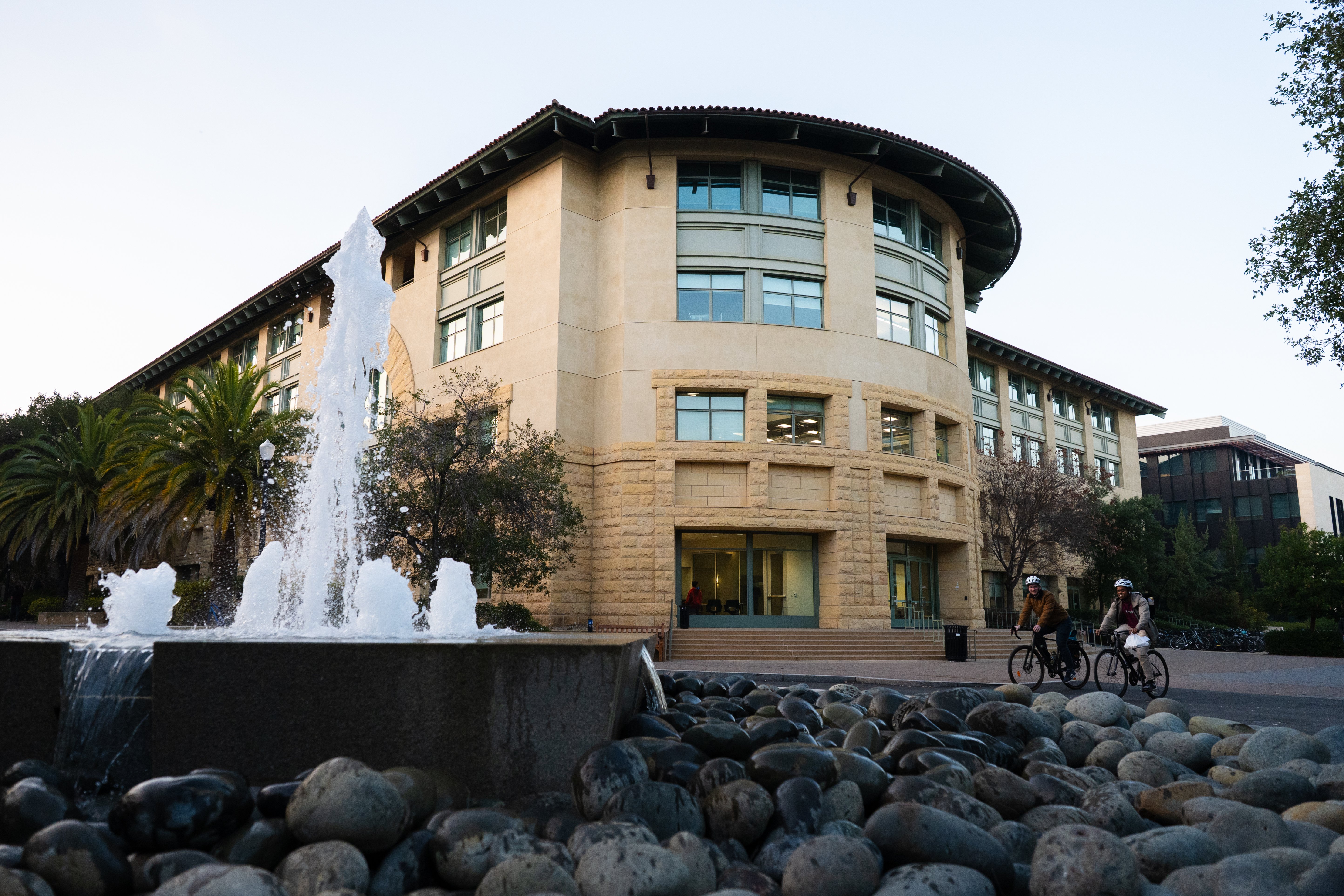
Biomni-AD, a joint project between Stanford University and Mount Sinai’s Icahn School of Medicine, was named as one of two grand prize winners of the Alzheimer’s Insights AI Prize at the 20th International Conference on Alzheimer’s and Parkinson’s Diseases in Copenhagen, Denmark.
Biomni-AD is an AI system that functions as a scientific collaborator for Alzheimer’s disease research. The research team behind the project was awarded a $1 million grand prize by the Alzheimer’s Disease Data Initiative (AD Data Initiative) at the conference on March 20. The competition drew more than 180 submissions from teams around the world.
“Our judges evaluated each finalist on scientific rigor, technical originality and the likelihood that the work could materially accelerate Alzheimer’s research and discovery, with real potential to help enable better treatments and, ultimately, a cure,” Gregory Moore, a senior advisor at Gates Ventures and the head of the competition’s judging panel, said to AD Data Initiative.
Biomni-AD stood out to the judges because of its unique capability to synthesize vast quantities of biological data to maximize efficiency in biomedical research.
“Most AI tools in this space are designed to answer a specific question,” said Stanford computer science professor Jure Leskovec, who is a member of the Biomni-AD team.
“Biomni-AD is something different: it’s a co-scientist agent that can actively participate in the research process. It can explore hypotheses, integrate evidence across multiple biological modalities and communicate its reasoning in ways that scientists can interrogate and build on,” said Leskovec.
Leskovec also highlighted Biomni-AD’s ability to engage and collaborate with human researchers. “The goal was never a smarter tool, it was to build a capable research partner,” he said.
Lead developer Kexin Huang Ph.D. ’25 described the philosophy similarly. “Biomni stands out because it takes a co-scientist approach, making it very scientist-first because it is designed to help scientists get their work done,” Huang said. “It’s a very collaborative agent and we have set up the infrastructure to make this go very smoothly.”
Designing the agent was technically challenging. “Teaching the agent to reason like a scientist, not just retrieve and pattern-match” was among the hardest problems the team faced, Leskovec said.
Alzheimer’s disease is projected to affect approximately 152 million people by 2050, and its complexity makes it an excellent proving ground for AI research agents. Understanding the disease requires simultaneously synthesizing markers in genetics, protein biology, neuroimaging and clinical data, which can push the limits of any individual researcher.
“No human researcher can synthesize all of it at once,” Leskovec said. “That’s exactly where AI agents can change the equation.”
For Huang, the motivation is also personal. “I have the APOE [apolipoprotein E] gene which makes me high-risk for Alzheimer’s Disease,” he said, referring to a genetic variant that significantly elevates a person’s likelihood of developing the disease.
With the prize funding secured, the team plans to continue developing Biomni-AD and make it freely available to researchers worldwide through the AD Data Initiative’s data-sharing platform, AD Workbench.
Leskovec said he hopes the project attracts more attention in the broader conversation about AI in medicine. “There’s a lot of excitement about AI for drug discovery or AI for diagnosis, but Biomni-AD is really about augmenting how scientists do their work,” he said. “It is about giving a researcher a collaborator that never sleeps, has read everything, and can hold the full complexity of a disease in working memory.”