
Editor’s Note: This article is a review and includes subjective thoughts, opinions and critiques.
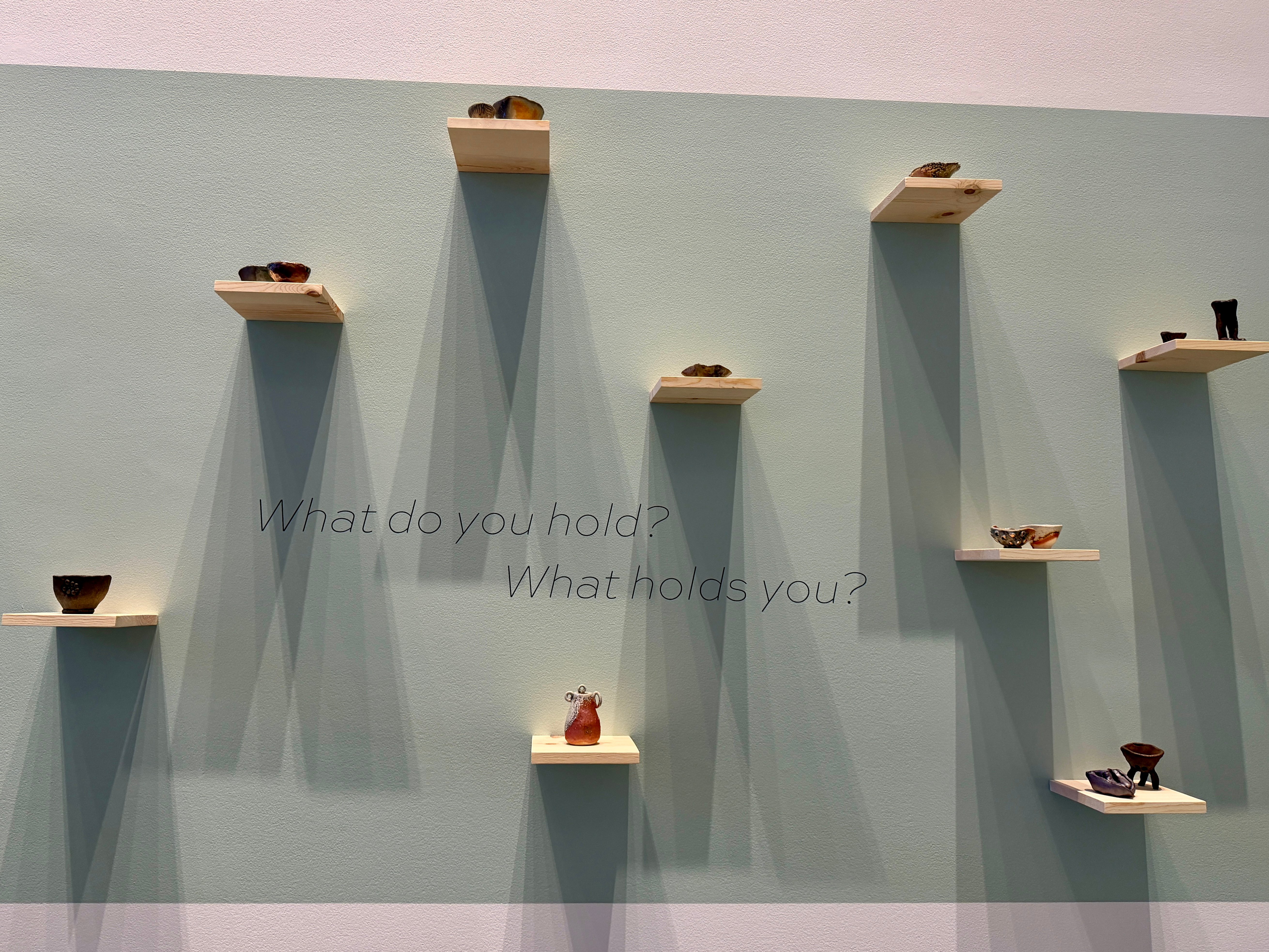
Entering the Anderson Collection Wisch Family Gallery, you might see something you never have at a museum: visitors picking up, touching and physically interacting with the artwork.
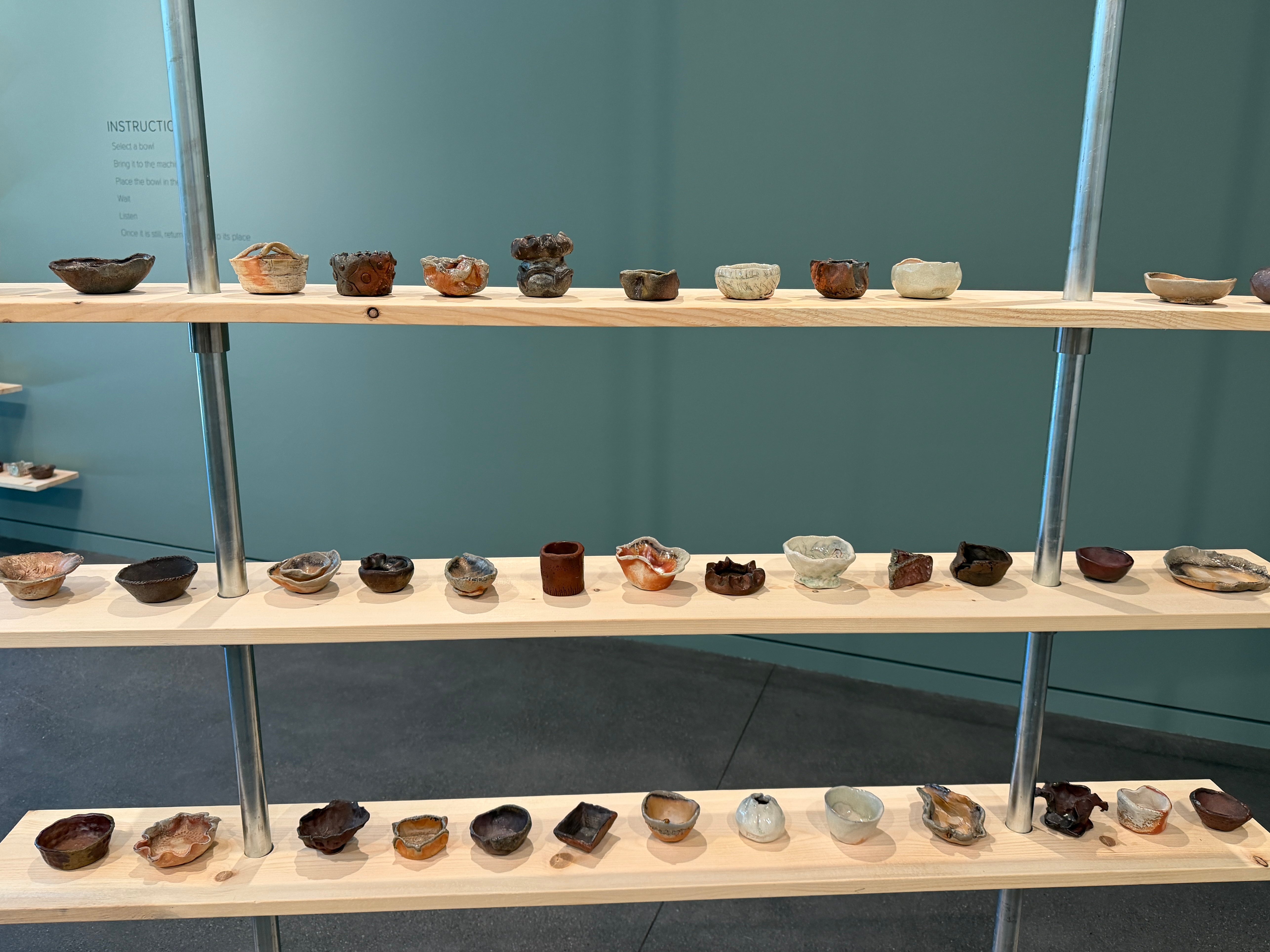
The defining attribute of “1,000 Ways to Hold,” by Erika Chong Shuch, is its interactive nature. Hundreds of ceramic bowls line the shelves — and unlike most other museum experiences, you are not only permitted but encouraged to pick them up, place each one on a machine that, through electronic chips embedded in each bowl, allows visitors to hear directly from its maker.
Open since April 2, this exhibition is the culmination of a year-long project by Shuch, Stanford Arts’ 2025-26 Visiting Artist. In January, Shuch held a series of workshops in and around Stanford inviting people to create bowls responding to a central question: What have you held, and what has held you? Participants also recorded a minute-long story of what they were trying to represent. One bowl was made as a gift for the participant’s son as he grew up. Another symbolized holding onto a sense of home.
Their creations, and others’, are now displayed in the exhibition. The body of artists is broad and interdisciplinary — community members, Stanford graduate students and undergraduate and faculty across fields from applied physics to film all contributed to Shuch’s exhibition.
In one hallway, a film by Heechan Lim ’28 documents the stories of bowl makers and individual workshops. A second film offers a broader narrative of the project’s scope and purpose. At the end of the gallery, visitors can also contribute to an interactive board responding to Shuch’s key question themselves.
From piece to piece, none looked remotely the same. Star-shaped bowls sat beside classic round ones. There were bird-shaped forms, colorful patterns, wavy lines and everything in between. In tandem with the recorded stories, this range of artworks epitomized the exhibition, representing the diversity of thought, experience and identity of the participants.
Jason Linetzky, director of the Anderson Collection, offered opening remarks at the reception, highlighting how he hopes this exhibition will spark conversations about connectivity and belonging.
“Through this generous and welcoming act, [Shuch] offered bowl makers and all who will experience this project the opportunity to learn more about themselves and each other,” Linetzky said. “What a truly powerful way to encourage empathy, recognition and respect.”
The bowls and visitors, and their interactions, “form both an artwork and a collective portrait — evidence of how small acts of making and listening can hold memory, care and community,” according to the Anderson.
After Linetzky’s opening, Deborah Cullinan, vice president for the arts at Stanford, described how the exhibition came about in collaboration with Ellen Oh, director of interdisciplinary arts programs.
“We thought about what would it be like if we could build something that could touch people across the campus and engage them in their own stories, engage them using their own hands in the making of things together, and if we could figure out a way to help us see ourselves as a community, as a fabric, as a place, no matter what we believe in,” Cullinan said.
Then, Schuch herself addressed a question raised by Cullinan during the preparation of the exhibit: “‘How can we democratize the process of making art?’” According to Shuch, “1000 Ways to Hold” exists in the spirit of shared art and co-creation, “Whether that’s because you created a bowl, or whether you were functioning as a performer within this exhibition by taking a bowl and listening to it, or whether you collaborated on the project itself.”
“Where else would I be able to do that, other than Stanford University?” Shuch said.“The whole premise of this place is that there’s something that you don’t know, and then you come to this place, and then you learn and you grow.”
I saw the exhibit while it was bustling with people for the opening. What struck me most was how rarely a piece of public art manages to simultaneously feel genuinely personal, how a singular bowl, lifted off a shelf, could suddenly make a stranger’s life and story feel impossibly close and important.
There is something quietly radical about an exhibition that asks you not just to look, but to hold, engage and connect. Per Shuch’s suggestion, I will be returning when it’s less busy to fully digest more of the personal stories embedded in each bowl — and I highly recommend you do the same.
Update: This article has been updated to include Jason Linetzky’s full name and title.
Correction: This article has been updated to correct the spelling of Jason Linetzky’s surname. The Daily regrets. this error.