
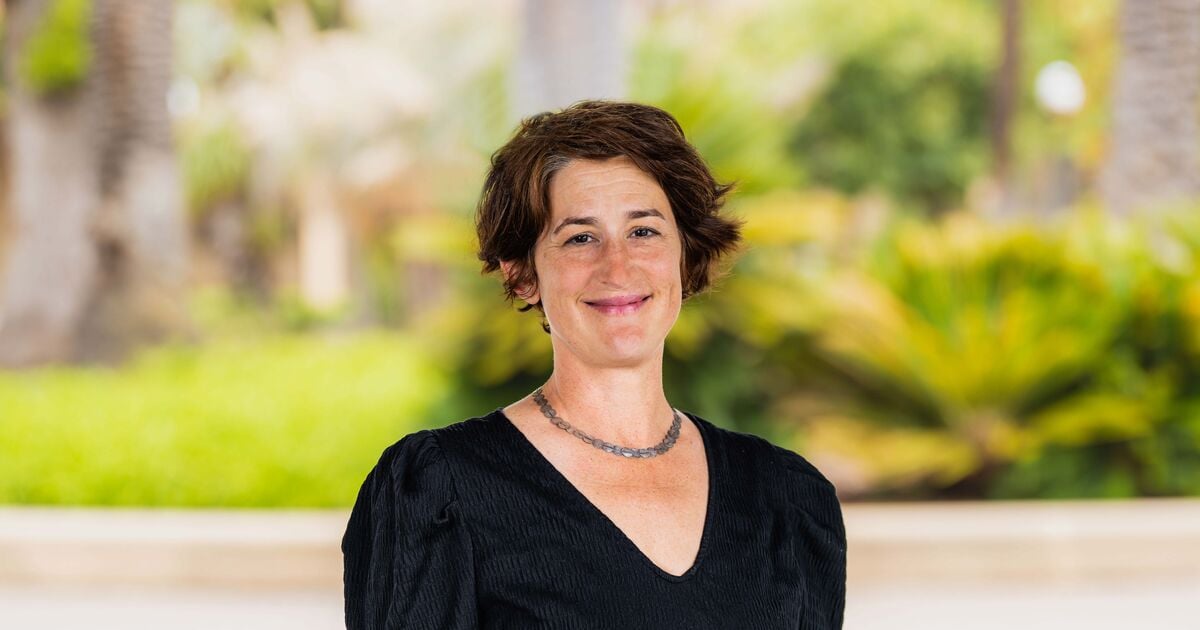
History professor Joel Cabrita is one of five Stanford recipients of the 2026 Guggenheim Fellowship, alongside economics professor Ran Abramitzky, anthropology professor Angela Garcia, sociology professor Robb Willer and anesthesiology professor Sheng Xu.
Cabrita, director of the Center for African Studies, is based in the department of African and African American Studies. She is currently writing the first sustained history of the Central Intelligence Agency’s (CIA) operations in apartheid South Africa.
Cabrita received her Ph.D. at the University of Cambridge and was a junior research fellow at Trinity College, Cambridge. Before moving to Stanford, she held permanent posts at the School of Oriental and African Studies (SOAS) and the University of Cambridge.
Her books include ‘Text and Authority in the South African Nazaretha Church’, about one of the largest African-initiated churches, ‘The People’s Zion’, focused on the religious movement African Zionism, and the award-winning biography of feminist activist Regina Twala, ‘Written Out: The Silencing of Regina Gelana Twala’.
‘Written Out’ won South Africa’s National Institute for the Humanities and Social Sciences Biography Prize, was shortlisted for the African Studies Association of the UK (ASAUK) Best Book Prize and earned Cabrita an honorary doctorate from Uppsala University.
Chosen from a pool of nearly 5,000 applicants, the Class of 2026 Guggenheim Fellows was chosen based on both prior career achievement and exceptional promise.
Cabrita wrote to The Daily about the fellowship, her archival work and the future of African studies.
The Stanford Daily (TSD): Will the Guggenheim support the CIA/apartheid South Africa project or another line of work? What are you most excited to dig into during the fellowship year?
Joel Cabrita (JC): I’m thrilled to be supported by the John Simon Guggenheim Memorial Foundation for this project. What I’m most excited about is getting into the archives and reconstructing a set of relationships that were often deliberately obscured between the CIA, student activists and the apartheid state. It’s my chance to tell a more connected, global story about South Africa during the Cold War, and to show how those international dynamics shaped events on the ground.
TSD: “Written Out” is, among other things, a meditation on the politics of knowledge production. What drew you to the archival and methodological challenges of reconstructing Regina Twala’s life?
JC: What drew me to Regina Gelana Twala was both the difficulty of the archive and the ethical questions that come with it. I was very aware of the role I was playing in interpreting and mediating her story, and in my biography of Twala (“Written Out: The Silencing of Regina Gelana Twala”). I try to engage those questions directly, especially around representation and its underlying power dynamics, rather than sidestep them. Alongside the book, I’ve also worked with the Stanford Center for Spatial and Textual Analysis and the Stanford Digital Repository to digitize her papers and make them accessible to a much wider audience. I’m also working with researchers in South Africa to prepare her major ethnography of Swati women for publication. So for me the goal has always been to have Twala speak to the world in her own words and on her own terms.
TSD: As director of the Center for African Studies, how do you see African studies evolving at Stanford and in the U.S. academy more broadly?
JC: At the Center for African Studies, and in the U.S. academy more broadly, African studies is evolving in really exciting ways. There’s a growing emphasis on connecting the continent with the wider African diaspora, rather than treating them as separate fields. Stanford’s new Department of African and African American Studies reflects that shift by holding African and diaspora studies together in a single intellectual framework. At the same time, I see the field placing greater emphasis on African creativity and intellectual innovation — that is to say, highlighting Africa not just as a subject of study, but as a source of ideas that shape global conversations.
TSD: Any advice for undergraduate or graduate students drawn to the history of Africa, religion or gender?
JC: I’d encourage students to trust what genuinely interests them. I started out in theology and ended up in African history, and my work has never really fit into neat boxes. I’ve always leaned into that rather than resisting it. Often, I find that it’s those in-between spaces that lead to the most interesting ideas.