
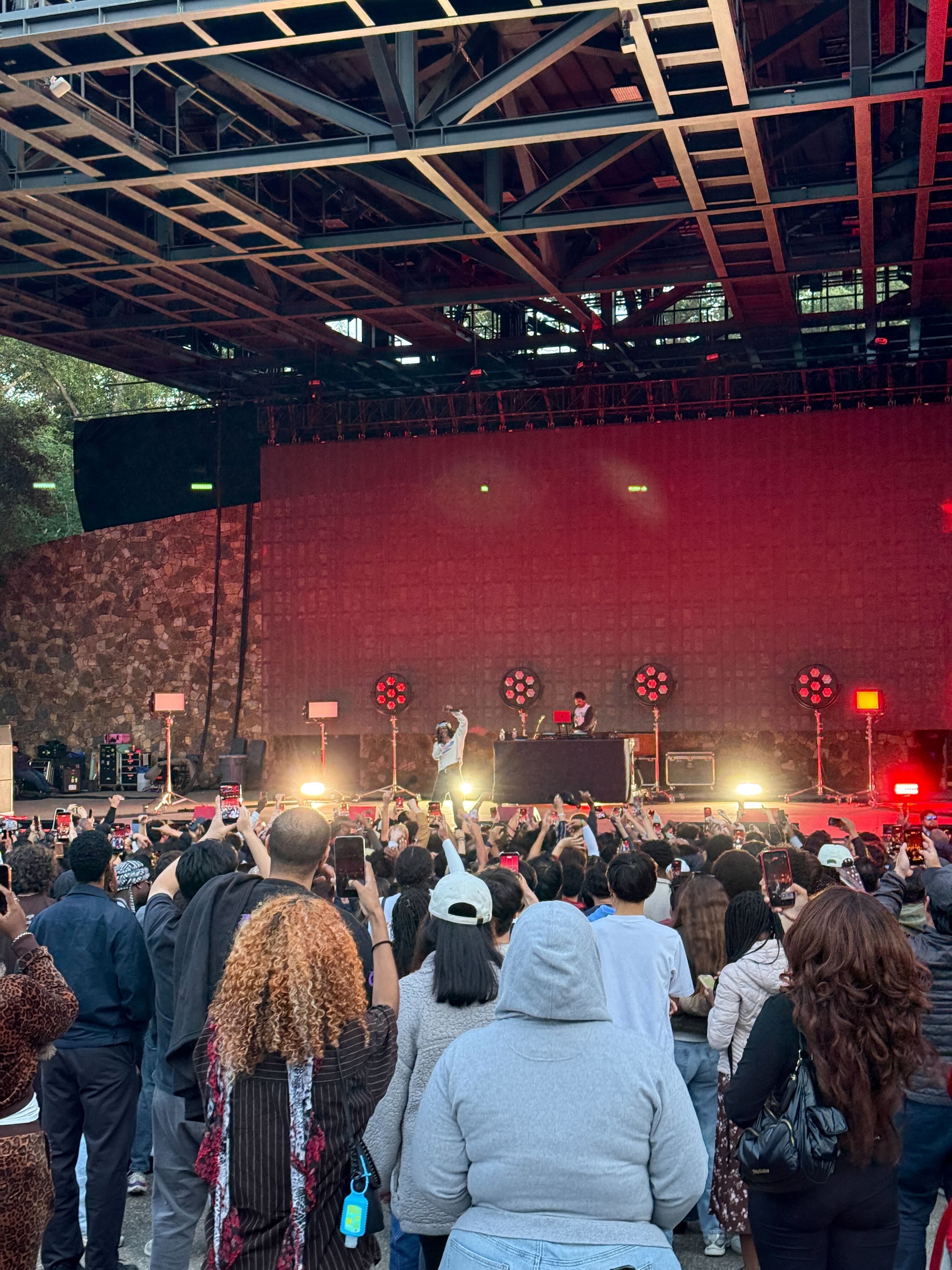
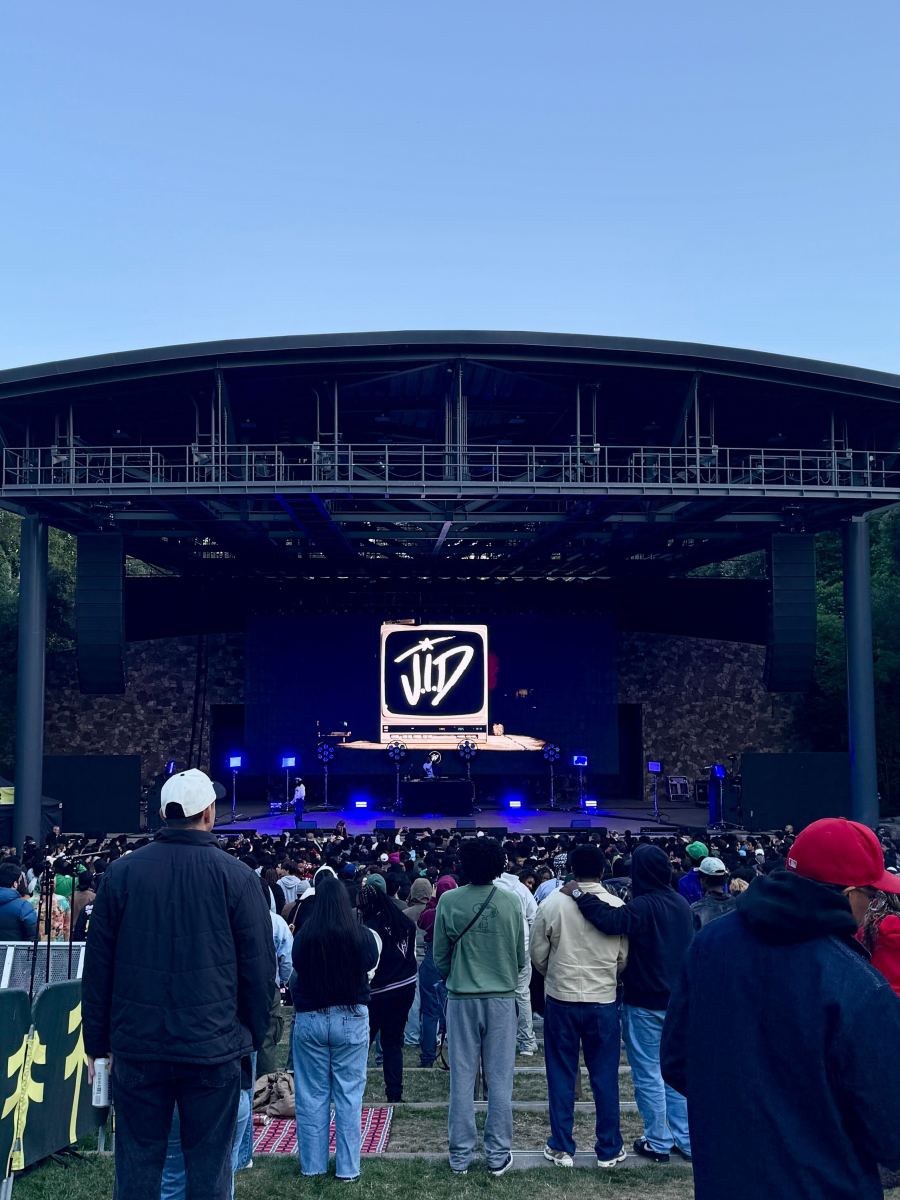
On Sunday, hundreds gathered in Frost Amphitheater for Blackfest, the largest annual Hip-Hop and R&B festival in the Bay Area. Upon entrance, attendees were greeted by displays of artwork by Black Creative Collective and the Black student body lining the entrance of the amphitheater. Inside, Atlanta rapper J.I.D. headlined the festival, joined by Samara Cyn, bringing together music fans of all ages over the course of the evening.
For many Stanford students, Blackfest represents community. “I’m originally from Houston, and Blackfest gave me a way to connect with the Black Bay Area community,” said Mayowa Adesina ’27, co-director of the Black Family Gathering Committee, which coordinates Blackfest. “It is so important that Blackfest can be a representation of Stanford to the broader Bay Area.”
For others, the festival was an opportunity for free, live music. “Live music is such a special opportunity and moment for people. But it’s not accessible anymore, which is super sad — people have to pay hundreds of dollars,” said Simone Jacot-Bell ’27, another co-director of the Black Family Gathering Committee. “It’s amazing to organize this event where people can go and see their favorite artists for free.”
A core goal of this year’s Black Family Gathering Committee was to not only have artists who the student body would like, but also artists who they feel represent Black art.
In previous years, “We have liked being able to incorporate women and female rappers, including Samara, into our lineups because that is a really big part of hip hop in general,” Adesina said.
Another goal of Black Family Gathering Committee this year was to increase the amount of collaboration with the Black community. Adesina was excited to bring Black Bay Area vendors to connect with students on campus: “All of these aspects are bringing the Bay Area to Stanford,” he said.
Before performances by artists Samara Cyn and J.I.D., the lineup featured a showcase of Stanford’s Divine Nine, the historically African-American sororities and fraternities, continuing the event’s mission of emphasizing student and cultural representation.
“There is a lot of collaboration between the Divine Nine orgs, but for our specific step shows, it is up to the individual chapters how they want to present themselves,” said Lula Jackson ‘27, who performed as a member of the Stanford Chapter of Alpha Kappa Alpha (AKA) sorority.
AKA’s theme this year was AKA-Airlines, where their step routine took the crowd on a historical journey through time through different spots, from AKA’s founding at Howard University to a layover in Berkeley, where AKA’s far western region was founded, and finished at Stanford, where the Xi Beta Chapter is.
Going into the festival, Jackson was excited to celebrate aspects of Black fraternities and sororities that she feels the larger Stanford student body is undereducated about. “At our core, we are service organizations and dedicated to the advancement of Black women through college-educated life. Step shows are an accessible way to share that.”
One important aspect of Blackfest is that it “drives people to want to learn more about our organisations,” said Ara Omitowoju ’26, president of the Delta Sigma Theta Sorority Omicron Chi Chapter. The Stanford Deltas have performed routines to tracks from prominent Black artists including Rihanna, Beyoncé and Kendrick Lamar.
“We are not just about stepping, even though that is an important part of Black culture in general,” Omitowoju said. “We are doing a lot of service work during these trying times. We have people on the front lines working to ensure rights for all people.”
This year, Blackfest also coincided with the Black Alumni Summit. “We wanted to do a good job for people who have crossed our sorority in years prior,” Omitowoju said.
Following the D9 Showcase, Samara Cyn performed her set, including hits like “Sinner” and “oooshxt!”
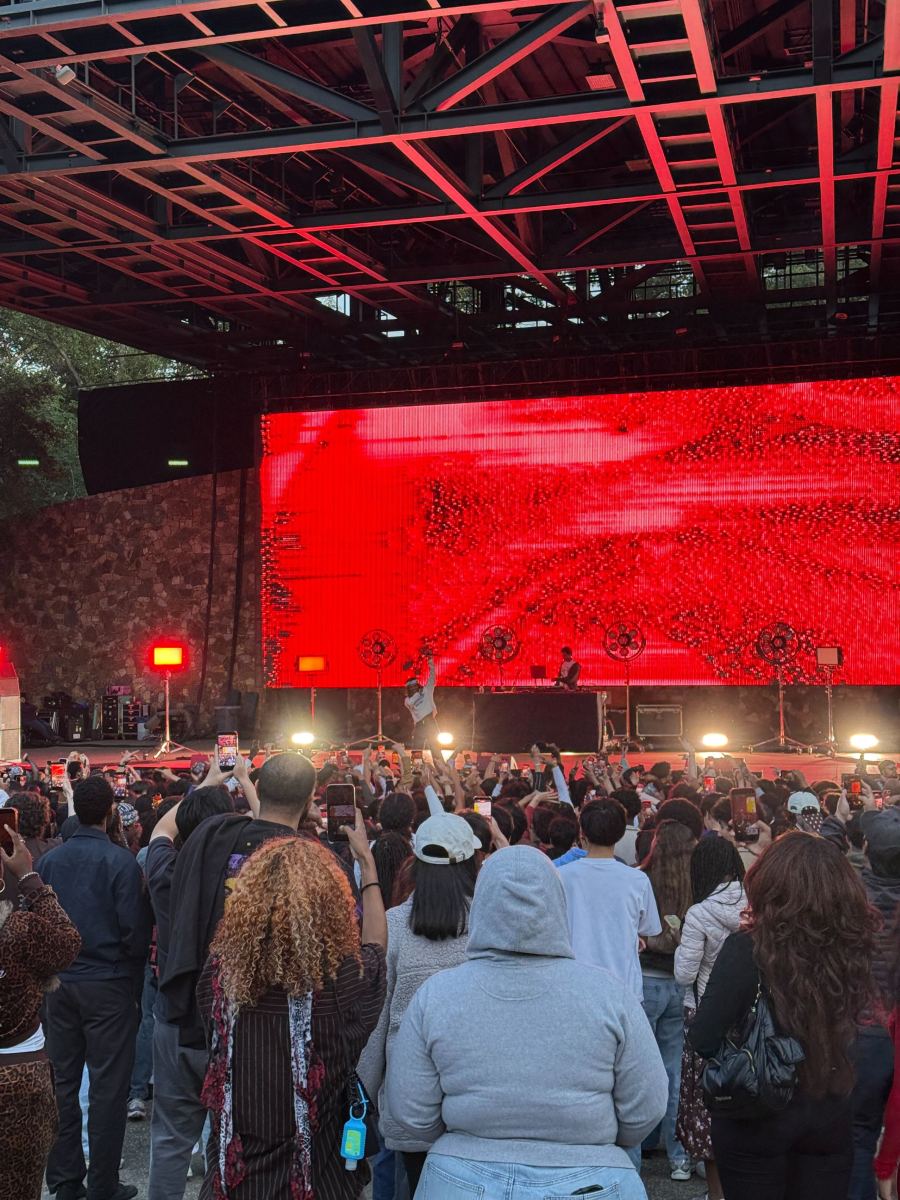
After Cyn’s performance, Atlanta rapper J.I.D. took the stage, accompanied by his collaborator, Christo. His set included earlier songs from his 2018 album “DiCaprio 2,” including “151 Rum.” It also showcased his musical range from “Surround Sound” to “Kody Blu 31” from his acclaimed project “The Forever Story.”
Looking forward, Jacot-Bell hopes that in the coming years, the university will continue to support the festival and have a “collective care for this kind of event,” she said. While she feels optimistic about Black Family Gathering’s ability to fundraise, “The elephant in the room is that… ASSU usually gives us 200k to put on Blackfest, and next year we are only receiving about 43k.”
Omitowoju said she hopes that Blackfest is able to continue in the capacity that it has: “One of the biggest things about Blackfest is that it is a free concert that invites people from all over the Bay Area. It sends the message that you do not need to spend money to be around people of similar cultures or to hear artists you love.”
“Most importantly, it is hopeful to see people come to Palo Alto, not a traditionally Black area, and show that community is everywhere that you go,” Omitowoju said.
Jackson also hopes that “black vendors, fashion designers and food vendors can continue to collaborate with Blackfest and expand Black expression.”
“Blackfest is not just about the musician,” Omitowoju said. “My hope is that, at future Blackfests, innovations that highlight black excellence in general can continue to be shared.”