
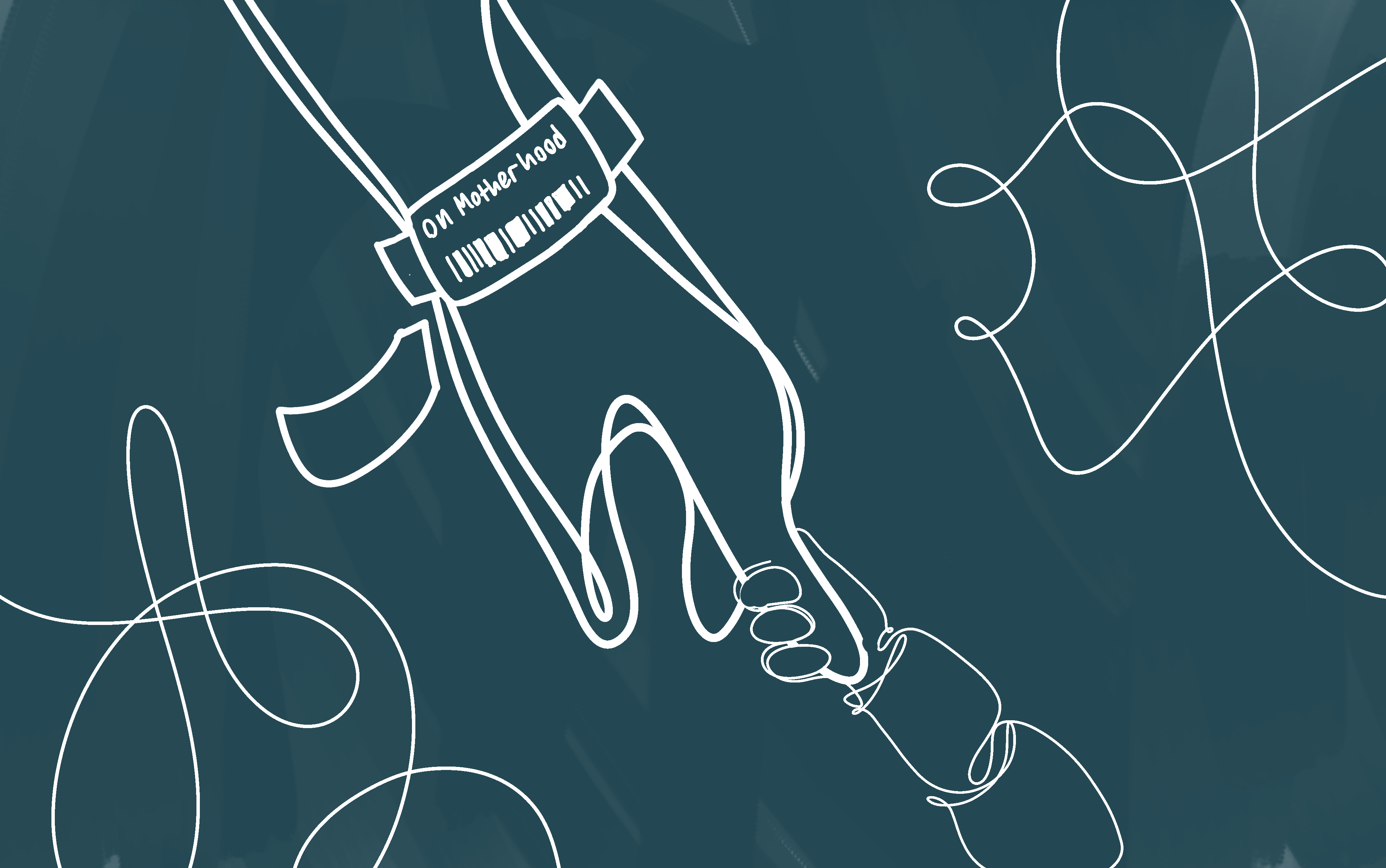
An orphan is a child who has lost both parents. A widow has lost her husband; a widower, his wife. But in English, there is no common word for a parent who has lost a child. Maybe because the mouth struggles to conceptualize it, let alone say it.
On Saturday night, as I waited for the clock to strike 9 p.m. so I could call my mother on the East Coast and wish her a happy Mother’s Day, I opened the news and watched the funeral for eight children killed last month in Shreveport, Louisiana, the deadliest mass shooting in our country in over two years. They were seven siblings and their cousin, ages three to 11. I thought about the mothers of those children: Shaneiqua Pugh, Christina Snow and Keosha Pugh — and the terrible poverty of our language: that we have no word for what they are now, or for what they became when they regained consciousness, injured and grieving, that their babies were no longer here. But the greater failure is not linguistic. It is political. After all, we know exactly what to call a country that allows patterns of gun violence to repeat again and again. We call it the United States.
So much of gun violence is domestic in both senses of the word: American and inside the home. The Shreveport children were murdered by their father, a man grappling with mental health issues who had previously pleaded guilty in 2019 to a felony weapons charge and served probation. A Stanford Medicine-led study found that most children who die in American mass shootings are killed not by strangers, but by family members; relatives account for 59.1 percent of pediatric mass-shooting deaths from 2009 through 2020. The danger, in other words, is often already known.
And yet, rather than addressing this domestic pattern of harm, Congress is now positioned to consider H.R. 38, the Constitutional Concealed Carry Reciprocity Act, a bill introduced by U.S. Rep. Tracey Mann (KS-R) and Richard Hudson (NC-R) that would extend concealed-carry privileges across state lines and further constrain states’ authority to regulate the public carrying of concealed, loaded firearms. Proponents call the bill reciprocity, arguing that a person allowed to carry concealed in one state should not lose their Second Amendment rights, or risk becoming a criminal, by crossing into another. But domestic violence, abuse, stalking, mental-health crises and prior weapons histories are not confined to one jurisdiction either. They travel with people. A survivor may leave one state for another precisely because laws, courts and geographical distance — or some combination of all three — might protect them.
Under H.R. 38, that margin of protection weakens. The House-reported version requires states with stronger regulatory frameworks to recognize concealed-carry permissions issued under potentially less restrictive regimes elsewhere. Doing so would preempt significant portions of state and local concealed-carry regulation, constrain the circumstances under which law enforcement may detain or arrest individuals for firearm-carry violations and create a private right of action allowing individuals to pursue litigation over alleged interference with federally recognized concealed-carry privileges.
Consider what that would mean here in California. California law generally requires a concealed-carry license, background review, training and live-fire qualification. Vermont, by contrast, does not issue concealed-carry permits; more broadly, 29 states allow some form of permitless carry, with some of these states issuing optional permits. Under H.R. 38, California could be forced to treat a qualifying Vermont carrier as authorized to carry concealed here, even though that person never had to meet California’s permitting or training standards, subject to the bill’s limits for private or government property.
True reciprocity implies comparable systems recognizing one another, such as transferable library cards and driver’s licenses. States license drivers, for instance, under broadly similar rules: age requirements, tests, visible licenses, revocation mechanisms. Concealed-carry laws, however, vary more significantly across states, most notably in whether a permit is required at all.
Gun-carry laws are local because public life is local. A concealed handgun means something different on a rural road than it does on a packed subway platform, a college campus, a hospital corridor or a school pickup line. States and cities write different rules because they face different risks: density, policing capacity, nightlife, transit, domestic-violence patterns, tourism, poverty and the daily choreography of how people move through public space. H.R. 38 would flatten all of that. It would treat concealed carry as though the country were one uniform place, rather than a collection of communities with various needs who have chosen their own safeguards, endangering a centuries-long democratic precedent of voting and electing trusted public local officials.
This concern does not only come from gun-control advocates. The Fraternal Order of Police and the International Association of Chiefs of Police have urged Congress to reject H.R. 38, warning that the bill would create serious problems for officer safety, liability, qualified immunity and state and local gun-safety enforcement. In a traffic stop, a disturbance call or a domestic incident, an officer who discovers a concealed gun may have to determine in real time whether the person is protected by another state’s laws, including a permitless-carry state where there may be no permit to verify.
One need not imagine an America without firearms to recognize an America overwhelmed by them, and therefore urgently in need of reform. What kind of society do we become when the prevalence of guns demands, again and again, the surrender of our humanity and grief?
When I was younger, my mother called me her Yi Miang — meaning my dear life in Fujianese. A child is not simply loved by a mother. A child is carried as a life beside her own, as her own, often before her own. To explain that feeling is not unlike trying to bridle a wild horse or hold back the tide. I know only that I have been held by it, when I was still too young to know she needed holding, too. I have been protected by it, in the way she scolds me first and cries after. I have been fed by it, at the expense of her lying to me that she isn’t hungry. I have been someone’s dear life, and because of that, I am forever lucky.
To Shaneiqua, Keosha and Christina: I cannot give you words or politics worthy of what you have lost. But I hope my words can stand, however small, as a witness: your children matter. Your motherhood matters. You matter. And this Mother’s Day, I was thinking of them. I was thinking of you.