
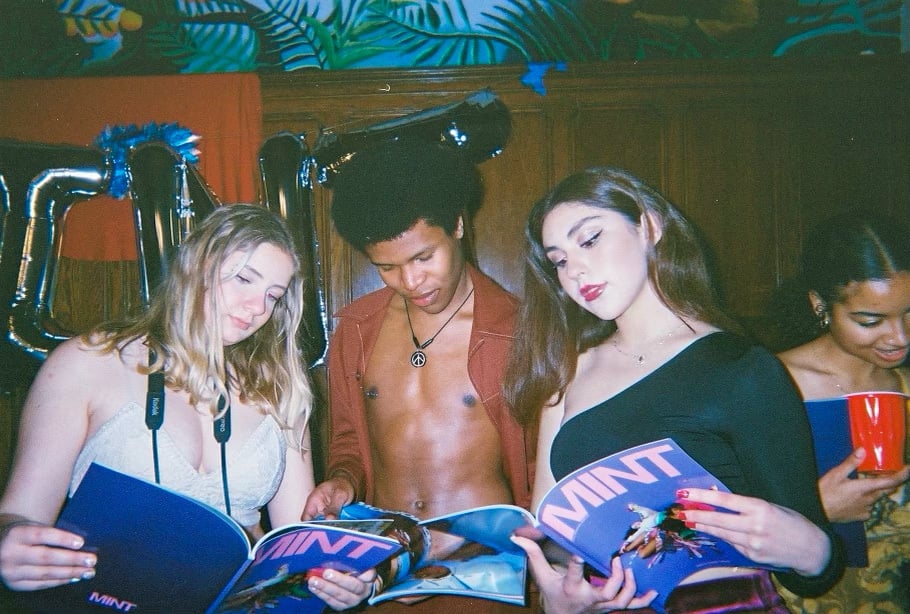
In the mid-2010s at Stanford, student style was “extremely casual [outwardly],” featuring “lots of fleece, sneakers [and] athletic wear,” Ashley Overbeek ’17 told The Daily. Nonetheless, to define Stanford fashion at the time as bland would have been a disservice, she said.
“If you looked a bit closer, there were all these very distinct aesthetic subcultures forming,” Overbeek said. “You had people pulling references from blogs, downtown New York, London club culture, Japanese fashion, normcore, skate culture, Céline minimalism [and] internet irony.”
Inspired by this concoction of culture hidden behind a mirage of simplicity, Overbeek founded MINT Magazine — Stanford’s student-run editorial, culture and arts magazine — in 2013. Through photoshoots, poems and anthropological essays alike, MINT issues have explored everything from fashion’s environmental impact to the ethics of modeling.
“One of the reasons I wanted to start MINT was because fashion is often dismissed as frivolous or superficial,” Overbeek said. “In reality, it’s an extraordinarily revealing lens through which to examine culture, identity, labor, economics, gender, technology, globalization, all of it.”
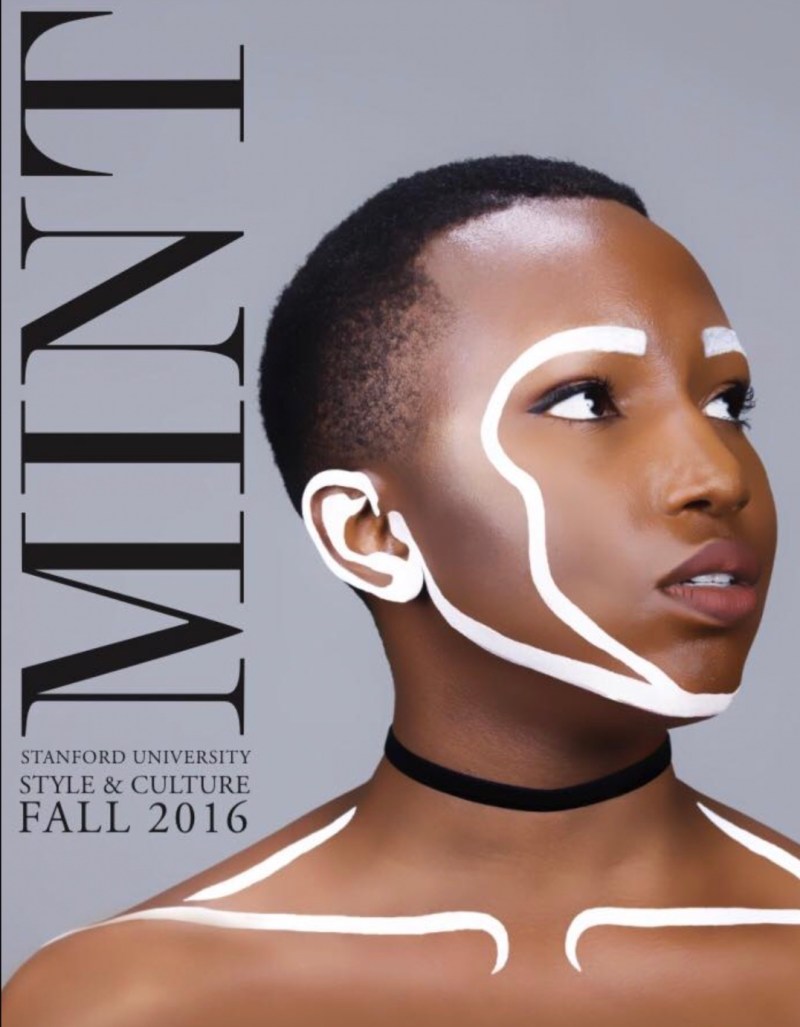
To view MINT as strictly a fashion magazine, however, underestimates the medium’s coverage, said Overbeek. The MINT Magazine team was “more interested in fashion as an entry point into broader conversations.”
13 years later, the magazine is now led by co-editors-in-chief Maxwell Campbell ’26 and Abigail Chee ’26, who reflected on how Stanford’s journey as a school has impacted the magazine’s own trajectory.
“Especially over time, Stanford has shifted into a more techie space,” Campbell said. “Being able to keep that artsy and creative side alive and also finding a middle ground between them has been really beautiful.”
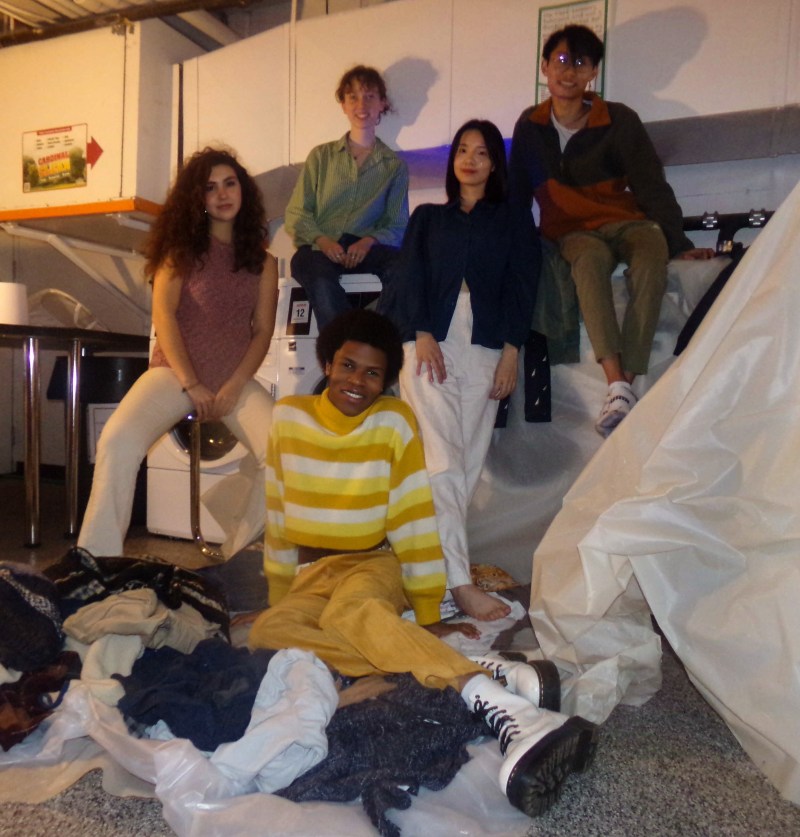
In their final undergraduate year, the duo had several ways they wanted to reform the magazine before leaving Stanford.
Campbell told The Daily they wanted to revive writing in MINT Magazine issues. Going through past issues of MINT, Campbell said, he and Chee discovered it was “a totally different magazine” — filled with opinion pieces and industry analysis, it was a stark difference from the photoshoot-centric magazine MINT had become. Thus, MINT’s fall 2025 issue put more weight on the written word: Half of the magazine was poetry pieces or short stories.
Beyond this, Campbell and Chee also hoped to make MINT a more united and open space. Achieving this involved lowering the bar to entry.
“I’ve heard many stories and seen many talented people be pushed aside or not be invited into [MINT] just because the application used to be really overbearing and threatening,” Campbell said. “When we came back from the fall, we still had an application, but it was purely so we could assign people to different teams. I think we need to welcome everyone into this creative space.”
All attendees of the first meeting of the year were welcomed into MINT, getting to explore their passion in roles ranging from styling and curating outfits to designing the physical magazine.
“One of my goals this year was making sure everyone in MINT was genuinely friends,” Chee wrote to The Daily. “The creative community here on campus is sometimes a little more elusive than I would prefer, but finding MINT back in freshman year and realizing that there was a place that existed where I could turn my hobbies into art was such a gift.”
Overbeek, Campbell and Chee all agree that exploring their love for fashion through the magazine has been foundational in shaping their future endeavors.
“MINT definitely shaped the way I think about building brands and communities: It taught me that people are rarely drawn to products alone,” Overbeek wrote. “They’re drawn to narratives, worlds, rituals, aesthetics, shared references. The emotional architecture around something matters just as much as the thing itself.”
Overbeek explained how these themes persist in what she’s building with Pearle, her plant-based caviar company.
“On the surface, [Pearle] seems completely different from publishing a student magazine, but actually the connective tissue is quite strong,” Overbeek wrote. “Pearle sits at this intersection of luxury, sustainability, food culture and design.”
Chee expressed a similar appreciation for the broad applicability of story-based connection. She is choosing a path more directly connected to her years involved with the magazine — a job in consumer and retail consulting in New York City. “[MINT] gave me a space to take my creative interests seriously and helped me understand how much I’m drawn [to] the visual language that fashion and art allow us to speak,” Chee said.
In contrast, Campbell revealed that they’d like to keep fashion as a passion, lest they lose the passion due to monetizing it.
“I am actually going to go into a more public service nonprofit sphere,” Campbell said. “I’m a very open person, but fashion is one of those private pleasures I have. I’m just going to let it be the thing I love to do, independent of everything else.”