
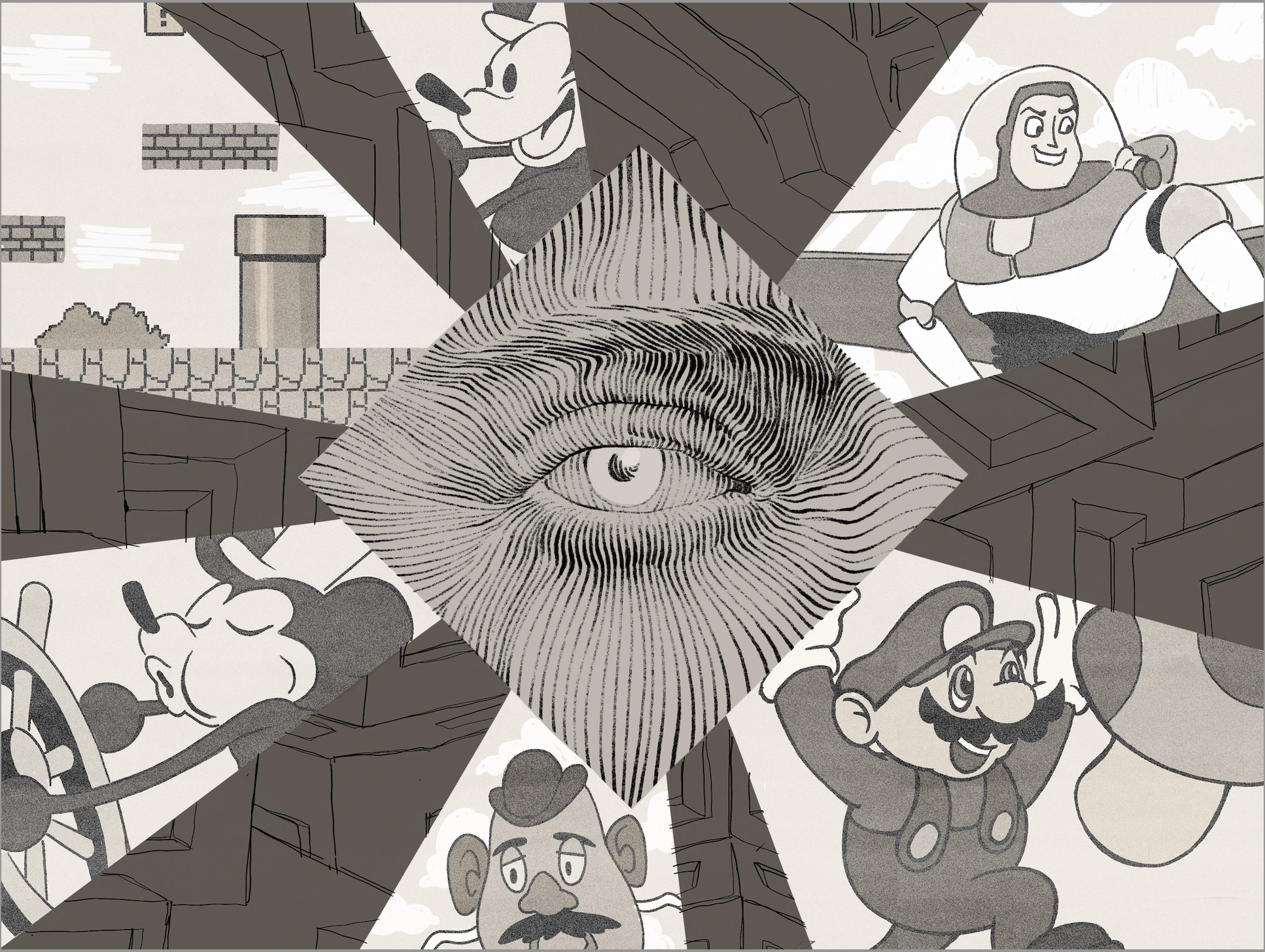
In her column, Iman Monnoo ’28 dissects the failures, successes and future direction of animated media.
Editor’s Note: This article is a review and includes subjective thoughts, opinions and critiques.
If you’ve been online recently, you might’ve come across the “2026 is the new 2016” trend. In fact, CNBC reported that searches for the 2016 aesthetic “spiked to all-time highs on Google” this year. There is a burgeoning demand for what is known as “retro nostalgia” — a yearning amongst the young adults of our generation for a simpler time before doom-scrolling, fears of AI takeover or rapid climate exploitation.
With this rise in nostalgia, we are also witnessing the rebirth of the movie theater in a post-pandemic society. According to the Los Angeles Times, movies like “Project Hail Mary” (2026) and “The Super Mario Galaxy Movie” (2026) have pushed year-to-date domestic box office revenue to 23% higher than 2025. After fears that streaming would bring about the death of cinema, we can almost hear the sighs of relief from theater owners viewing these numbers.
Amidst these waves of nostalgia and a revival of older theater habits, newer films seem to be calling for a return to tradition, too. Even Meryl Streep in “The Devil Wears Prada 2” (2026) asks what the future of fashion magazines holds in the age of technology, proclaiming there must be some commitment to “tradition” and to “beauty.” Films like this one appear to be becoming more self-referential, advocating for a return to a golden age of cinema, perhaps even back to what Hollywood was in its initial conception: the industry that “Cinema Paradiso” (1988) romanticized, with human artistry and beauty.
The birth of the film industry was predicated on pushing the boundaries of storytelling through technology. With the invention of the moving picture (and later, with synchronized sound), directors aimed to use these tools to create compelling narratives while never outsourcing the core of the story. Production meant a search for the best actors who could bring the character to life, the best scriptwriters who could craft a nuanced arc, the best director to compose the shots and so on. Yet, if such films themselves desire a return to this golden age, why are their production methods hinged on opposing values?
Take “The Brutalist” (2024) for example. The film follows a visionary architect and traumatized Holocaust survivor named László Tóth (Adrien Brody) who emigrates to the U.S. After meeting the wealthy, demanding patron Harrison Lee Van Buren (Guy Pearce), Tóth must fight to hold onto his artistic integrity in the face of a hyper-capitalist, industrial system. For Tóth, anything that bends to the whims of Buren’s profit and empty production is “ugly, cruel, stupid, but most importantly, ugly” (as he exclaims in the middle of the film).
However, the film’s production does away with its own messaging. Where Tóth pours his soul into creating work he’s proud of, no matter the cost, the actor Adrien Brody used voice-altering AI to make his Hungarian accent more authentic.
In a similar vein, the upcoming “Toy Story 5” (2026) appears to fall into the same paradox. We see our favorite toys, Woody (Tom Hanks) and Buzz Lightyear (Tim Allen), as they face off against the latest threat: an iPad-adjacent tablet called Lilypad. The trailer is targeted towards avid fans of the Toy Story series, even featuring a new version of the iconic song from the first film, “You’ve Got a Friend in Me.” Once again, both the film’s message and its marketing attempt to satiate the crowd’s hunger for a time when art was untouched by Big Tech — but its development is heavily reliant on AI-driven software for script analysis and even storyboarding.
On a campus like Stanford’s, hearing about the use of AI in media production is not new or even remotely shocking. Arguably, it’s exactly what we as students have been trained to strive towards in order to streamline production processes and increase profit margins. But still, I cannot help but wonder whether the creators of such films recognize their own hypocrisy.
While we do live in an age of technology and artifice, there may be something to be said about directors like Guillermo del Toro who insist on creating films like “Frankenstein” (2025) without any sort of generative AI. In an article with Variety, after being asked about using AI in his films, he responded plainly: “I’d rather die.”
At the very least, it’s interesting to recognize how the film industry is becoming increasingly self-referential, attempting to return to its own history and traditions by stepping through a veritable looking glass — and the results, so far, have been distorted. In this age of digitalization, these clashing desires for older aesthetics and newer technologies beg the question: will this new era of cinema ever live up to the old?