
Emilio Alexander Farrell ’26 rushed down a hallway the length of Stanford’s Anderson Collection, a modern art gallery that — for one Saturday evening — he and his team transformed to house the fashion show he’d been obsessing over for months.
“The sound’s not situated yet,” he said, a hint of panic in his voice. “And I need a stapler.”
“It’s already 6 p.m.!” a voice called out as Farrell quickened his pace toward the office-turned-dressing room off the hallway. “Huddle up, everyone,” he said, and directed the models and designers to move into positions for a final run-through. There was only time for an adjustment or two: the stapling of pieces of fabric, the mending of a green leather vest that Farrell designed.
The All Black Runway Show would have to begin, whether they were completely ready or not.
Farrell’s love for fashion traces back to high school, when he and a group of friends began shopping for second-hand clothing to emulate outfits from “Do the Right Thing” (1989), “Boyz n the Hood” (1991) and other favorite movies.
A design major and the show’s creative director, Farrell continued to develop his personal style during his time at Stanford. On a whim during freshman year, Farrell began to post videos on TikTok of outfits he’d put together. His follower count shot up, hitting 10,000 by the time he was a sophomore.
Now with over 57,000 followers on TikTok, Farrell has collaborated with brands like Converse and Adidas. His social media posts often feature unique, colorful pieces modeled in his dorm room or on an aesthetically graffitied street corner. Offline, he can be spotted on campus toting a fuzzy backpack adorned with patches and keychains, and he nearly always sports a statement piece — leopard-printed sneakers, a bedazzled beanie patterned with the Union Jack or a bright yellow puffer jacket.
Farrell began ruminating about a runway show highlighting Black creatives at the start of his senior year. It was only after he attended New York Fashion Week in February — an experience he described as “life-changing” — that he began seriously planning the event.
Three months before the May 23 show, Farrell presented the idea to the Institute for Diversity in the Arts (IDA). Born from late-1960s campus activism, the IDA aims to support creativity “across disciplines, experiences and cultures.” As a fellow in the institute, Farrell received $5,000 to execute a creative project of his choice.
Soon after the IDA approved the show, Farrell enlisted peers in the Black Creative Collective — Milo Golding ’26, Tife Awoleye ’26, Solange Sylvain ’26 and Jason Thompson ’26 — to help him plan the event.
To turn the All Black Runway Show into reality, Farrell and his team quickly got to work making promotional videos, fliers and social media posts, meeting weekly to plan logistics and collaborating with technicians, artists and Anderson Collection staff.
Farrell met with Kenji Swanson ’26, an associate director at Strike-Slip gallery in San Francisco, in early May to plan the art that would be displayed at the show.
When Swanson pulled up the website of André Renay, a San Francisco-based artist, Farrell grinned. “This is so cool,” Farrell said of Renay’s abstract work. “It’s very clearly Black-centered.”
Renay and Dominique Silva, another artist whose work is displayed in Swanson’s gallery, gave permission for their paintings to be used for the show — but on the condition that the event’s organizers “took care of them with their lives,” Farrell recounted.
Farrell parsed through art with a critical eye, favoring portraits of Black individuals and paintings that draw on Afro-Caribbean motifs and color palettes.
To present the art, the duo decided that a meeting room in the Anderson Collection would serve as a makeshift gallery space — facilitated by the removal of a conference table and rolling chairs and the addition of easels.
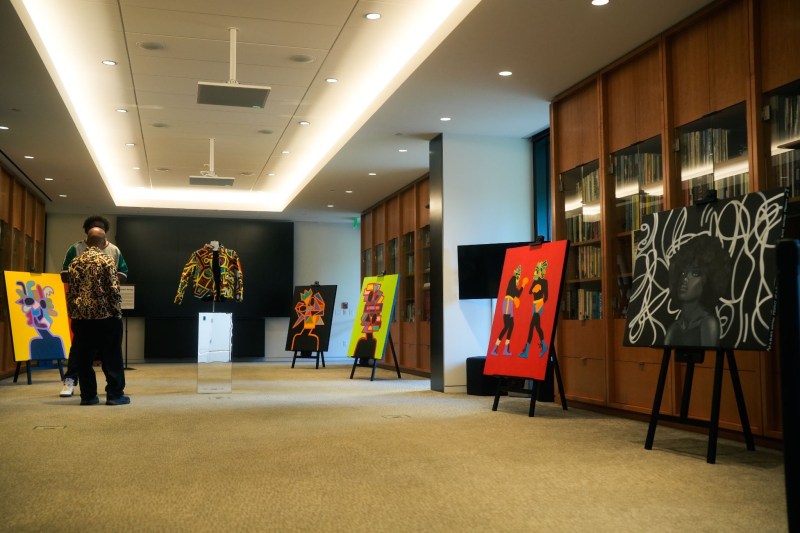
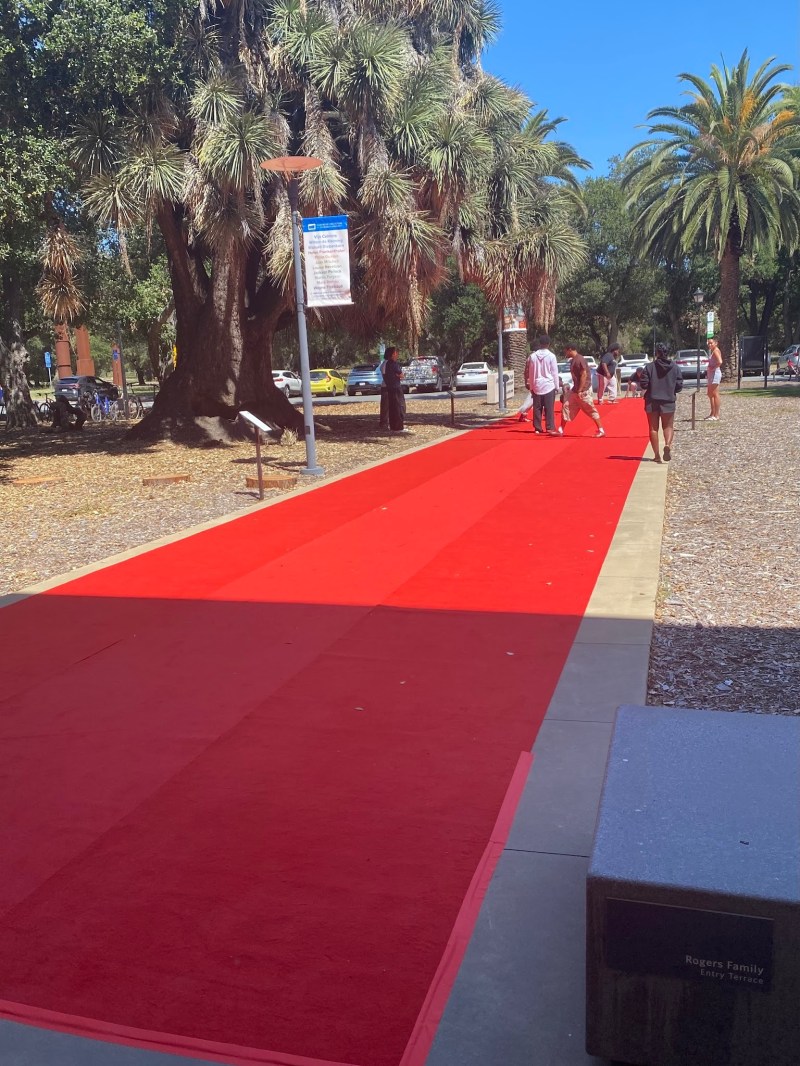
On the afternoon of May 23, less than five hours before the first models would strut down Farrell’s makeshift runway, the art gallery took shape inside the Anderson Collection.
Members of the team unboxed five-foot-tall build-it-yourself easels. A jacket painted in colorful geometric patterns sat in the middle of the space, flanked by Renay and Silva’s paintings. Jaeden Clark ’26’s sculpture of a hair pick, its handle replaced by a Black power fist, took up a corner of the room.
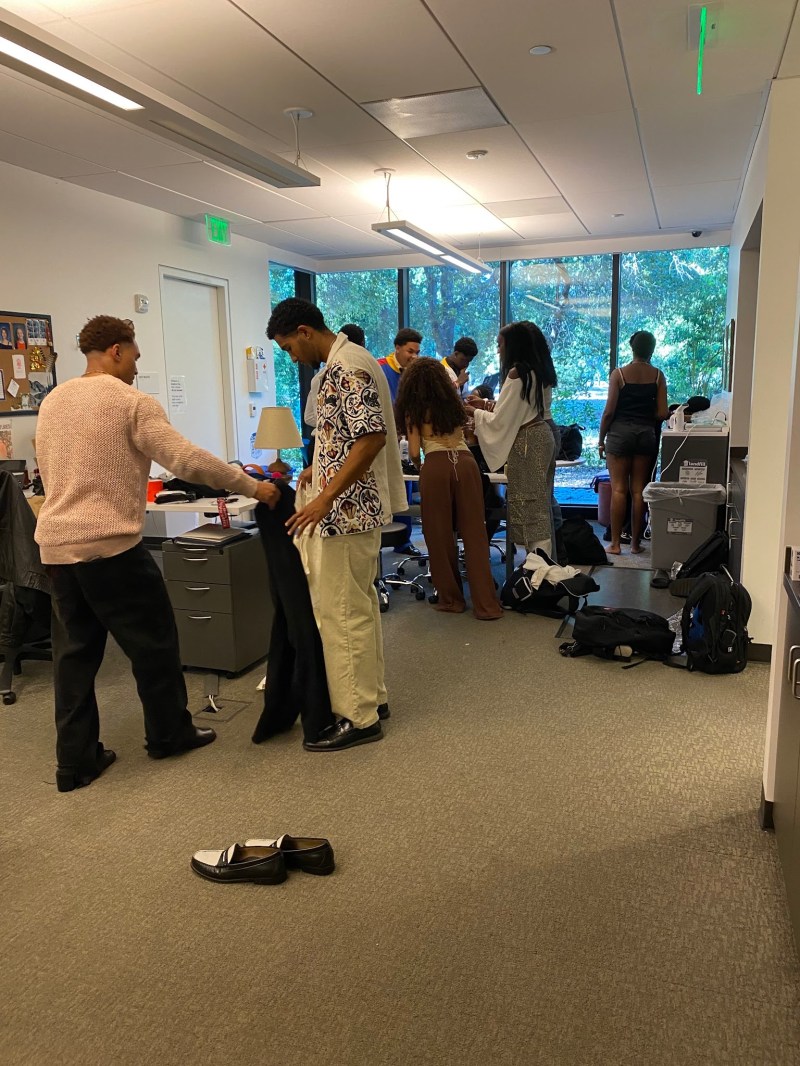
A moment of silence fell over the Anderson before the models arrived, accompanied by the sound of heels clip-clopping on the ground and idle chatter — “Oh, I love your top!” one said to another. The overlapping conversations from the models’ makeshift dressing room grew louder as 5 p.m. drew nearer, the floral smell of perfume wafting through the air as they got ready.
Two models already dressed in their runway outfits practiced their walk, swaying their hips comically before executing a few dramatic poses in the hallway. Farrell caught a glimpse of their outfits as he exited the gallery space. “This is what I’m talking about!” he said, smiling excitedly as Golding looked on.
Farrell and Golding had met the Monday before the event, huddled over laptop screens in Old Union until 4 a.m. The two created a playlist for the show, ordered fruit and cheese platters to set out at the beginning of the event and confirmed the runway setup.
Around the same time, Farrell was troubleshooting. Two of the designers had pulled out of the show, bringing the total count down from eight to six. Farrell decided to fill in as the seventh, joining the remaining designers — Josie Amoo ’25 M.S. ’26, Sarah Oyegoke ’27, Asukulu Songolo ’25, Rebecca Spence ’28, Grace Thompson ’26 and Josiah West — to design a piece of his own and style two models.
Then, the weekend before the show, Farrell got a call. On the other end was a technician who told him that lighting for the event would cost over $4,000 — an unexpectedly large price tag. He spent the next 45 minutes on the phone: “Look, man, I’m a student,” he said. “I’m putting this together, and we have a limited budget … is there any way for us to cut this to 3k?”
Some negotiations later, Farrell was set — with 20 lights rather than 32, but enough to illuminate the runway and stage a photoshoot of the models before they began walking.
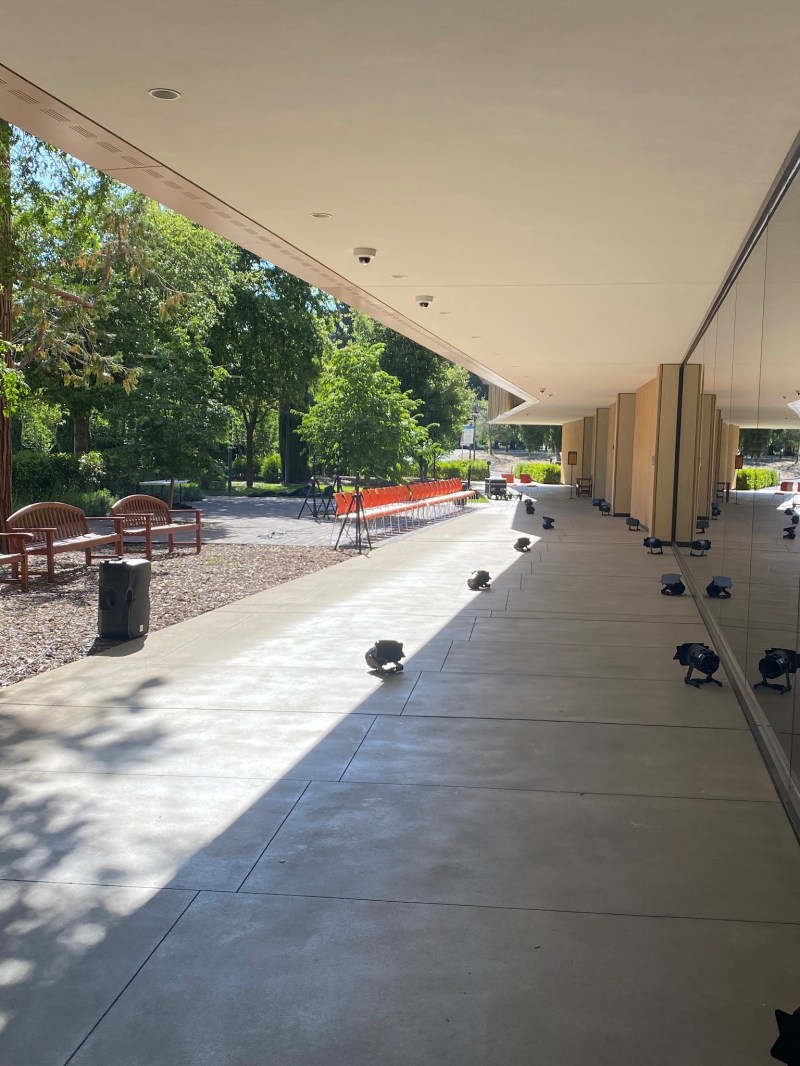
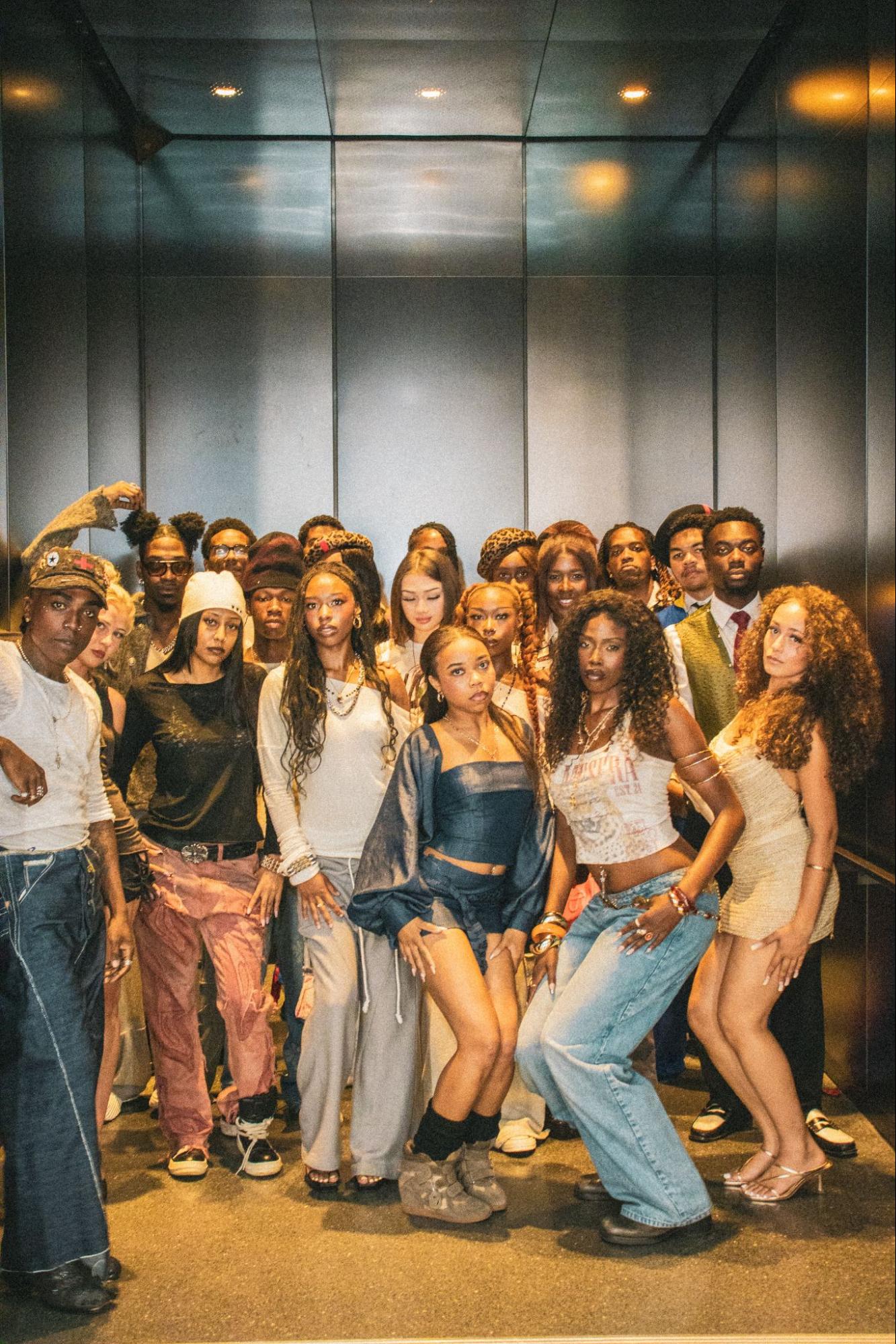
The lights worked. That much was made clear when they flickered on at 6:30 p.m. — 30 minutes before the gallery’s doors would open for attendees. Speakers jolted to life with the lights, and bouncy house music filled the space. Models dressed partly in runway designs and partly in sweatpants came down from the second floor two at a time, posing for practice photographs.
“We’re running really close on time now,” said Laniesha Brown, the Anderson Collection’s engagement and events coordinator, putting extra furniture into a storage closet as the last two models descended the elevator.
While the house playlist subsided and models scurried back into the dressing room, Farrell taped VIP signs to chairs lining the runway, volunteer staff slid behind the mocktail bar and upbeat music reverberated through the space, courtesy of DJ Dereje Tarrant ’29. Just as the team put the finishing touches on the venue, attendees began to stream in through the Anderson Collection’s double doors.
By 8 p.m., over 200 people mingled inside and outside the building. In the dressing room, designers put the finishing touches on their looks, models perfected their makeup and dancer Denise Robinson ’27 warmed up for her performance, stretching her feet and ankles and practicing moves with eyes closed.
The gallery space, food and drink, sound and lighting had all come together — all that remained was for the runway show to go smoothly.
Chatter among the models subsided outside the second-floor elevator, Farrell looking on as they lined up to walk. Downstairs, Robinson opened the show, gliding down the runway to a thumping bass rhythm in a routine of sweeping kicks and abrupt movements.
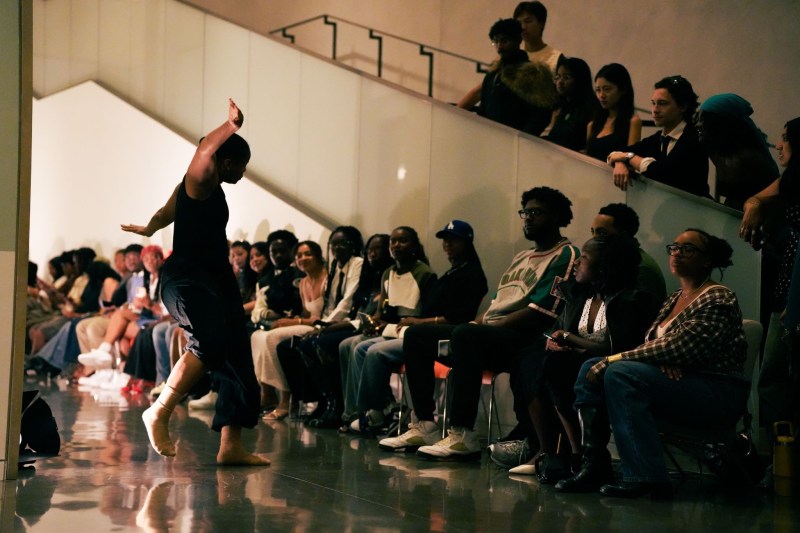
After 10 minutes, Robinson slipped back through the dressing room door, and Golding walked down the runway in a suit and red tie. He used a remote to turn the lights from yellow to white, waving at onlookers as he went. As he approached the end of the runway, he alerted Farrell: all clear.
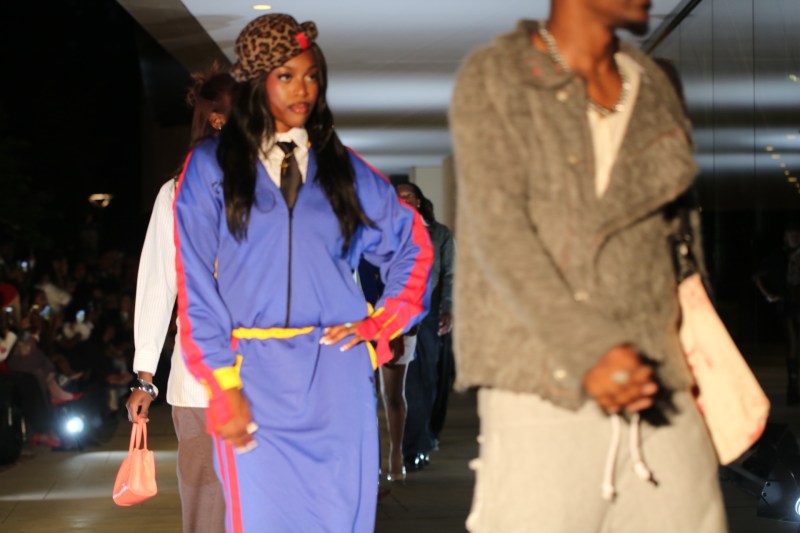
When the first models stepped onto the runway, the audience exploded with cheers — an energy that didn’t subside for the nearly 30-minute-long walk. Audience members shouted the names of the models as they walked by, moving to the music as blue track suits, pants layered with textured fabric and complexly laced black corsets strutted down the path.
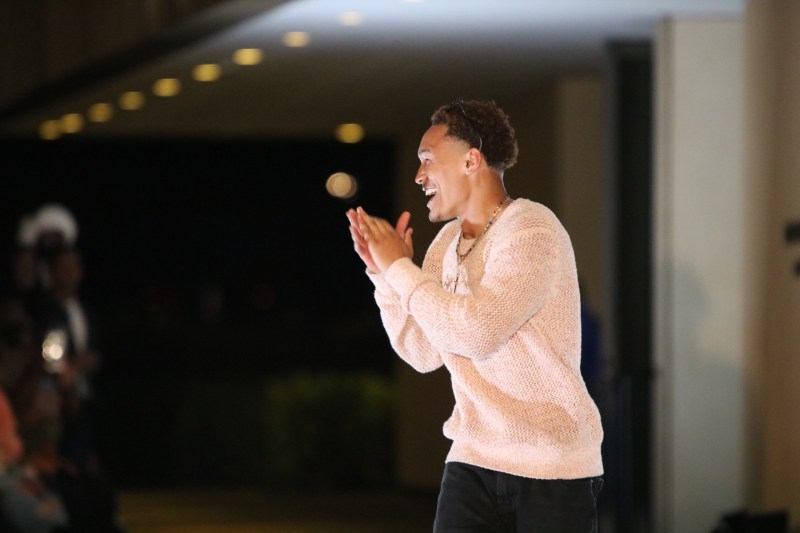
As Farrell walked down the runway at the end of the show, occasionally stopping to dance to the music that still played in the background, he grinned from ear to ear.
Hands clasped in front of his chest, he took in the faces that lined the path. “Thank you all,” he said. “I appreciate you all so much.”