
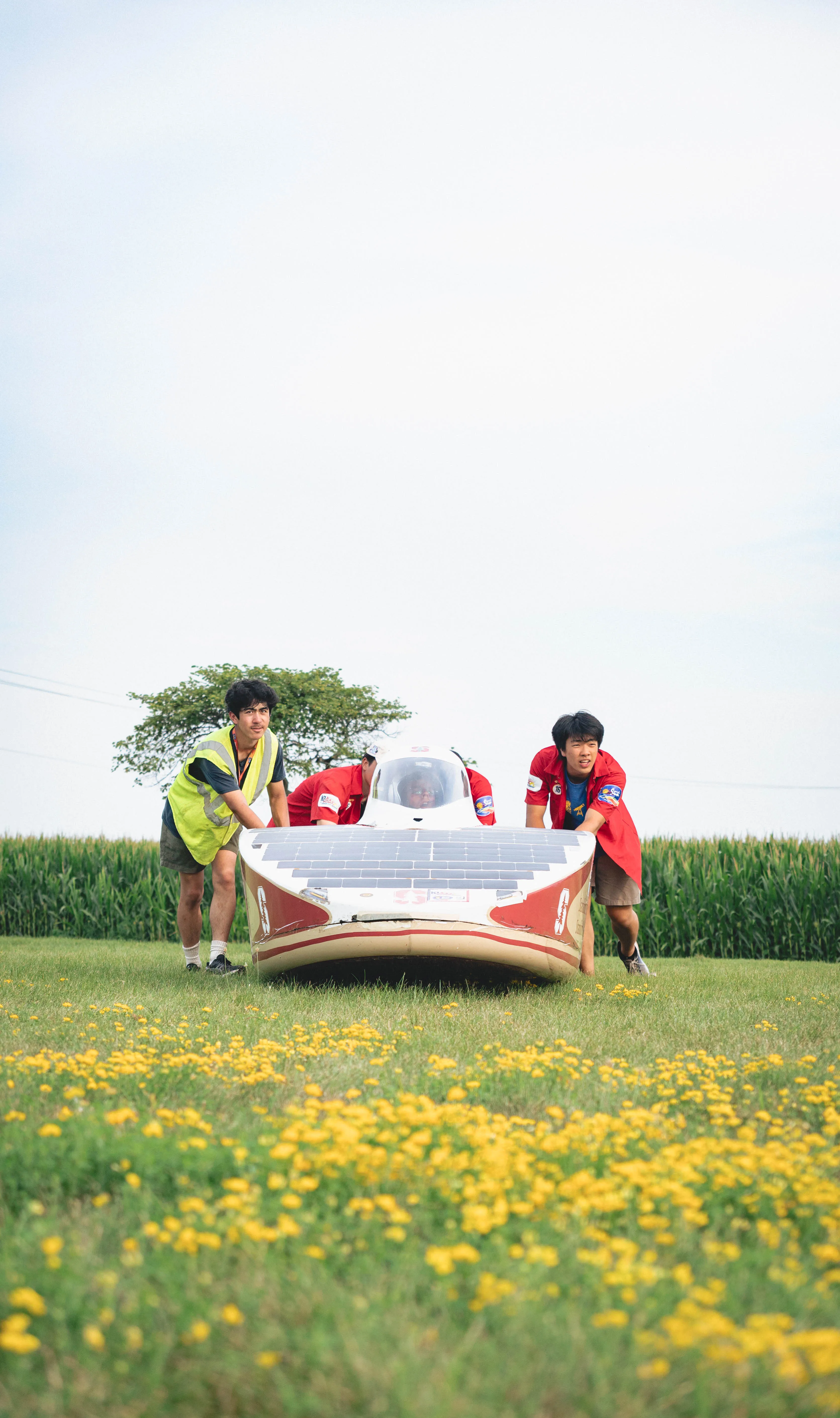
A group of Stanford students drove across eight states this summer, on a trip fueled not by gas or electricity but sunlight.
They did so as part of the 2026 American Solar Challenge, a biennial competition for college teams that design, build and race solar-powered cars. The group, named the Stanford Solar Car Project, placed fifth overall and second among teams from American colleges.
“It was amazing. It’s kind of hard to know what you’re building this all for until you actually go and race it,” said Joshua Koch ’27, a member of the Stanford Solar Car Project.
According to team vice president Panagiotis Papanastasiou ’27, the event marked a “major milestone” for the team: its first completed road race since 2017. During its last road race, in 2019, the team’s car battery caught fire — an experience that informed its next vehicle design.
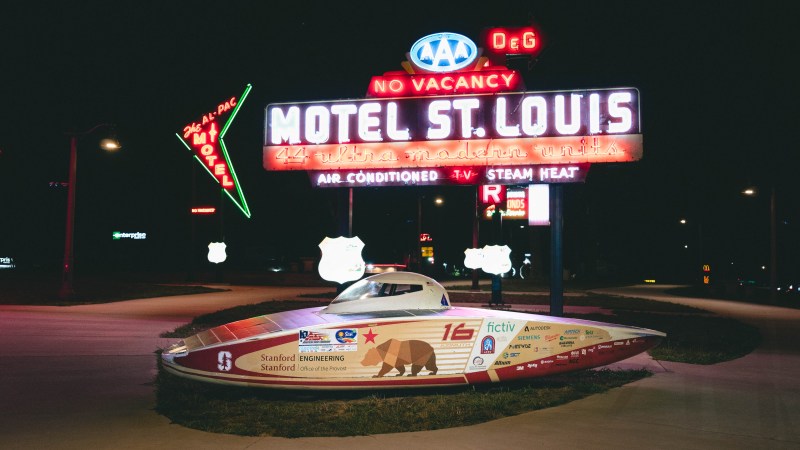
Founded in 1986, the Stanford Solar Car Project is a student-run, nonprofit organization that builds a new vehicle roughly every two years.
The organization was among more than 40 teams from the U.S., Canada, Belgium and the Netherlands that registered to compete in this year’s American Solar Challenge. Of these, only 16 qualified for the race and just seven completed the route.
The Stanford Solar Car Project left the starting line at the University of Minnesota in Minneapolis on July 25 and crossed the finish line in Amarillo, Texas eight days — and almost 1,500 miles — later, on Aug. 1.
Its solar car, named Azimuth for an angle that points toward a fixed spot on the horizon, traveled at an average of 30 miles per hour due to cloudy weather but reached a high speed of 63 miles per hour during the final stretch.
Team president Akhil Marri ’28 explained that building a solar car “pushes the limits of engineering” because the solar panels on the roof, called the array, generate only 750 watts — roughly as much power used by a toaster. As a result, the vehicle must be as energy efficient, lightweight and aerodynamic as possible.
For Marri, the team’s fifth place finish came as a surprise. Because only three of 19 members had participated in a road race before, he said, their goal was to simply gain competition experience.
“I expected way more things to go wrong and expected us to do significantly worse, but we found our groove and ran a really good race with the car that we had,” Marri said. “I was very happy with where we placed with [our] circumstances.”
Papanastasiou said he was impressed by the work ethic of the team.
“I was very happy to see a lot of young members really get motivated and dedicated, and understand what it is that solar racing actually is,” he said.
The team also had a smaller array than its competitors. The array limit for the challenge increased from four to six square meters after Azimuth was built, allowing some teams to generate 50% more solar energy than Stanford’s. Still, the Stanford Solar Car Project completed the race and placed first among vehicles with its size array.
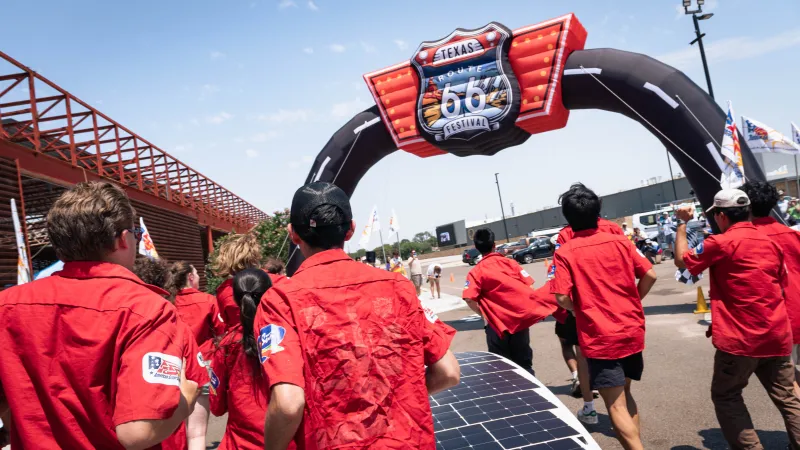
Before the team could begin the road race, however, it had to complete two other events. First: scrutineering, a technical inspection to ensure vehicles meet competition regulations. Second: a three-day track competition, in which teams must meet mileage requirements to advance to the main event. The Stanford Solar Car Project completed both, unlike 2024, when it failed to qualify for the road race.
“Just getting to the starting line of the American Solar Challenge is already a big feat,” Koch said.
Each day during the road race, students charged the car in the morning, drove for eight hours and charged again in the evening. At night, they camped wherever possible, including a golf course, church parking lot and horse auction site.
The team faced varied terrain and real-world driving conditions. Students collected data on factors including weather patterns, rolling resistance on tires and road elevations to determine how the car would operate under different conditions.
Marri said it was “pretty much smooth sailing the entire race,” with one exception: the weather. Grey skies meant Azimuth traveled slowly, and the team had to pull over for a quick fix when it rained. When building a solar-powered car, the team president said, water is sometimes “an afterthought.”
For Marri, the Stanford Solar Car Project is about more than building a car; though; it’s about building a community.
“I… like the student team vibe — really scrappy, spending long hours doing something, and you’re just sort of friends with everybody who’s there,” he said. “You’re making mistakes and failing together, and then once you have something that works and you take it to a race, you get a lot of serotonin. It’s just an overall great experience.”
The team will retire Azimuth and build a new vehicle to debut at the 2027 World Solar Challenge in Australia. It will also compete at the next American Solar Challenge in 2028. Despite their success this year, the team members said they’re aiming even higher for the future.
“The goal is to go back in two years to the American Solar Challenge and win,” Marri said.