
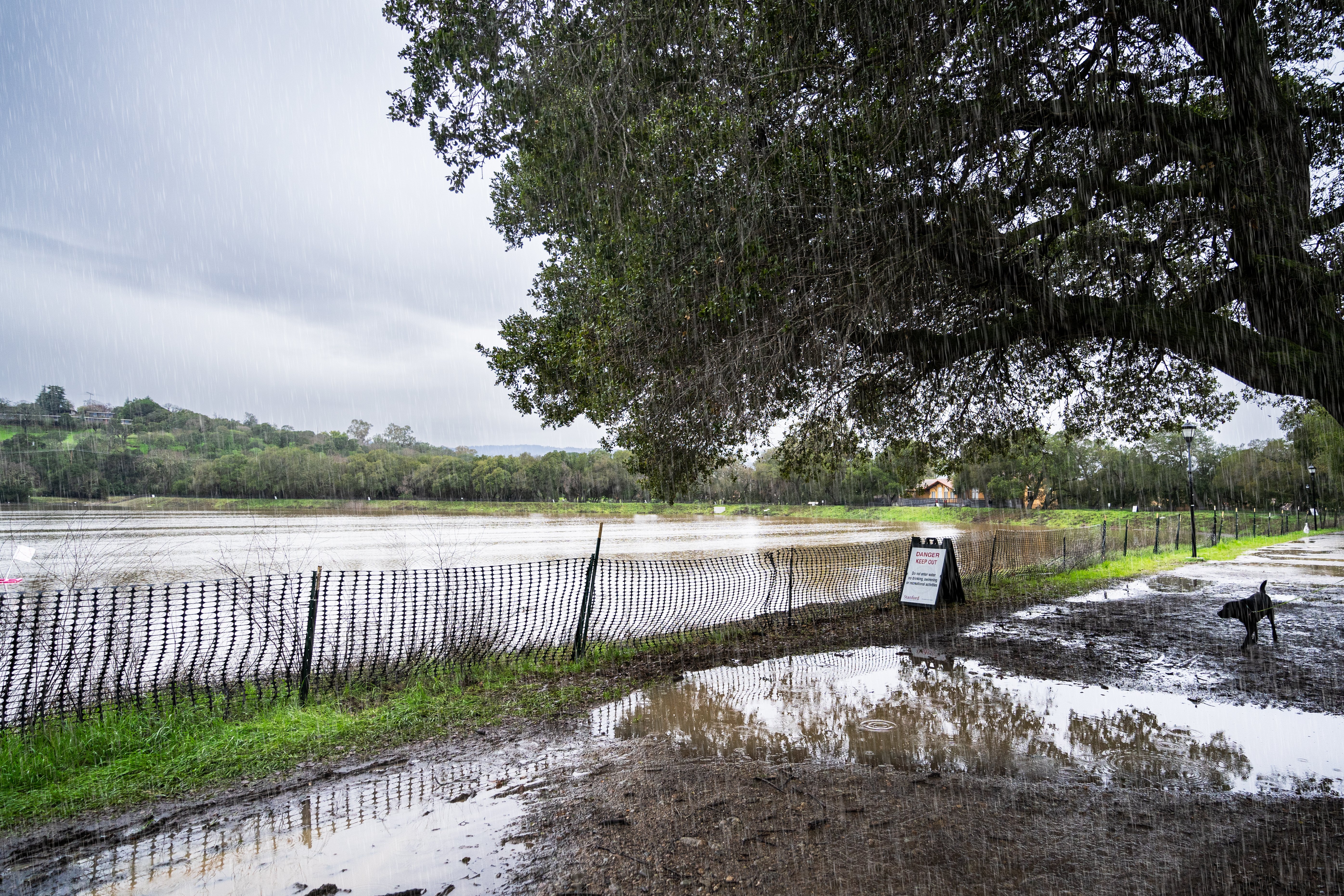
California Governor Gavin Newsom declared a state of emergency on Monday to prepare the state ahead of El Niño storm conditions, which are expected to be of historic severity. El Niño will likely bring heavy rain and localized flooding to Stanford’s campus and other parts of the Bay Area this fall.
El Niño is a natural climate cycle in which surface water temperatures in the central and eastern tropical Pacific Ocean warm. That process will bring higher-than-usual precipitation to California, causing a more intense winter with the potential for strong storms and coastal flooding.
In recent years, abnormal atmospheric rivers
An El Niño year increases the likelihood, strength and frequency of atmospheric rivers along the West Coast. During the 2023-24 academic year — which marked a transition into a stronger-than-average El Niño — California saw 44 atmospheric rivers, heavily affecting Stanford.
Climate change is expected to escalate this year’s El Niño. El Niños today are 36% more intense than before the Industrial Era, according to a study published in Science this past August.
Scientists and government officials have highlighted a need for California to mobilize state resources to protect communities. Mobilization efforts will include staging supplies such as sandbags and pumps and directing the National Guard to support traffic control, road closures, snow removal and search and rescue efforts in response to weather conditions, according to a state press release.
Students can stay updated on real-time safety protocols through AlertSU, the University’s emergency information communication system.