
Stanford will develop the curriculum for Foundry School, a national program launched by the Trump administration on Sep. 3 to “rebuild American manufacturing,” according to a U.S. Department of State press release.
The administration has touted the school as a training program for entrepreneurs, engineers and technicians. Stanford is set to develop a “first-of-its-kind advanced manufacturing curriculum for American students” and host a ten-session core program beginning in January. The school is also a project of Pax Silica, the Department of State’s flagship effort on Artificial Intelligence (AI) and supply chain security.
The curriculum has two phases: seven regional sessions beginning in September will cover the fundamentals of modern factory design, materials and supply chains, assembly-line engineering and more. The remaining sessions at Stanford will cover advanced manufacturing capabilities, including precision tooling, industrial automation and quality systems.
“More builders. More makers. More entrepreneurs. More great American manufacturing,” wrote Joseph DeSimone, a chemical engineering professor at Stanford and the faculty lead for the project, in a LinkedIn post earlier this month. “Let’s build.”
In the post, DeSimone also thanked Stanford president Jonathan Levin for his “vision and energy behind this effort.”
The Daily has reached out to the University, the Department of State and DeSimone for comment.
Vice President J.D. Vance and Secretary Marco Rubio announced the launch of Foundry School at an event hosted by Under Secretary for Economic Affairs Jacob Helberg at the United States Institute of Peace, which the State Department recently renamed the “Donald J. Trump Institute of Peace,” adding the president’s face to the facade of the building.
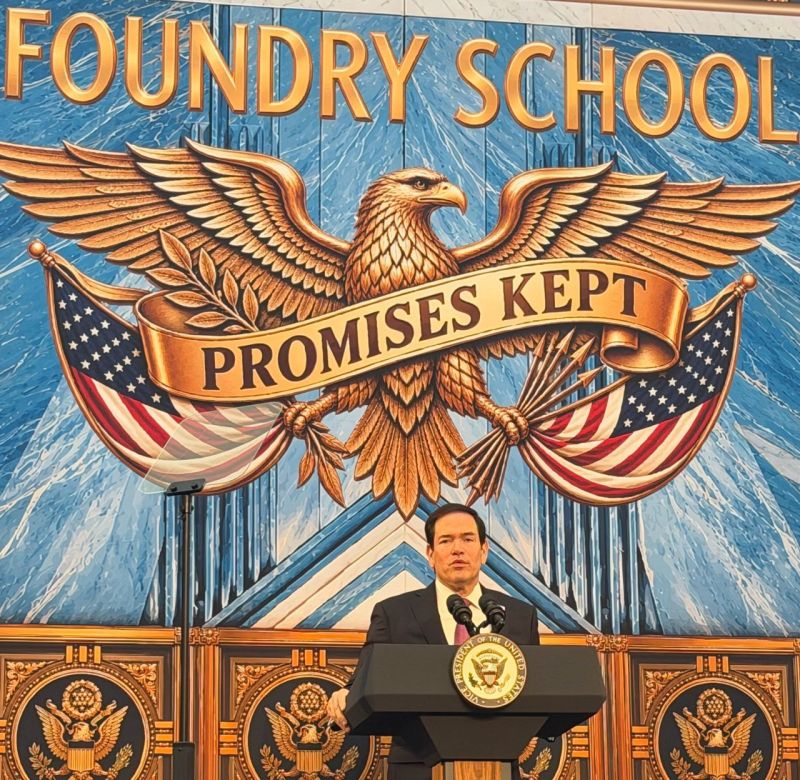
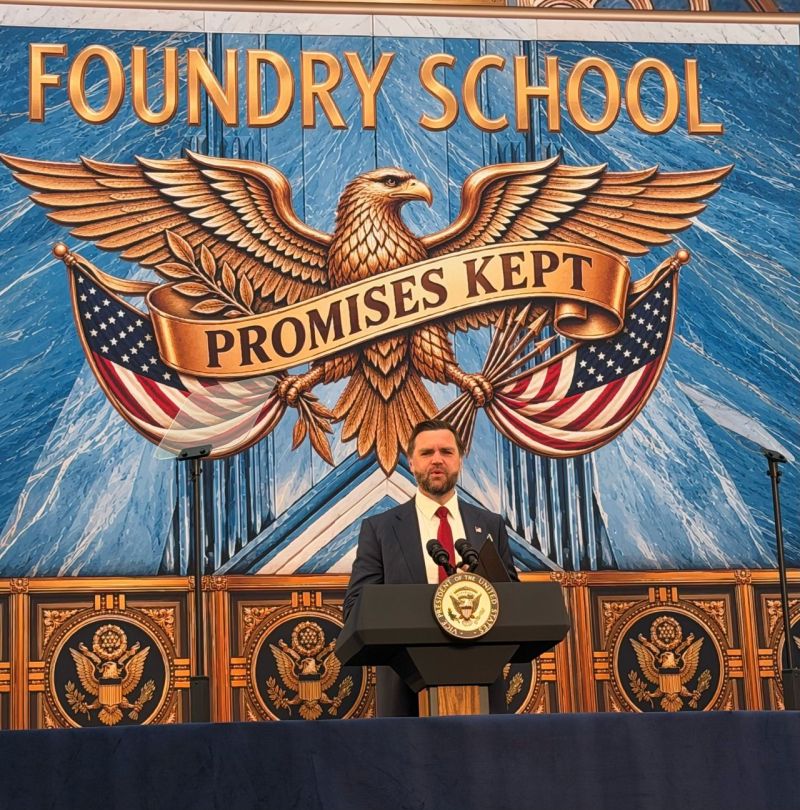
They were joined by presidents and senior leaders from Stanford and other universities working to develop the curriculum, as well as chief executives and company presidents from manufacturing and technology companies.
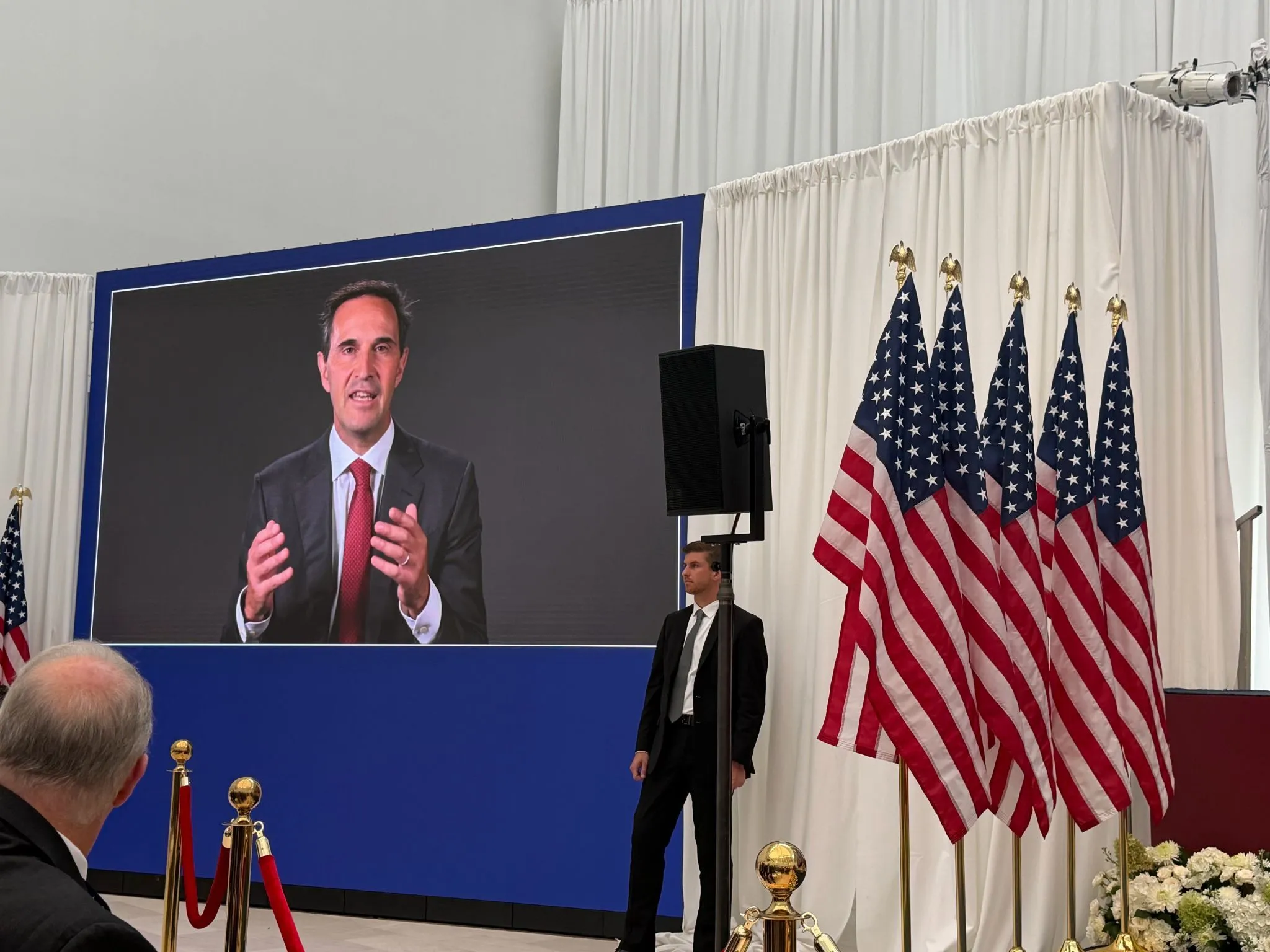
Levin appears on a projector screen in a photo of the launch posted to DeSimone’s LinkedIn.
At the launch, Rubio said Foundry School was important because the U.S. has become “dangerously dependent” on other countries.
“It is an opportunity to say to students, ‘if you come here and you go to school and you follow this curriculum, you will leave here, not just with a paper credential, but with the skills that make you immediately employable in a high paying job, in a good paying job with long term stability,’” he said.
Vance echoed Rubio at the launch, saying Foundry School was motivated by a belief that industrial security is national security, and that manufacturing was still needed in Western economies.
Through the school, he said, the Trump administration intends to proclaim that “we believe in making things again, and we’re gonna give you the tools and the education and the networking in order to do it.”
Stanford is collaborating with seven other universities on the school: Arizona State University, Georgia Institute of Technology, The Ohio State University, The Pennsylvania State University, the University of Kansas, Vanderbilt University and Washington University in St. Louis.
“I’m very proud that we have Ohio State front and center along with Stanford, Penn State and a few other great universities,” said Vance, an Ohio State alumnus. “I think it’s an amazing collection of people, of institutions, of businesses, of thought leaders and of entrepreneurs that we’ve gotten together in order to make this possible.”
Across the eight campuses, the program will run 17 sessions, or keystone lectures, taught by founders and Chief Executive Officers (CEOs) from advanced manufacturing enterprises.
Speakers will focus on running a manufacturing enterprise, and will be drawn from the United States and Pax Silica participants — countries who have signed the Pax Silica Declaration, a commitment to stabilize global supply chains for advanced technologies. Participating countries include the Republic of Korea, Japan, Taiwan and India.
Foundry School, the press release states, will focus on turning President Donald Trump’s “trillions of dollars in industrial investment” into jobs. 3.8 million manufacturing jobs will likely be needed by 2033, according to The Manufacturing Institute and Deloitte. The State Department wrote that Foundry School “exists to make sure Americans fill those jobs.”