
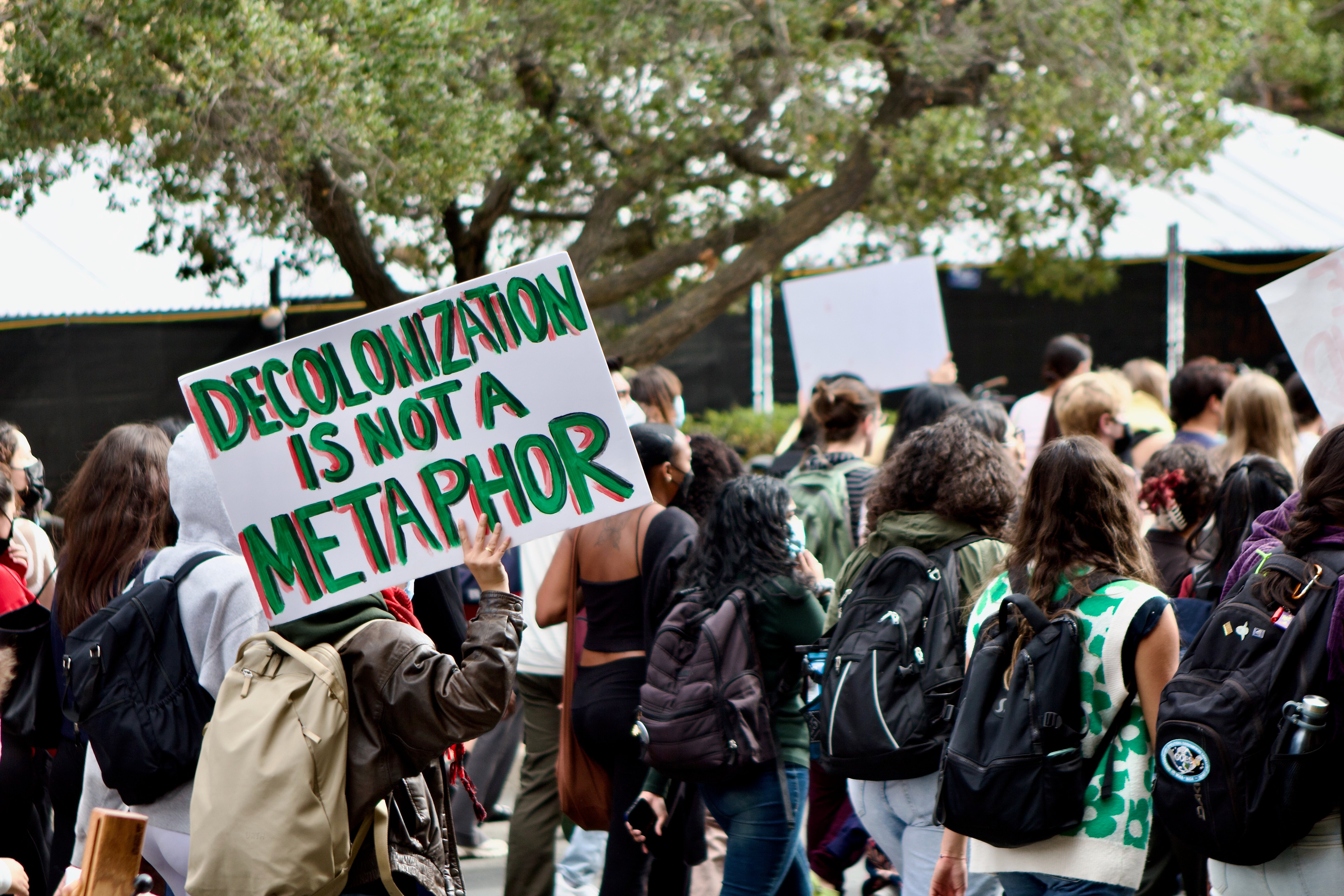
How is it possible that Stanford ranks 9th in “Political Tolerance” and 21st nationally in “Openness,” according to the Foundation for Individual Rights and Expression (FIRE)’s 2027 College Free Speech Rankings, but 207th among 261 surveyed schools in “Self-Censorship”?
If students are willing to hear others out, at least more so relative to other schools, then why are they not equally willing to voice their opinions?
Three explanations stand out. First, there may be misperceptions at play, as students are over-paranoid when in fact there are not likely to be serious social consequences. Second, FIRE’s “Self-Censorship” category is weighted more toward conversations in class, so it could be the case that Stanford students fear repercussions from authority figures more and from their peers less than students on other campuses. Third, even if costs to speech are generally low, there is still “tail risk,” and it is true that free speech has cost some students dearly in the past year, with The Daily’s lawsuit against the Trump administration, the arrests of the Stanford 11 and the violent assault of a pro-Palestinian heckler as examples. Moreover, despite many positive moves, Stanford has been deplorably hostile to pro-Palestinian voices in particular, as the ACLU and Amnesty have found.
While all these factors play a role, I want to take this opportunity to discuss a fourth explanation: that students do not value free discussion very much.
Advocates for campus speech focus their diagnoses disproportionately on the “cost” side, on how to ensure that free expression does not invite censorship, and not enough on the “benefit” side, on how to persuade students that it is worth braving the risk of stirring a little bit of controversy. Speech will never be fully costless — nor should it be — but we need to instill in ourselves the courage to speak regardless.
In order to choose to express a potentially unpopular opinion or willingly listen to someone who holds one, students must be convinced that discourse is conducive to truth, and that truth is valuable. To some extent, there is an intrinsic enjoyment from exchanging ideas, including developing a deeper understanding of your counterparty. But there is also inevitably discomfort — even if you believe, extremely optimistically, that your moral character will not be judged on the basis of this one disagreement. After all, it is uncomfortable to disagree even on smaller things, such as with your roommate about the arrangement of your room. I am convinced that a process-oriented motivation for free speech, celebrating debate for its own sake, cannot consistently overcome hesitancy, especially because a lot of people are just shy.
I recall my high school Christian fellowship leader saying, whether you are a Christian or not, it is unacceptable not to care whether Christianity is true. Because if it is, that should change the way you live your entire life; everything hinges on the truth, I learned from him, so you have to think hard about it and discuss it with others, including critics, because you do not want to give the wrong answer to the most consequential question you can ask yourself. Where a fanatic might have said religion is too important to question, he said faith is too important not to question.
Not every issue is quite as significant as the purpose of your life, but many still matter deeply. It matters whether a fetus is a life because, depending on what you conclude, we are either holding billions of women in bondage or committing mass murder. It matters whether the US needs to clamp down on border security because we do not want to stretch the resources of already overburdened communities or unfairly put millions of immigrants in brutal and dangerous positions. It matters whether the police force is a fundamentally racist institution because we cannot overstate the complicity of hardworking people who often do want the best for their communities or understate the extent of reform needed in a system which continues to commit abuse. These are not mere brain games for intellectuals.
So the truth is enormously valuable; it determines whether you did your best not to neglect tragedies. You want to take every opportunity you have to correct opinions you hold which might be mistaken by testing them in the public arena and help others get closer to the truth by sharing whatever insight and reasoning, even if imperfect, you may have.
Unfortunately, there seems to be skepticism about whether debate, as opposed to authoritative knowledge, helps us get closer to the truth, as evidenced by the fact that more normative topics such as affirmative action and transgender rights were rated as “difficult to have an open and honest conversation about” by more respondents than more empirically rooted topics such as climate change and gender inequality in FIRE’s Stanford survey.
At Stanford, what I see more commonly than passionate conviction combined with fear, although that certainly exists for some, is a vague uncertainty and apathy. It is not an overwhelming cost, but a reasonable-sized obstacle to expression with a lack of motivation to step over it, because why risk discomfort when there is nothing to gain, when I seek neither to persuade nor be persuaded? Why risk being responsibly provocative?
This is why I believe Stanford excels when it comes to a tolerance-based, live-and-let-live definition of free speech — sure, if others inexplicably desire controversy, if they are the “political” type, I won’t mind too much — but not when it comes to a deeper definition which sees free speech as a powerful tool to collectively apply reason in pursuit of the Big Truths.
Let’s keep in mind that campus free speech had its golden hour in spite of pressure from school administrations and even direct government repression during the Vietnam War. While the university could do more to make Stanford a free speech zone, ultimately it is up to students to decide that speech is worth it. We should not forget civility, but neither should we maintain the peace by avoiding conflict altogether, or only get as far as “acknowledging” rather than “challenging” each other’s opinions. Our ardent advocacy should be molded by humility and curiosity but not tempered by tentativeness and blandness. That radical transformation all begins when we stubbornly insist that we cannot afford not to question the most important things.