
Editor’s Note: This article is a review and includes subjective thoughts, opinions and critiques.
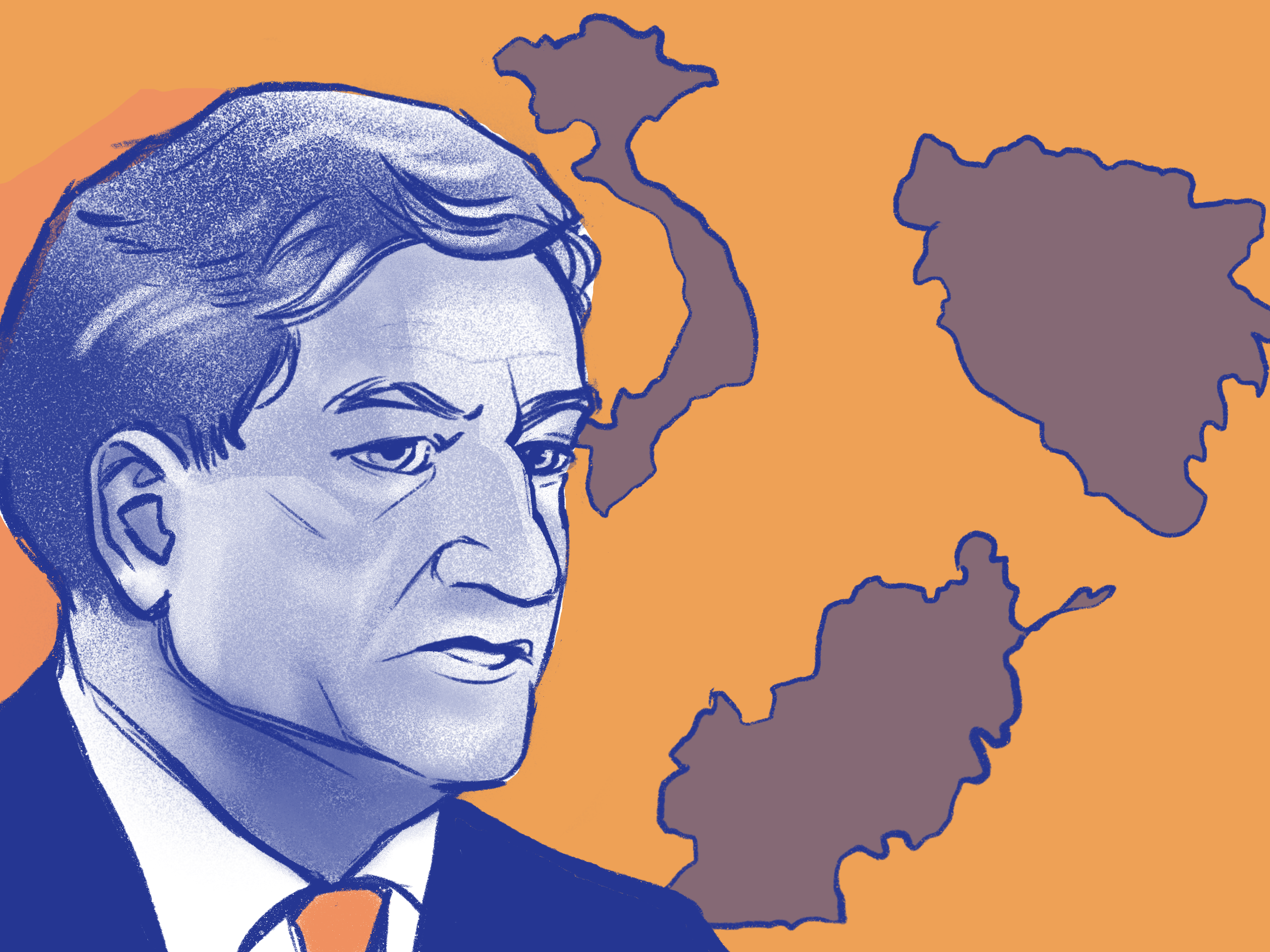
“The Odyssey” — the epic that inspired the movie of the summer — begins by famously calling Odysseus polytropos, an epithet which different translators have variously rendered as “a complicated man,” “a man of twist and turns” and “the wanderer.” The similarities between Odysseus and Richard Holbrooke, the subject of George Packer’s 2019 biography, “Our Man: Richard Holbrooke and the End of the American Century” end there. However, there’s hardly a better word than polytropos to describe a towering figure of American diplomacy. From the Vietnam War to the War in Afghanistan, Holbrooke served in five Democratic administrations until his death in 2010 inside of Secretary of State Hillary Clinton’s office.
As long as a Democrat was president, Holbrooke was in government, from his time as a young diplomat in Vietnam under the Kennedy and Johnson administrations, to his tenure as Assistant Secretary of State for Asia under Jimmy Carter, to what I consider his career peak under Bill Clinton, where he served as ambassador to Germany, Assistant Secretary of State for Europe and later US ambassador to the United Nations. His stint in the Clinton administration exposes the triumph and tragedy of Holbrooke’s career — ending the brutal, genocidal war in Bosnia following the breakup of Yugoslavia, not being selected as Clinton’s second secretary of state and losing his friendship with National Security Advisor Tony Lake. Obama’s advisors recommended Holbrooke have a role in his administration; he was ultimately given the new title of “Special Representative for Afghanistan and Pakistan.” At the time of his death, his diplomatic efforts had stalled and he made more and more enemies in the White House.
Despite being a history major, I’ve never been big on biographies for pleasure reading; I’m a little ashamed to admit I’ve never even cracked open Robert Caro nor Ron Chernow. I encountered Packer’s book just this July in the Council of Foreign Relations’ recommended summer reads — it popped out as the only biography but, more importantly, as a work about someone I’d never heard of, much like when my parents first told me about the musical “Hamilton” as a kid (“Was he president?”). Though Holbrooke was no Hamilton: he never served in the cabinet, he is less mentioned in textbooks and he’s not as sympathetic a figure.
Packer contends Holbrooke’s achievements are undeniable, chiefly by exploring the leading role Holbrooke played in negotiating the Dayton Accords that ended the war in Bosnia (an accomplishment which Holbrooke himself claimed earned him a Nobel Peace Prize). But Holbrooke’s lack of self-reflection, arrogance and predisposition to easily, deeply offend potential future allies, Packer argues, thwarted his barely-concealed desire to become secretary of state. Parallel to a rapidly changing world is the constant character of Holbrooke himself, who found himself a visitor but never a permanent resident of the White House or the seventh floor of the State Department.
Packer presents what amounts at times to a “Rosencrantz and Guildenstern Are Dead” of American history, with figures like Henry Kissinger and Joe Biden rotating through the story, though sometimes only in a single meeting. Holbrooke, himself a man prone to theatrical behavior, takes center stage in Packer’s retelling of the breakup of Yugoslavia, berating Serbian President Slobodan Milošević and dashing from presidential room to presidential room at Dayton.
With literary flair and frequent fourth wall breaks, Packer juxtaposes achievement with the tragedy of unrealized ambition in his presentation of a man whose only professional barrier was his personality. In the prologue, Packer argues that Holbrooke was “someone who was almost great,” someone whose life parallels the challenges facing a post-Vietnam, then post-Cold War America. On a human level, Holbrooke’s “boisterous struggling lays open more human truths than the composed annals of the great.” Packer maintains the book’s focus on Holbrooke’s life itself, and the shifts to thematic reflections never disrupt the overall narrative.
The book’s literary quality is both its biggest strength and shortcoming — Packer’s rich, textured prose occasionally detracts from understanding an already sprawling narrative packed with names and events. I often found myself flipping back to remember who someone was.
After having read “Our Man,” can I describe Holbrooke better than I could before? In a sense of his career, yes, but the contours of his character remain so difficult to pin down that I can only think of opening lines of “The Odyssey” as rendered by Emily Wilson — a complicated man indeed.