
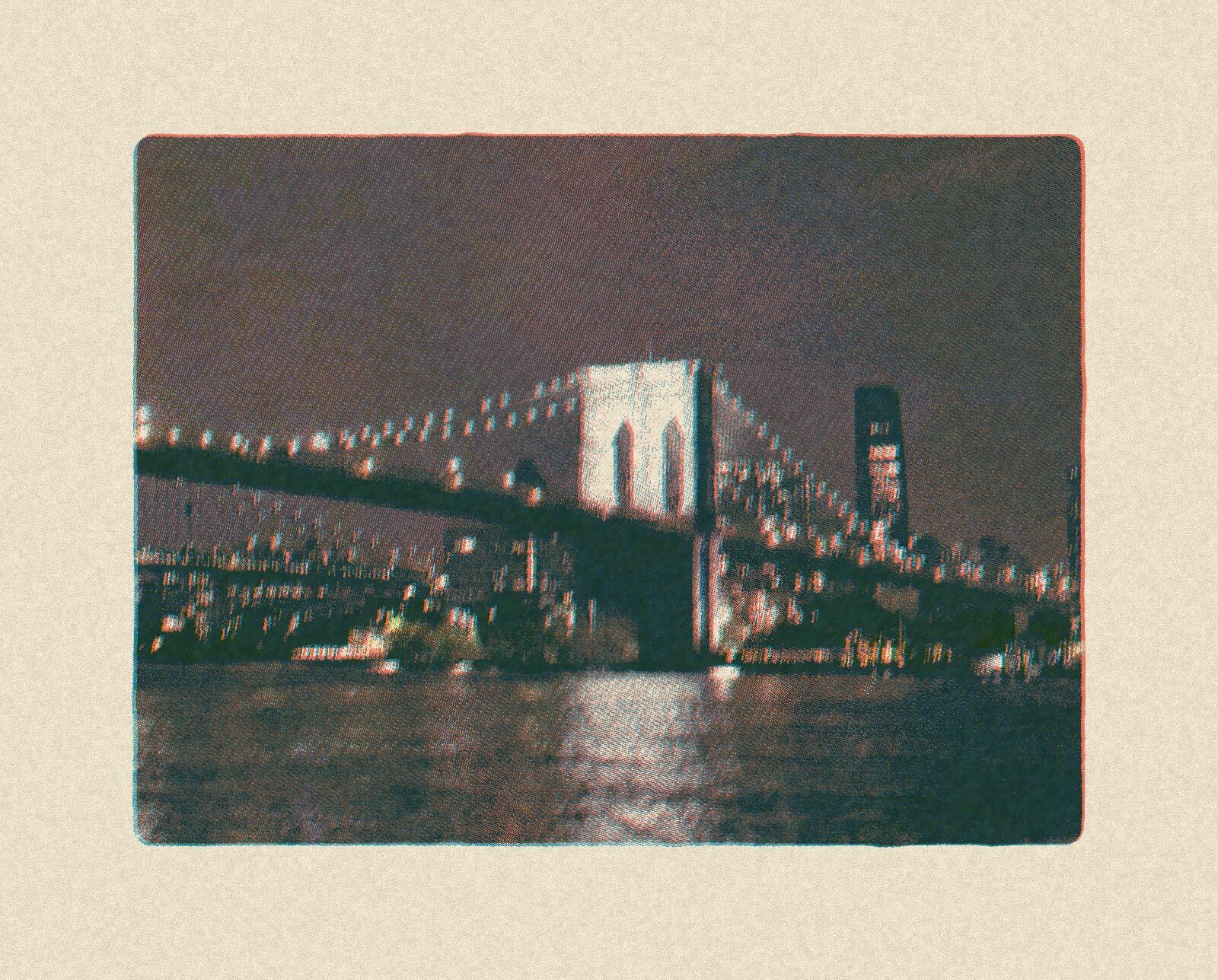
The night before I turned 21, I found myself at The Rooftop at Pier 17 on the edge of Manhattan. This was not unexpected — it was, after all, the venue for a concert I had decided to attend weeks in advance — but the improbability of me being in there, adrift in an unfamiliar crowd on the cusp of a new age, put me in a state where all emotion was subsumed by a sense of awestruck disbelief. I stared out to the other side of the East River, facing Brooklyn. The buildings, including the Stanford in New York residences, sat on a jagged horizon. I was in a place I never had been, and it would be far from the last time.
In every season of this year, I’ve lived somewhere different — springtime on campus, a summer in West Berkeley, and now fall quarter in New York City. I’ve been disoriented and reoriented and everything in between. I’ve learned how to settle into a rhythm in an unknown place, before wrenching myself out of it the moment things get cozy. And that’s still while staying in the country—I’ve had friends living in different continents, different hemispheres, a double-digit-hour plane ride away from anything resembling home.
I’ve never been one for travel. The word “tourist” brings to my mind groups of extractive and disrespectful visitors who shamelessly plunder cities for Instagram pictures. That said, I’ve found nothing more satisfying than going to an unfamiliar place, living there for a month or two, and feeling the streets you once got lost in slowly make themselves familiar to you. It feels like a sneak peek into an alternate life. It prompts to me to realize that I could feel at home in more places than I ever imagined.
Of course, the familiarity that comes with being a transplant is leagues different from that of a local. But one cannot be a local everywhere. College can give you a taste of other lifestyles through classes and programs and internships away from home, with relatively minimal stress and financial burden. After that, however, comes the pressure to settle somewhere for good. “Where do you think you’ll live after graduation?” has become a common icebreaker now that I’m beginning senior year, right up there with “Are you doing a coterm?” and “What are you planning to do with your major again?”
The night before turning 21 was not the night for thinking of such questions. Those could be pondered tomorrow, if they had to be pondered at all. I was at The Rooftop concert to exorcise my anxious adult malaise through song. Even so, doubts about belonging creeped in; I felt terribly out of place among New York’s power-pop-punk-rockers or whoever the other Jeff Rosenstock fans in the area were. They knew the setlist; they could relate to his lyrics about harsh urban winters or being stoned on the subway. I recognized less songs than I thought, and started feeling a bit ashamed.
Again, the difference jumped out at me — tourist versus local. When would I start feeling like I wasn’t pretending? How many concerts did I have to attend, how many streets did I have to traverse, how many lives did I have to live? Maybe all of adulthood was just an act of pretend. Or maybe it would all feel real once I turned 21.
The songs that I had been waiting to hear came at the concert’s end, two and a half hours in. One was my favorite from Jeff Rosenstock’s discography: a song called “Nausea” where we all sang, in a cathartic chorus: “I got so tired of discussing my future / That I walk through my life like I’m the only one / With evenings of silence and mornings of nausea / Shake and sweat and I can’t throw up…”
The other, a track called “You, In Weird Cities,” was the last of the night. It was a song that gained new meaning for me as I started living in new places and realizing that my friends would also start living in new places, perhaps ones that were very far away. About such friends, Rosenstock sings, “We try to see each other whenever we can / But there’s only so many days that we can stay.” Near the end, the song takes on a more hopeful — yet bittersweet — refrain: “When I listen to your tunes / it’s like I’m hanging out with you.”
“Alright, you know what to do,” he said after singing that line. Did I? The instrumentals cut off, leaving the crowd to sing the melody in acapella. I woah-oh’ed with my neighbors off-beat harmony as we all swayed shoulder to shoulder. I was 2500 miles away from home and hurtling into an unknown future, but all that mattered was that I knew this song. I knew what came next. And soon, I would know the city too.