
AI use in coding has grown increasingly common, both in classes and in the workforce, since computer science professors Chris Piech ’10 M.S. ’11 Ph.D. ’16 and Mehran Sahami ’92 M.S. ’93 Ph.D. ’99 created Code in Place, a free, online intro-to-coding course for students all over the world, six years ago. This year, two new courses — Code in Place X and Probability in AI — aim to teach students to code in the age of AI and to understand the math behind AI, respectively, while emphasizing human connection in learning.
Code in Place and Code in Place X, free online intro computer science courses open to the public, both follow a similar track to Stanford’s CS 106A: “Programming Methodology” course. However, the new version of the class carries a special focus on students’ ability to communicate their work and the reasoning behind it.
Students in Code Place X can use AI however they wish in their assignments. The catch, though? No matter how they used AI in their learning process, students have to show up to a weekly section and successfully answer questions asked live by their section leader.
“We’re betting on this skill of being able to talk about technical things being a lasting skill, even when software engineers are using AI to write a lot of code,” Sierra Wang, co-instructor of Code in Place X and fifth year Ph.D. student in Piech’s lab, said. In other words, students’ ability to explain their work and reasoning is used as a way to evaluate their understanding of the course concepts.
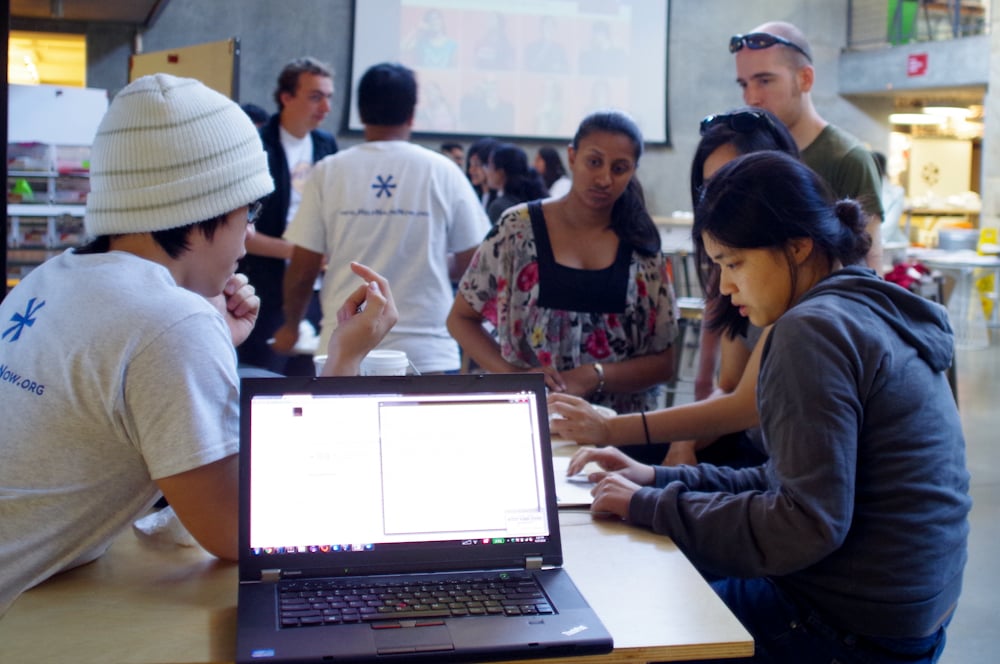
The weekly sessions, which make up the heart of the class, are led by volunteer instructors, who work about 2-3 hours per week, according to Piech. These volunteers can be Stanford students or any member of the public who can “write a simple python program and explain your thinking out loud”, according to the Code in Place X website. Being a section leader in one of these online courses isn’t just a resume-builder in Piech’s eyes, however.
“I think the upper bound of the number of people who would spend 10 hours [a year] teaching could be close to a billion people,” Piech said. “It’s just a human thing to want to pass on knowledge, and maybe we’ve put too many barriers to prevent people from spending their 10 hours.”
Regardless of AI’s role in student learning, Juliette Woodrow, co-instructor of the class and fifth year Ph.D. student in Piech’s lab, views the course as centered on human connection.
“One of our missions with Code in Place X is we really care about the human connection aspect of learning,” Woodrow said. “Even as many people are developing with AI tools, us included, we always keep [human connection] at the center, and that will still be at the center of Code in Place X.”
Probability in AI, a completely new course taught by Piech and Sahami, similarly relies on volunteers.
Unlike Code in Place X, which Piech describes as “an accelerated version of Code in Place,” Probability in AI is a completely new course aiming to teach students about the probability that fuels AI without the prerequisites that come with many probability courses at Stanford and elsewhere.
“We put a lot of effort into making it so that as long as you know y = mx + b, then we could take you to the point where you could implement a whole bunch of really cool things with a code agent and understand the probability that goes into these modern models,” Piech said.
Since the launch of Code in Place in 2020, nearly 100,000 students and 10,000 instructors have gone through the course. The course has also had an extraordinarily high retention rate, with around 70% of students taking the course to completion, according to Piech.
Though both courses may have been designed around a world increasingly intertwined with AI, the human connection aspects of the course — sections and section leaders — is one that Piech does not anticipate being replaced by AI.
“I’ve very strongly camped that AI might be a tool that adds to the teaching experience, but it will not replace teachers,” Piech said. Two years ago, Code in Place conducted two randomized control trials where students were allowed to try using an AI tutor or speak to a human instructor online.
“10 minutes with a human led to a 10 percentage point increase in people completing the course,” Piech said. “Being given access to a chatbot meant you were three percentage points less likely to complete the course.”
For both instructors and students, applications for Code in Place X and Probability in AI are due on Sept. 30. Regardless of which course students apply for, or if they apply to both, they can look forward to joining a global community of learners of all ages.
“There’s so many human teachers in the world,” Wang said. “I think we can just connect them with the human students and make everybody learn together, and it’s more fun.”