
Kelly Ryerson MBA ’03 began her career analyzing buyouts for an investment bank in London. This spring, she set out to stop a federal agency’s plan for herbicide use in Lake Tahoe.
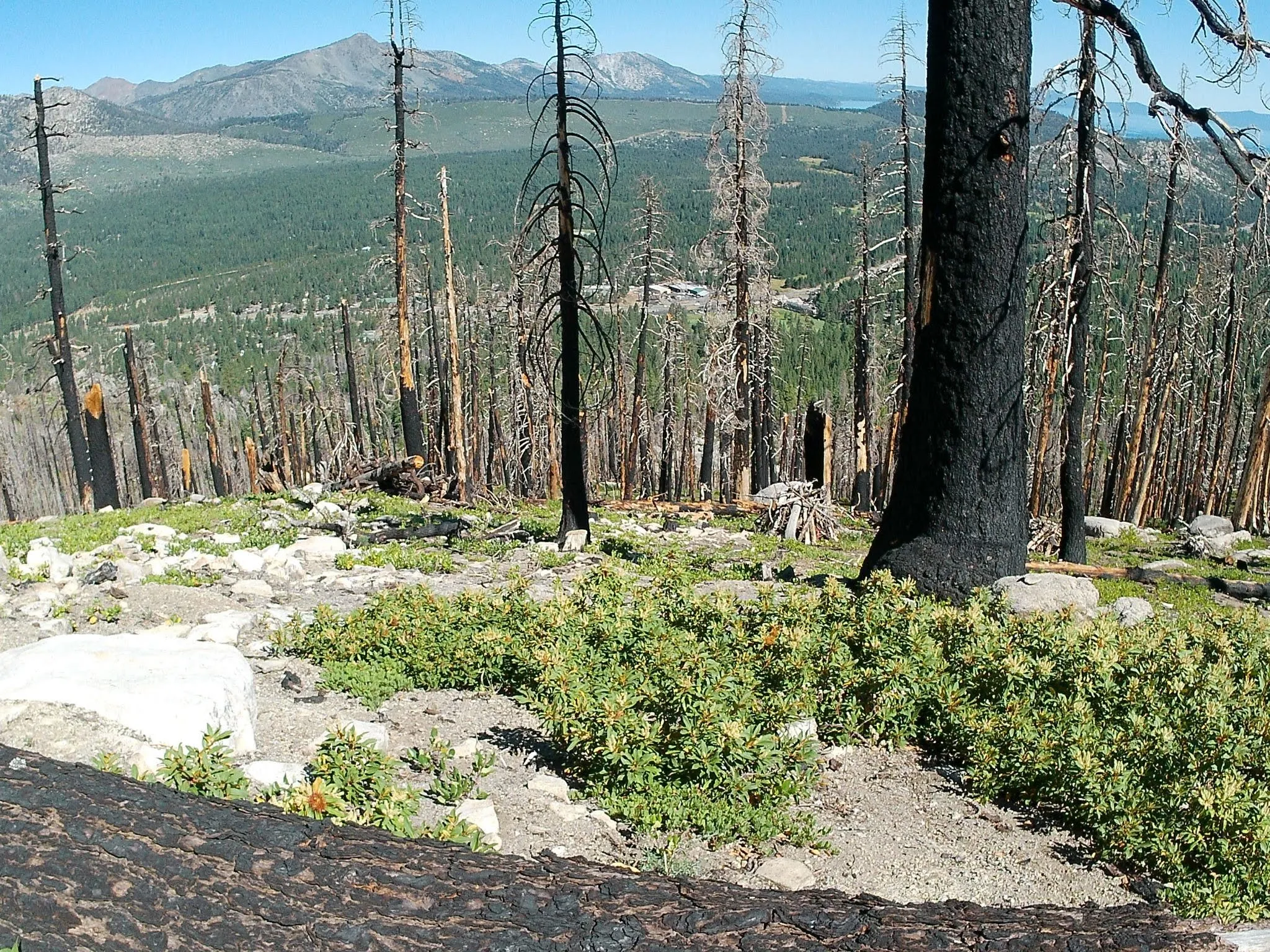
In May, Ryerson co-founded Protect Tahoe, a coalition working to stop the U.S. Forest Service from spraying glyphosate, the main ingredient in the herbicide Roundup and four others, across as many as 3,600 acres of the Caldor Fire burn area in the Lake Tahoe Basin.
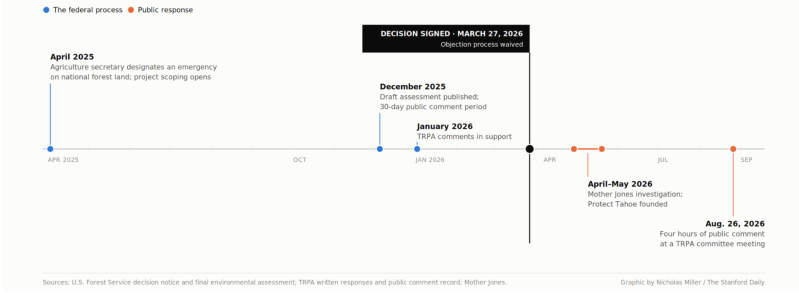
The group was created weeks after a yearlong Mother Jones investigation revealed that Forest Service glyphosate spraying in California, including around Lake Tahoe, was among the fastest-growing uses of the herbicide in the state. By then, the Forest Service’s decision had already been signed.
“It’s ludicrous,” Ryerson told Mother Jones in May, to spray glyphosate “in such an environmentally sensitive and pristine place, where it can get into the water that so many people drink or swim in.”
Ryerson’s reference to drinking water is not a figure of speech. Incline Village’s utility pumps its drinking water straight from the lake, and its treatment plant is one of a handful in the country exempt from federal filtration requirements because the lake is so clean. Glyphosate’s safety remains contested: the World Health Organization’s cancer research agency classified it as probably carcinogenic to humans in 2015, while the U.S. Environmental Protection Agency (EPA) has found it not likely to cause cancer.
Protect Tahoe is not asking for a delay; they want a ban. “We proceeded to meet with members of Tahoe Regional Planning Agency (TRPA) and the Forest Service, federal and regional, to discuss a vision to create a bio-regional pilot that would eliminate the use of conventional herbicides in the Tahoe Basin,” Ryerson wrote to The Daily.
Much of the campaign runs online. The group’s petition demanding an immediate halt to the spraying has drawn more than 5,200 signatures, and its Facebook group has more than 3,200 members, according to its website. Ahead of TRPA’s Aug. 26 meeting, Protect Tahoe posted the time and place, instructions for calling in and scripts for contacting elected officials, urging supporters to show up however they could.
Ryerson did not start out in environmental advocacy. After graduating from Dartmouth College in 1998 with a degree in economics, Ryerson spent three years in London as a senior investment analyst at Donaldson, Lufkin & Jenrette Merchant Banking Partners, the buyout arm later spun off as Phoenix Equity Partners. She then earned her MBA from the Stanford Graduate School of Business (GSB) in 2003.
In 2017, she began writing as Glyphosate Girl and launched Glyphosate Facts, an educational platform on the herbicide. Besides Protect Tahoe, she also serves as a co-executive director of American Regeneration, which advocates for farming methods intended to rebuild soil health rather than deplete it.
Much of the group’s pressure has landed on TRPA, which holds land-use authority across the Basin and is where Ryerson wants local protections passed. The agency told The Daily it has not treated the herbicide work as a project requiring its review, citing a longstanding agreement with the Forest Service that exempts reforestation from its approval.
The meeting Protect Tahoe rallied supporters to attend ended with no binding action. After four hours of public comment on Aug. 26., the committee “asked TRPA staff to continue working with the Forest Service regarding potential future herbicide use in the Caldor Fire Restoration Project,” wrote Jeff Cowen, the agency’s public information officer.
The fight is not over. “No herbicide applications are expected in 2026 or 2027 in the project area where tree planting is proposed,” the Forest Service wrote to The Daily.
The legal path for challenging decisions like this one narrowed over the summer. On June 25, the Supreme Court ruled 7-2 in Monsanto v. Durnell that federal pesticide law overrides state lawsuits accusing manufacturers of failing to warn customers about health risks. The ruling closes off a route people have used to sue over glyphosate exposure.
Ryerson called the decision “an absolutely stunning heartbreak.”
“It makes it that much more important that we just eliminate the exposures entirely,” she wrote. “The state and federal governments tend to all be corrupted by chemical lobbyists, but there is room on local levels to pass local protective ordinances. Which is exactly what we want TRPA to do.”