
Sadia Orpa ’27 is a fourth-year Stanford undergraduate studying Historical Memory and Power with the Department of History. She believes deeply in advising truth, enjoining justice and encouraging perseverance.
Every time there’s a rape on campus, statistics about campus sexual assault spring from an otherwise unspoken and unvisited well. Resources without any faces, just links, are forwarded through everyone’s inboxes, wedged between the email about a new campus job on Handshake and a Canvas assignment. Statistics can be important, and shed light on what might otherwise be invisible. But how invisible is any of this, really?
Between 1996 and 2013 there were 259 officially reported sexual assaults at Stanford University – and one expulsion. Without belaboring the obvious, this number is not accurate or representative of the actual volume of assault or harassment that takes place on campus. No student has gone through their time at Stanford without either hearing about the assault of a friend, or experiencing their own. This is particularly the reality for women. Notarized reports do not carry the truth about women’s safety on this campus, or beyond. Your peers carry the truth.
Sexual assault, sexual violence, sexual harassment, stalking – the effects of these harms are not recognized by the University. It’s something that follows them through class during finals week, even when OAE can’t get them an extension because they have no documentation to prove they were assaulted over the weekend.
Sexual assault is something spoken about to others in confidence, removed from stages and considered “none of their business” by “good men” who have never personally raped anyone. Survivors are the students who take a leave of absence “out of nowhere,” start missing classes “out of nowhere” or suddenly develop mental health struggles “out of nowhere.”
But there is a “somewhere,” and there is a reason. Survivors exist and they are your peers.
Campus sexual assault is not invisible. It’s here, it’s heavy, and it’s an everlasting part of people’s experiences on this campus and beyond. Women don’t report, because it is unsafe to report.
Campus reporting systems can exacerbate the grief and distress of survivors because these systems are not built to deliver justice – they’re built to do damage control.
You’re asked to relive what happened to you, but not for the pursuit of justice. The school remains concerned and focused on letting a report pass across their desks quietly, with no room for the survivor’s pain.
Jane Doe from Cornell wants to remain anonymous, because the fact that she was harmed, violated and traumatized immediately becomes about everyone else: the “bright futures” of the men who raped her, the University’s reputation, a debate about fraternities and the discomfort of everyone unable to face these truths and failures. Jane Doe was gang raped by seven men who actively documented their actions in front of 50 bystanders. Her rapists were punished with essays; no investigation was conducted due to “a lack of evidence” in spite of a group chat detailing the crime. 50 men in that chat just watched.
“free pussy”
“Shop still open?”
These quotes were pulled from Cornell’s Chi Phi group chat with around 57 members the night that student Jane Doe was gang raped by seven male Chi Phi members.
New York prosecutors only re-opened an investigation two years later after Jane Doe filed her own lawsuit. Two years.
“What I experienced from those who raped me in the fraternity was the worst experience of my life,” wrote Jane Doe, describing her 2024 rape at Cornell University.
“I was brutalized and it injured me physically but perhaps more importantly, emotionally,” she said. “I want to recover from this trauma but it is extremely difficult. It affects every aspect of my life. It will haunt me and be part of me the rest of my life.”
Evidently, our systems do not hold offenders accountable. University administrators make excuses. The salaries of these university administrators are so high not because uncovering the truth is difficult. The truth is clear. But the efforts to obscure it, deny it, stifle it, punish it – these efforts are widespread, systematic and legitimated by University seals and official titles. The power to enforce justice is held by those who are incentivized to stifle it to avoid a news cycle with their University’s name.
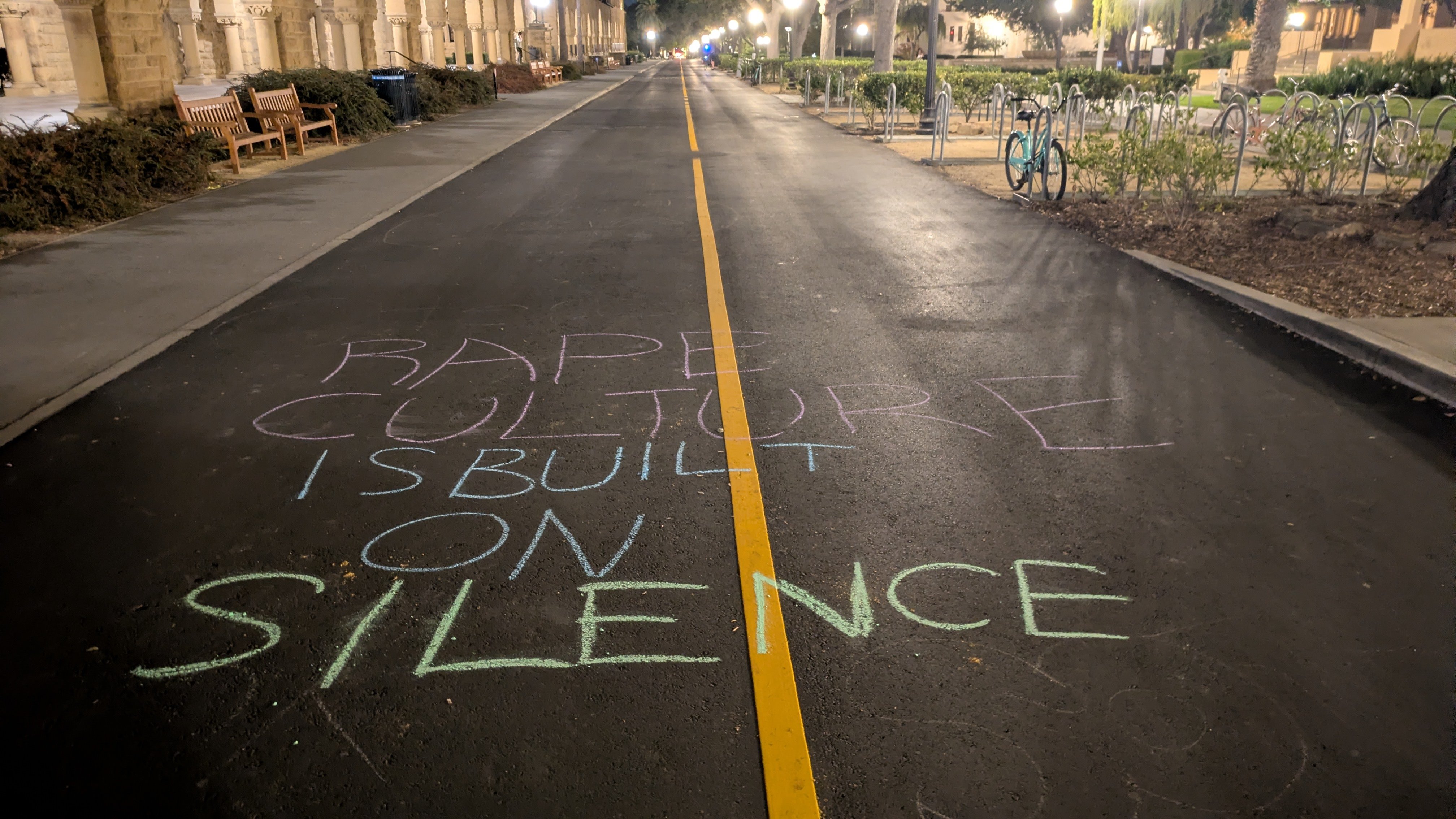
Rape culture is built on silence. Campus resources, especially at Stanford University, are here to protect the school and its reputation. There are well-meaning people everywhere, especially in the Title IX office. They advise students regularly, but they might be the first to tell you how often their hands are tied by Stanford policy.
The Office of Accessible Education (OAE) is full of well-meaning people too, but they will also tell you about Stanford’s policies on documentation. You can’t get emergency accommodations without seeing a service provider you’ve developed a relationship with, someone a student who was assaulted over the weekend might not have access to between classes and deadlines. That’s something a student who was assaulted might not even be ready for.
Many, if not most employees in these offices, empathize with students’ frustration and pain. Many sincerely try their best to work through the system for survivors. But even at Stanford, the goal of these systems is not the safety of the student who was violated. The goal is to prevent attention to the matter. Survivors are managed by offices and employees of the school, but never guaranteed justice or safety.
To seek justice (but not necessarily receive it) on this campus, you must destroy your physical health by hounding countless offices for quarters on end, catch administrators in their office who are avoiding your emails and continuously re-explain your situation. Maybe they’ll submit a student of concern report once you’re finally emotionally extinguished due to the University’s inaction – but no one will take responsibility when the system ultimately spits you out.
Your situation becomes an argument framed around the discomfort of the community center staff who realized you’ve been struggling. As well-meaning and truly caring as they are, it becomes about their guilt instead of your wellbeing.
Seeking justice on this campus requires strategy, because if the office staff feel called out for their disengagement from student life or lack of empathy, they might take it personally and not want to help you anymore.
Women should not have to disclose violence against their own bodies to teach empathy. For the people who work in these offices, I ask: is your job to protect the University or to protect students? Even when a survivor tells their story, the guilt of those who did nothing when it mattered is suddenly held against the survivor.
This article was not written for people who need to be persuaded that campus sexual assault is a pervasive problem; it is for the people who are already struggling to carry this truth, for everyone who feels alone watching the news this week. This is why Jane Doe is Jane Doe.
This is why everyone knows a Jane Doe in their life. This is why Jane Doe must stay Jane Doe in our current culture of silence.
I end with a note for survivors of all kinds, wherever you are:
Those protecting themselves from the discomfort of truth and grief cannot be persuaded to see. Decenter them. Be strong and upright in your own truth, and for the purpose of keeping others from being swallowed by grief. Especially if that “other person” is you.
You are dignified, and deserve to feel safe. You deserve to live, and the failures of those around you after you experienced something you did not ask for and did not deserve is something they need to face. Spend your energy on seeing other survivors, because you exist – even if our systems don’t recognize you.
You exist, and others like you exist too. Focus on those who aren’t afraid to be your witness. Those who aren’t afraid to walk with you. This is where the change within us and around us will begin.