
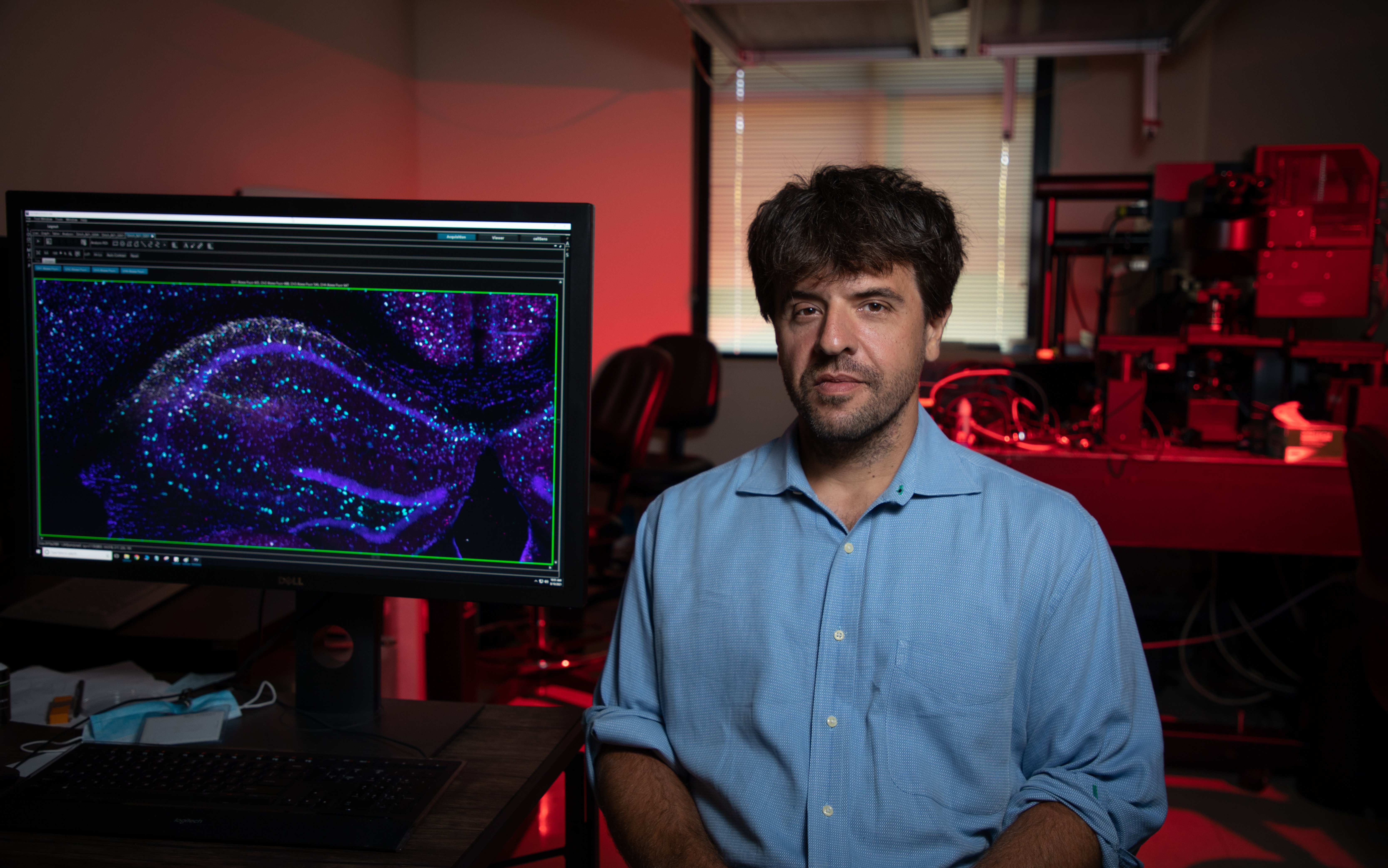
In 1992, Karl Deisseroth, Ph.D. ’98, M.D. ’00, arrived at Stanford to begin his MD-PhD training. By 2005, in a lab of his own on campus, he showed that a protein borrowed from pond algae and a flash of blue light could make cultured rat neurons fire on command.
On Monday, that work earned the professor of bioengineering and of psychiatry and behavioral sciences the 2026 Nobel Prize in Physiology or Medicine for pioneering optogenetics — a technique that lets scientists control brain cells with light.
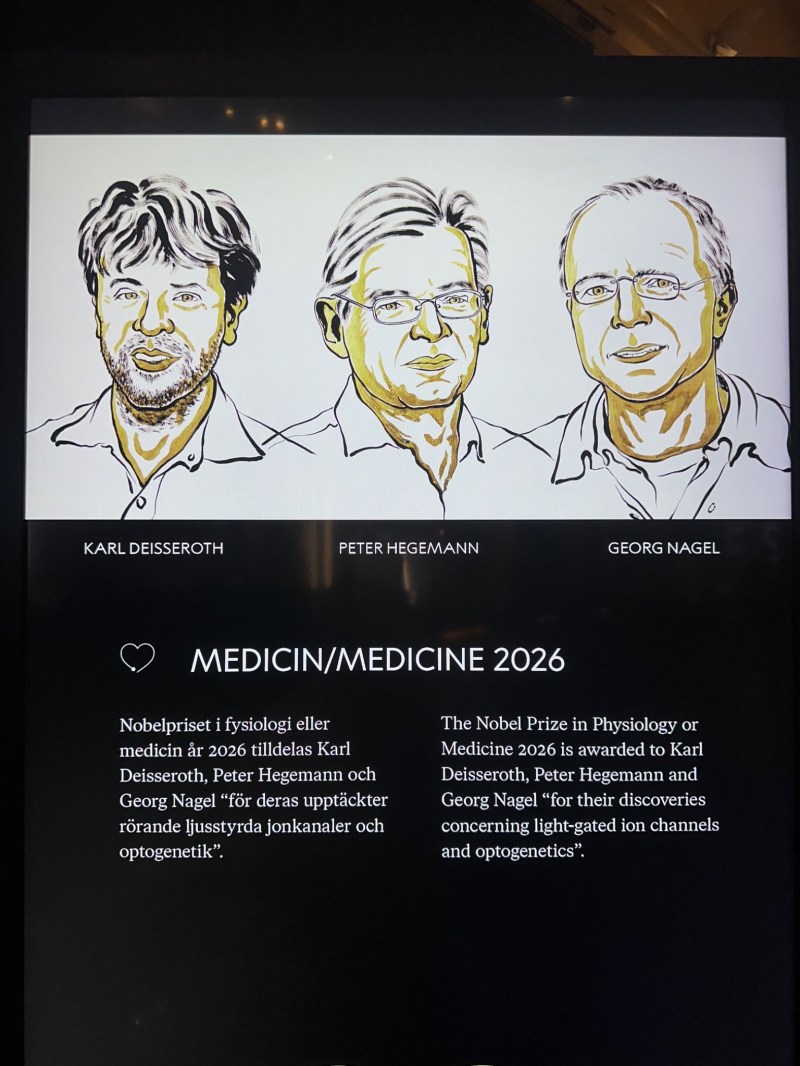
Deisseroth shares the prize with German scientists Peter Hegemann from the Humboldt University of Berlin and Georg Nagel from the University of Würzburg, whose discovery of a light-sensitive algal protein made Deisseroth’s work possible. The Nobel Assembly at Karolinska Institutet in Stockholm honored the three “for their discoveries concerning light-gated ion channels and optogenetics.”
The light-controlled switch for nerve cells allows scientists to map the brain “in a way that we could once only dream of,” Per Svenningsson, Chair of the Nobel Committee for Physiology or Medicine, said in the prize announcement.
“I couldn’t be happier because the trio that the committee picked spans the progression from the early algal explorations all the way to advanced neuroscience experiments,” Deisseroth told Stanford Medicine. “This prize really captures the full journey of discovery.”

The Nobel committee called Deisseroth at 12:27 a.m. Pacific Time, and he missed it. Seconds later, a second call came through to his wife’s phone: “May we speak with Karl?” When he picked up the phone, Deisseroth was so surprised that he couldn’t form words for about half a minute. “It was very surprising and overwhelming,” he told Stanford Medicine, while his wife, Michelle Monje-Deisseroth, M.D. ’04, Ph.D. ’04, the Milan Gambhir Professor in Pediatric Neuro-Oncology, was far less surprised.
“I’m just so delighted. I know I’m biased, but he’s really transformed the field of neuroscience — and actually several other fields,” Monje-Deisseroth told Stanford Medicine. “I’m so proud of him.”
President Jonathan Levin ’94 described Deisseroth as a “defining figure in modern neuroscience,” he told Stanford Medicine. “I am delighted that his groundbreaking work in optogenetics has been honored with the Nobel Prize… Stanford is proud to call him one of our own,” Levin said.
Dean of the School of Medicine Lloyd Minor sent an email to the Stanford Medicine community on Monday morning, celebrating Deisseroth’s achievement. “Karl’s work has made an extraordinary contribution to biomedicine and our understanding of human health,” Minor wrote. “We are proud to have him as a colleague and grateful for the influence he has had on science and on lives around the world.”
Prior to the advent of optogenetics, neuroscientists studied the brain in two ways, with electrical stimulation and with drugs, both of which were imprecise for different reasons. The solution came from a single-celled alga that swims toward light. Hegemann and Nagel found that an algal protein, channelrhodopsin, acts as a light-gated ion channel, allowing charged particles to flow across a cell membrane when exposed to blue light.
Deisseroth started his Stanford lab in 2004, and began working on the idea with two graduate students, Edward Boyden, Ph.D. ’05, and Feng Zhang, Ph.D. ’09. In a 2005 Nature Neuroscience paper, the team, with Nagel among the co-authors, showed that pulses of blue light could make rat neurons genetically engineered to produce the algal protein fire with millisecond precision.
“The key moment occurred when I put the algal gene into neurons,” Deisseroth told Stanford Medicine. Among many approaches he investigated to modulate neural activity, this was the one “with the highest risk but it turned out to be the one that worked best,” he said. “That was a valuable lesson.”
What followed the initial breakthrough was nearly a decade of refinement. “There were many additional steps in development, each one critical. It took years to really build into a whole technology,” Deisseroth said.

Following their seminal discovery, Deisseroth’s team described a thin, flexible optical fiber placed in the brains of live rodents, which delivered light to specific circuits and changed the animals’ behavior, in 2007. That same year, the team also found a protein — halorhodopsin, derived from the microbe Natronomonas pharaonis — that silences neurons under yellow light, allowing scientists to turn brain cells off as well as on.
In the coming years, Deisseroth’s lab went on to use optogenetics to study brain disorders. Working with Anatol Kreitzer, a researcher at the Gladstone Institutes, affiliated with the University of California, San Francisco, and other colleagues, Deisseroth helped identify two circuits involved in Parkinsonian motor behavior and showed that optogenetic manipulation could reverse parkinsonian symptoms in mice. His lab also identified a circuit that controls the drive for social interaction, and used optogenetics to both induce and relieve depression-like symptoms in rodents.
Deisseroth shared the tools of optogenetics widely, including through his creation of the Stanford Optogenetics Innovation Laboratory, a training hub that allowed visiting scientists from around the world to come to Stanford, learn the technology firsthand and take the knowledge back to their own labs. Deisseroth also democratized the technology by freely distributing materials — including viral vectors, plasmids and hardware designs — and providing open-access documentation for the protocols.
Zhang, now a professor at the Massachusetts Institute of Technology, recalled Deisseroth’s character as both a “brilliant scientist” and an “incredible mentor,” who “cares deeply about his patients with neuropsychiatric diseases and finding some way to help them,” he told Stanford Medicine. Recounting the early years of their discovery, “We were a team with phenomenal energy, a goal, and the will to make it happen,” Zhang said.
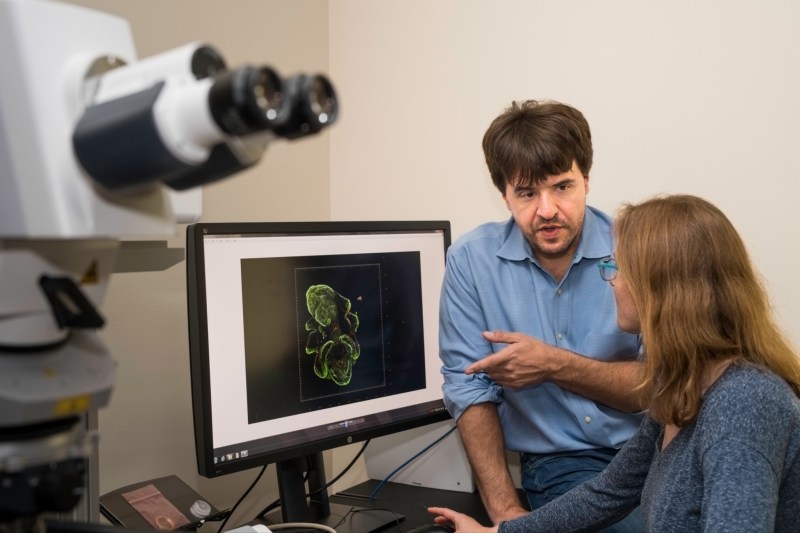
Deisseroth’s pioneering work in optogenetics has also been applied in diverse fields other than neuropsychiatry, enabling researchers to study “how the brain controls movement, memory, emotions and vision, opening new avenues for research on conditions such as blindness, Parkinson’s disease, depression and other disorders of the brain and nervous system,” Minor wrote. “Today, thousands of scientists around the world use optogenetics techniques to advance their work.”
Monje-Deisseroth has used the approach in her own lab to show how neuronal activity directly feeds the growth of gliomas, the leading cause of brain cancer related deaths worldwide. “It has been an absolute mainstay of my lab’s technical arsenal,” Monje-Deisseroth told Stanford Medicine. “It’s been key for the discoveries we’ve made.”
This year, one of Deisseroth and Monje-Deisseroth’s children, Alexander Deisseroth ’30, is a freshman at Stanford. “It’s been pretty amazing to see — the invention of optogenetics happened before I was born, and he’s been making incredible things with it over the course of my entire life,” Alexander Deisseroth told The Daily. “His creativity and fearlessness have let him do things no one else would have thought of doing or dared to do, and that’s something that I think is easy to appreciate from the inside.”
“I’ve been aware my entire life that the groundbreaking work that both of my parents have done is possible because of Stanford, and the opportunity to study here is an honor,” Alexander Deisseroth said. “It’s also been a blessing to be so close to home when this news was announced — the ability to go home and share this moment with my dad has been truly special.”
About Deisseroth: Deisseroth earned a bachelor’s degree in biochemical sciences from Harvard in 1992. He then earned a Ph.D. in neuroscience in 1998 and an M.D. in 2000, both through Stanford’s MSTP MD-PhD program. In 2012, Deisseroth became the D.H. Chen Professor of Bioengineering and of Psychiatry and Behavioral Sciences. In 2014, he became the Howard Hughes Medical Institute investigator. Other honors include the Lasker Basic Medical Research Award in 2021, the Japan Prize in 2023 and the Asan Award in Basic Medicine in 2025.