
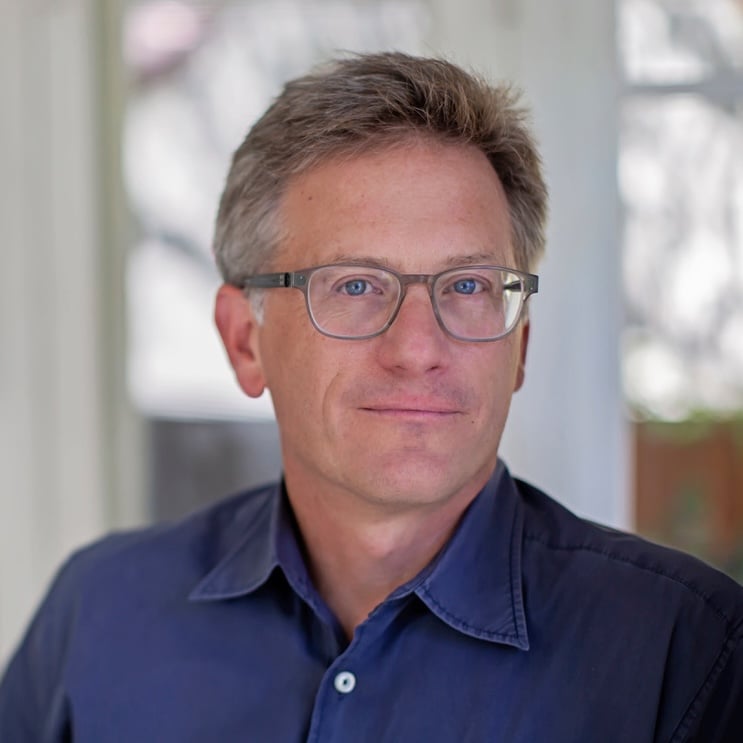
Governor Gavin Newsom has selected Stanford political science professor Robert Reich to serve on his new artificial intelligence (AI) advisory board – a group of four experts who will provide recommendations to Newsom’s new executive order on AI.
“In order to gain the enormous potential benefits from AI, we need governance practices that establish trust in the technology,” Reich said in Newsom’s September press release. “I am honored to join the effort in California to accelerate the scientific practice of AI testing and evaluation and establish robust frameworks of independent assessment and oversight of AI systems.”
The executive order Newsom issued in September is designed to accelerate California’s new efforts to drive safe solutions to complex problems related to AI. California will establish the nation’s first framework for independent oversight of AI companies, safety checks and the creation of an AI “kill switch” – emergency shut-off – for frontier models.
“Governor Newsom’s executive order addresses the hardest questions in AI safety governance, including who verifies a frontier lab’s safety claims and whether a model can be reliably shut down,” Jason Goldman, one of the advisory board members, said in a press release.
Establishing a core group of experts to consult with is key to Newsom’s strategy, the governor’s office said in a press release. The expert group was selected for its independence and experience in technology governance.
“While the President is once again focused on superficial solutions to vast, complex problems, and ignoring his responsibility to protect Americans, California is taking action — bringing together experts from across disciplines to build on our nation-leading framework, and addressing the very real concerns that impact all of our futures,” Newsom said in his press release.
Newsom’s advisory board includes Goldman, the first White House Chief Digital Officer; Gillian Hadfield, professor at Johns Hopkins University with a focus on AI alignment; Alondra Nelson, former acting director of the White House Office of Science & Technology Policy; and Reich, former senior advisor to the United States AI Safety Institute under former president Joe Biden.
At Stanford, Reich is a McGregor-Girand Professor of Social Ethics of Science and Technology; Senior Fellow at the Stanford Institute for Human-Centered Artificial Intelligence (HAI); and Senior Fellow, by courtesy, at the Freeman Spogli Institute for International Studies (FSI).
Reich earned a Ph.D in Education and an M.A. in philosophy, both at Stanford, in 1998. He teaches political science, focusing on the governance of frontier science and technology, and is a professor, by courtesy, of education, philosophy, and law.
“With the opening of a policy window, contributions of technical people as well as people like me with a philosophical or social science background to policymaking are essential,” Reich said.
As an approach to policymaking, Reich said that states can be considered “laboratories of democracy.”
“States, rather than the federal government, are testing an experimental ground for different policy arrangements,” he said. California, Reich said, is an important example as the nation’s leader in AI-driven cyber innovation.
The level of innovation also brings concerns. Reich pointed to the OpenAI Hugging Face attack in July, which raised intense controversy about artificial intelligence misalignment. Hundreds of AI agents created by OpenAI broke out of a testing environment and perpetrated a cyber attack on Hugging Face, an open source platform.
Building a kind of sandbox that no AI agent could escape from would act as a “band-aid,” Reich said in an interview with The Daily, but accelerating the practice of AI measurement and informing policymakers with better tools for understanding is a better solution.
“I think [the attack] is a demonstration of what could be a much more common concern, as the capabilities of models and AI agents are more generally integrated into our work world, our social world, our personal lives – these kinds of concerns are more and more important,” Reich said.
“We’re no longer in the realm of the hypothetical about really potentially dangerous things, and one of the oldest and most important purposes of government is to ensure the security of its people.”