
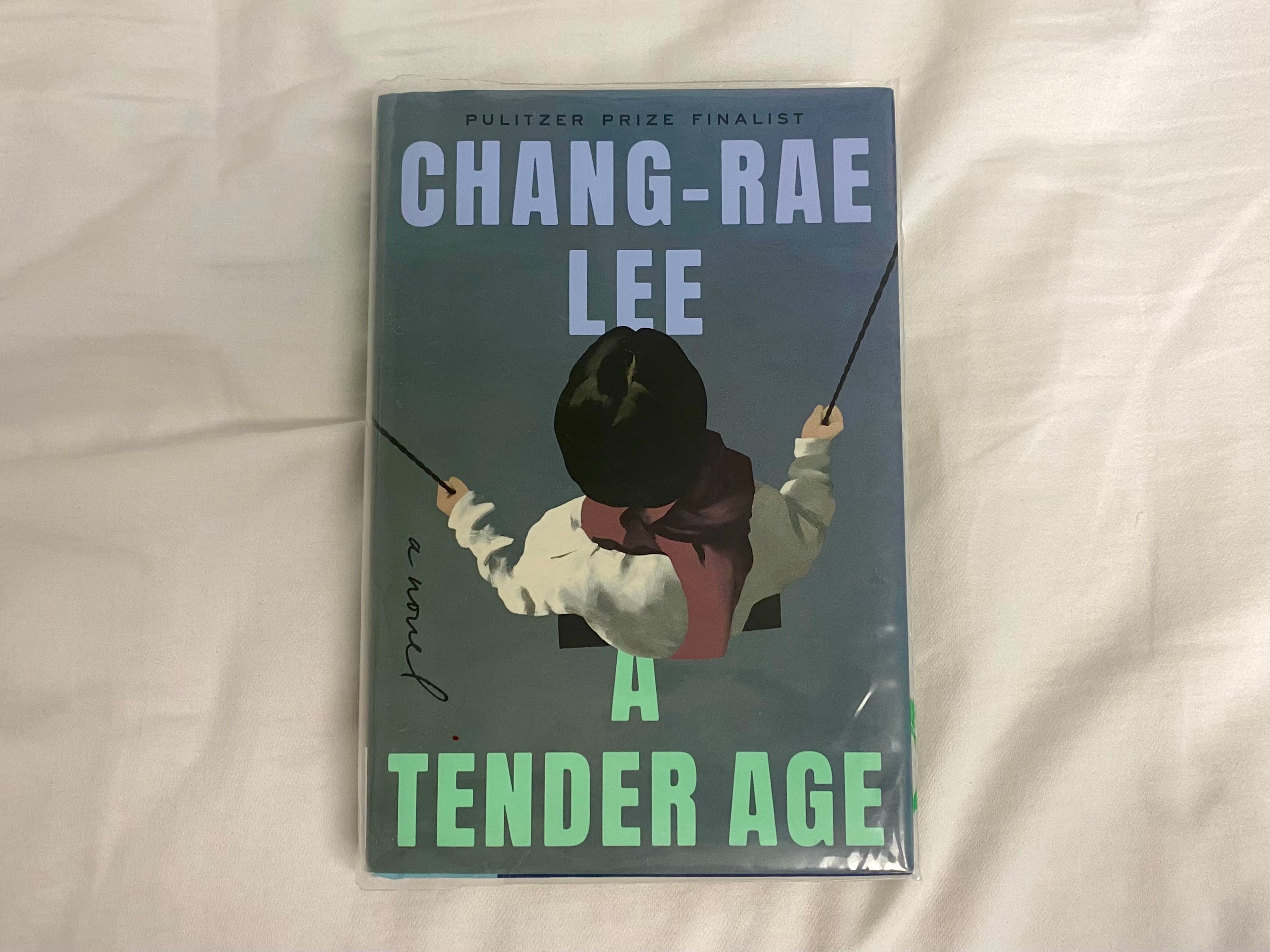
Editor’s Note: This article is a review and includes subjective thoughts, opinions and critiques. This review contains spoilers.
At Stanford, we often forget what it means to be children. On a campus of ducks floating through six-figure startups and consulting funnels, we drown out how calamitous the simplest squabbles once felt. Vying for first place in the playground race. Hurting from a friend’s harsh, confusing words. Fighting for authority in an adult-driven world. In “A Tender Age,” Pulitzer Prize-nominated author and creative writing professor Chang-Rae Lee brings a Korean American boy’s childhood to life in all its awkward, violent, confusing and vulnerable forms, lending the novel its ultimately devastating charm.
Told in the theaters of a Manhattan apartment, rusty playground, former prison and Christian Korean summer camp, “A Tender Age” follows Jeon-gi, who divides his life between being a sheltered son at home and sociopolitical pawn on the playground. He marches through a battlefield of racial slurs, physical threats and disturbing sexual encounters, where his un-Americanized home life must disappear behind fierce armor. Jeon-gi believes that “to be a kid is to be bullied, no exceptions.”
When this resentment builds into his assault on another boy, Jeon-gi is shipped between counselors and case workers who want to figure out what might have pushed a nice “Oriental” boy to commit such a crime. For a day, he experiences the hypersexualized and violent environment of a prison where the real criminals go, increasingly disillusioned with the goodness of the world. It is at Christian summer camp that his Korean and youthful side come to play together: Jeon-gi is neither a minority nor a monster, but a boy discovering human hatred, desire and understanding with other boys who look like him. In a new warzone with bullies and friends alike, he must discover if he can finally achieve real belonging.
“A Tender Age” is about the private lives we construct as children. Lee shapes this bildungsroman around a boy who must shield his feelings from his parents, playmates, bullies, idols and love interests, creating a terrified and resentful mental echo chamber where only the cruelest thoughts abound. Lee shows us how misguided worldviews can pervade every relationship: how interactions can all come down to violence, the assumption of violence and the need for violence to bring order back into the world. You cannot love Jeon-gi as unconditionally as his oblivious mother does, but you can resonate deeply with a boy damaged and unsure of his environment, feeling subjugated by the worst while losing hope in the best.
I found Jeon-gi’s relationship with women compelling, especially how he compares every girl to his mother yet finds her weak and rather pitiable. Many immigrant children, including me, can identify with the reversed power dynamic of sympathetic child and obedient parent, as the parent is crutched by a language and culture gap. In this way, Jeon-gi’s private life of small, superior cruelties is born at home, leading me to reflect on my own relationship with my background and family since childhood. We realize that Jeon-gi will never achieve true love if he does not reimagine his relationship with his mother first — that true love, at times, cannot overcome the strange amalgamation of lust, patriarchal conditioning and self-exploration in childhood.
“A Tender Age” builds slowly. I was not initially enamored by the mundane circus of boyhood fights, narrated in a retrospective and dispassionate voice. However, as Lee accumulates Jeon-gi’s injustices — those done to and by him — the emotional vault of his discomfort is palpable. The novel captures the way being a child feels like constant war. The victory of being accepted appears unreachable; the losses appear invisible to everyone else.
For many of us at Stanford, for whom accomplishments accelerated childhood and decelerated reflection, “A Tender Age” offers a chance to ponder how we adopted our ethics and identities. Was it through the playground or family feuds? Where were we bested, where were we understood? Where did the boy become the man, the immigrant become the American — and the fierce little kids become the “next generation of leaders” at Stanford?