
Editor’s Note: This article is purely satirical and fictitious. All attributions in this article are not genuine, and this story should be read in the context of pure entertainment only.
Miranda Rizona ’30 never imagined herself arguing before the Supreme Court this early in her life. Although she describes herself as a “plucky, pre-law student open to work” with mock trial trophies from high school and Elle Woods posters above her bed, she told Daily reporters that she never expected to arrive as the defendant.
The second surprise was the plaintiff, who was none other than her roommate Maddie Marbury ’30. As the justices entered, Marbury’s wrists shook, her vape pen wavering faintly as the Supreme Court announced their ruling.
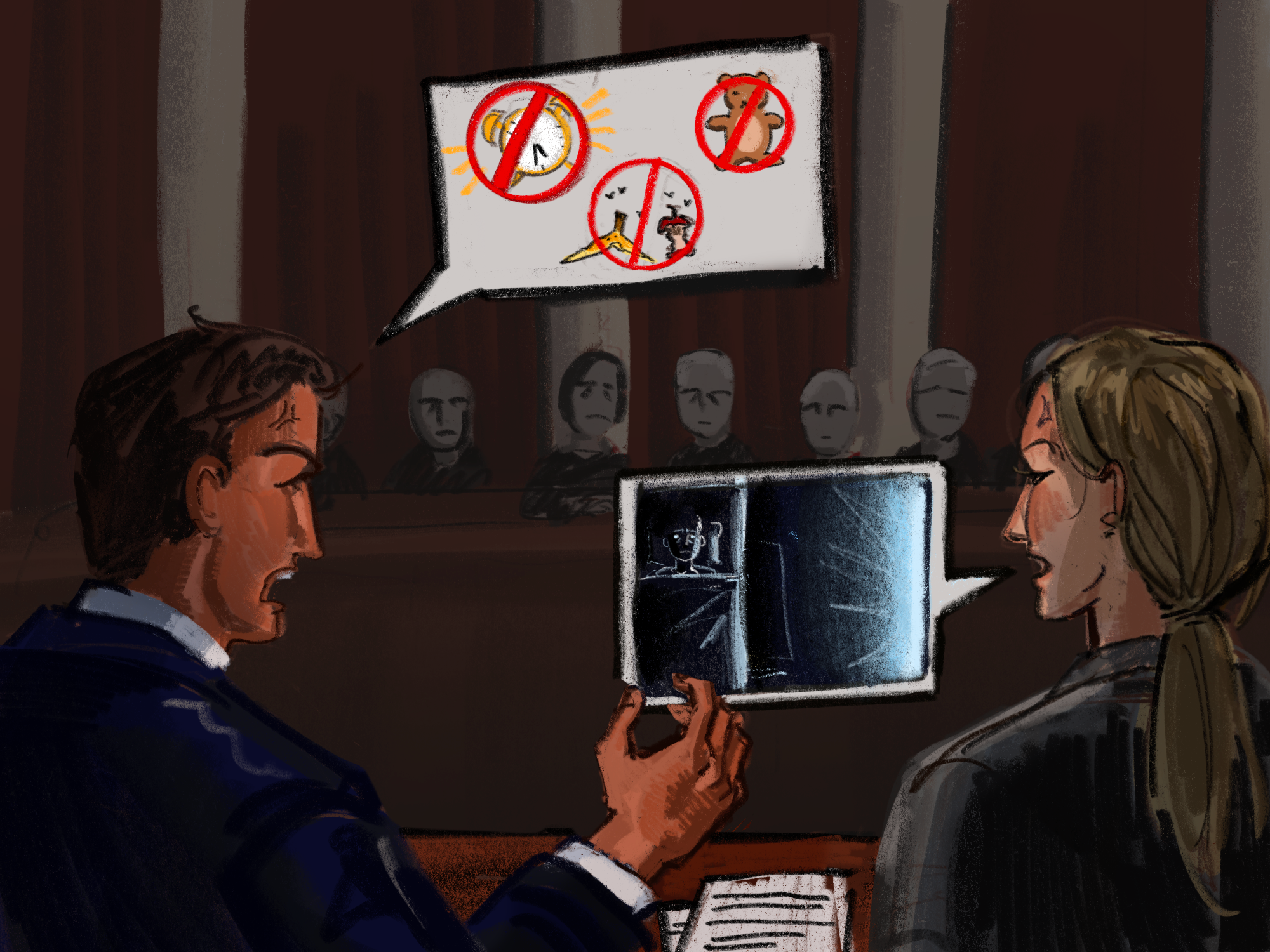
Marbury v. Rizona hinged not only the Constitution, but something more intimate: the roommate contract both parties signed shortly after move-in. The paper listed the shared values the duo aspired to in their living space — cleanliness, hospitality, and health — values which Rizona alleged her roommate failed to uphold when she caught Marbury blowing strawberry-smelling clouds into the ceiling.
“I didn’t know how to talk to her about it, so I did what was most natural to me,” said Rizona. “I sued her.” As evidence, Rizona presented the roommate contract before a judge.
“People appeal to the Constitution instead of common decency, but the Framers too had humble beginnings. They were farmers, common men; George Washington didn’t even have his own teeth,” said RA Virginia Loving ’28, handing journalists a ranch-crusted paper wedged between SHPRC condoms and an unopened Lookbook. “Shouldn’t we treat roommate contracts with the same sense of wonder?”
Both students weathered intense scrutiny from each justice as the Court agonized over the issues before them. Justice Samuel Alito, foaming at the mouth next to a red box with the caption “Break In Case of Third Amendment,” asked litigators whether either roommate served in the U.S. Military. Neither had.
“Both parties stipulated here that you planned to sleep between 10 to 11pm,” observed Justice Sonia Sotomayor. “Are these the ‘White Lies’ that were referenced in evidence?” At this point during the questioning, attorneys for both Marbury and Rizona reminded them of their Fifth Amendment rights.
Ultimately, the Court determined that roommate contracts were not enforceable by the United States judiciary, overturning the injunction that barred Marbury from vaping in their shared one-room double. Delivering the majority opinion, Justice Clarence Thomas wrote, “Having never been invited to speak at Stanford, I find it improper that legal precedent should operate there. The university doesn’t want our statutory perspective. I don’t mind, though.”
The ruling will affect hundreds of ongoing cases throughout higher education. “My roommate tried to sue me over psychological damages since I forgot to place a sock on our door handle,” said Gideon Wainwright ’29. “Now we can settle the matter ourselves, like mature adults should.”
Without the backing of the United States government behind roommate contracts, RAs have scrambled to situate themselves as mediators for intra-dorm conflict. As Loving explained, “The social contract may be fragile, but nothing will strengthen it like tithes to your Resident Assistants.”
“Today I witnessed a miscarriage of justice,” commented Rizona. “My only option left is to talk to my roommate. Or get housing accommodations.” Marbury, though victorious, sat glumly outside the courthouse.
As of press time, Rizona and Marbury resolved their foibles after a hug and a handshake agreement to air out the dorm from Fridays through Mondays and hotbox the dorm on Tuesdays and Thursdays. Their new roommate contract promises not only open communication, but shared paraphernalia and a joint payments of 20 Dining Dollars to Loving for adjudication fees.
“What we fought over were the Articles of Confederation,” Rizona said, tearfully embracing Marbury. “This is our Constitution.”