
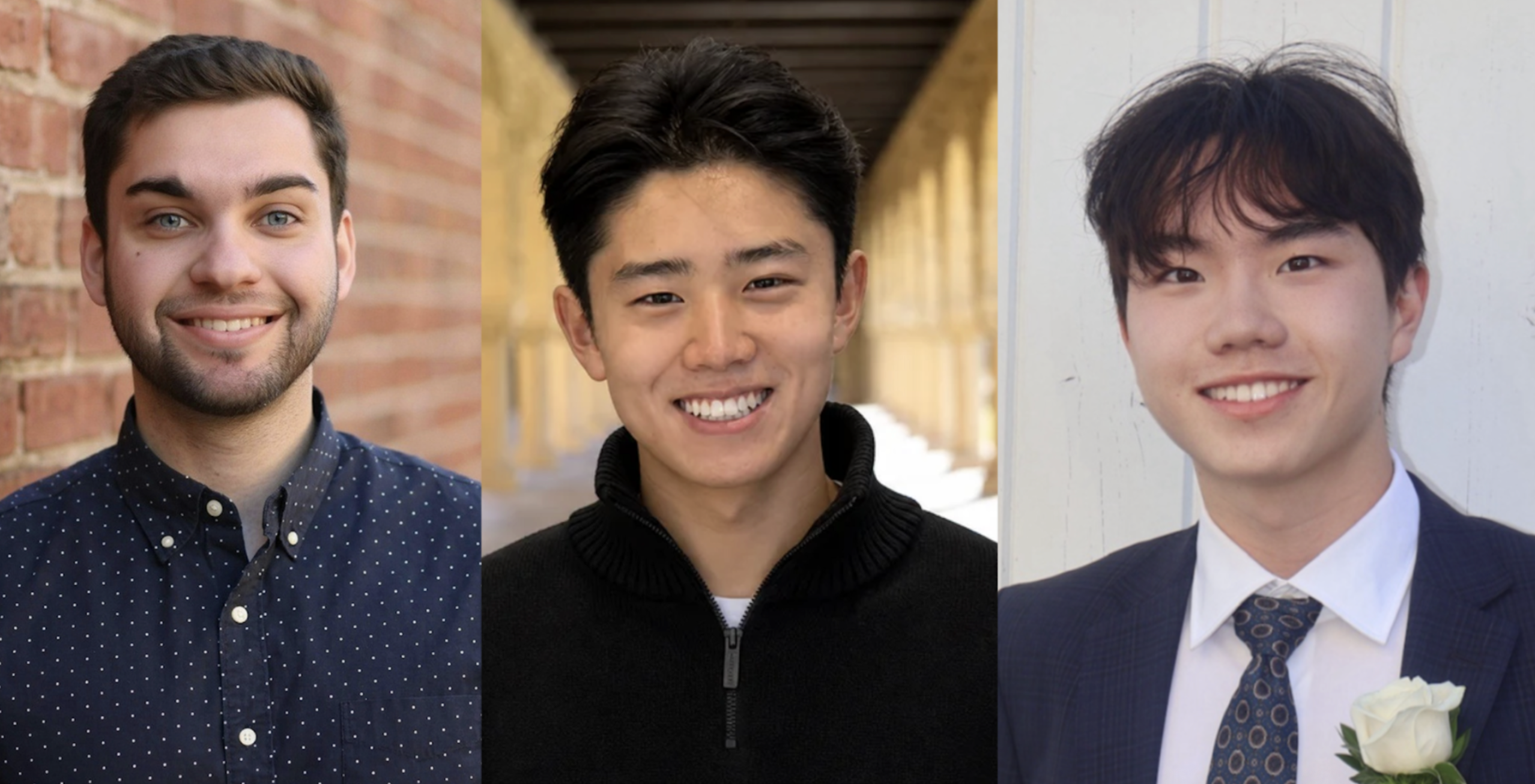
Roughly 5% of unicorn startup founders dropped out of college, compared to a general dropout rate of 4%. At Stanford, the 2025–26 Common Data Set revealed that 2.54% of first-year undergraduates did not return for their second year. For some students, opportunities beyond the classroom raise questions about whether a Stanford degree is worth staying for.
David Pantera ’21 graduated from Stanford, but deferred his graduate education for the workforce. “I joined Google out of college. But I always knew I was going to come back,” he said. Pantera dropped out of the Stanford Graduate School of Business (GSB) a year into the program.
Pantera’s undergraduate involvement reflected his longstanding connection to Stanford, underscoring the difficulty of leaving its MBA program. As class president, Pantera was nominated to be the Class of ’21 commencement speaker. He also served as undergraduate representative to the Stanford University Board of Trustees and held numerous university leadership roles. His leadership legacy continued during his MBA candidacy, becoming the student body president of the GSB.
“I did ASSU [Associated Students of Stanford University] and got really into clubs,” Pantera told The Daily. “When I graduated my undergrad, I felt like I had done everything I wanted to do. I felt very ready to go.”
Pantera left on the last day of his first year at the GSB with no intention of dropping out, but found that he’d gradually changed his mind. His reason was not a confidence crisis in higher education, but because it “did its job so well that, after just one year, I captured enough of what I came to achieve,” according to Pantera’s LinkedIn article detailing his decision to leave. “That was by far the hardest part of the decision for me. I made a bunch of promises. I had to tell people that I’m not going to be able to follow through with [them].”
Pantera’s outlook on dropping out of college differs from his experience. “A bachelor’s degree in anything is more of a minimum requirement than having a master’s degree in anything,” he said. “College is a great place to practice leading people, making good decisions, building relationships and fostering relationships.”
He encourages students who feel compelled to drop out to reframe their undergrad goals: “If you’re explicit about a checklist of things [you] need out of this experience, and you feel like before you’ve graduated, you’ve gotten that, if you feel like the degree itself was not one of those…it makes sense to drop out.”
Pantera emphasizes the importance of embracing student diversity. “As an undergrad, you could talk to 10 people and they could be studying 10 different degrees,” he said. “They could spend their free time in 10 different ways. They could have 10 super different sets of hobbies and interests and want to do 10 totally different things with their life.”
He asks students to consider if they are “ready to walk away from the people and the culture and the relationships.”
After leaving Stanford, Pantera returned as a Google Product Manager and now builds frontier AI models at Google DeepMind. He is also a venture scout and angel investor at Andreessen Horowitz (commonly known by its numeronym, a16z) investing in startups that are building AI-powered applications, models and infrastructure.
Five years since Pantera left, a minority trend of Stanford students dropping out to pursue high-potential projects remains steady.
Keven Pi ’29 intends to take a leave of absence beginning next quarter. “I’m working on a project in East Africa, where we’re digitizing hospitals, health care workflows, and connecting these hospitals to the online world,” Pi told The Daily. “We’ve deployed at about 300 clinics and around 10 hospitals. [We] have a lot of good partnerships with a lot of the big health care players in Kenya. They’ve been really, really excited by what we’re building.”
Pi recalls struggling with meaning and purpose in childhood. In high school, he considered working for the American Red Cross or supporting non-governmental organizations. “I always wanted to make a big impact or bring utility to the world,” he said.
The genesis of Sugen, Pi’s company, came during a trip to Kenya in 2026, when one of Pi’s friends was sent to the emergency room. “The mortality rate at one of these hospitals could range from 20% to 40%,” Pi said. Death could be close to a coin flip.
Pi is currently a director of Affiliated Stanford for Entrepreneurial Students (ASES) and seeks to focus his efforts on building Sugen. He reminisces about how Stanford transformed him in the short time that he has been a student. “Serendipitous things happen on campus. A lot of what you learn at Stanford would help you build a generational company.”
But for Pi, balancing academics with his company is becoming infeasible. “[I go] to class at 9 a.m. I sleep at 4 a.m. because I’m on call with people across London, India and Africa. And it’s taking a toll on my mental functions and also my health,” he said.
On his arrival to Stanford, Pi was indexed for a career in finance. “I’m really glad I broke out of that and found a project that I’m pretty passionate about,” he said. “I think it will make a lot of difference to a lot of lives.”
Another student, John Tian ’30 leaves his decision to drop out on a contingency: making $100,000 total revenue per month.
In 2023, Tian launched GradeWithAI with his high school teacher Aaron Braskin from Mira Costa High School in mind. “He was complaining about how much grading he had to do. It was the same day GPT-4 came out, so I was actually playing with it in class,” Tian said.
According to Tian, the Congressional App-winning platform generates around $13,000 in monthly revenue. “It’s doing quite well. The growth rate is actually increasing,” he said.
Similar to Pantera and Pi, Tian mentioned attachments to Stanford that make cutting ties with the University a daunting decision. Although Stanford teems with innovation, the curriculum is also a sandbox for individuals to explore their identities and seek personal growth. Tian remarked on his eagerness to enroll in Stanford’s Education in Self-Fashioning program. “I remember reading the description for ESF 18A, what does it mean to be human. [It’s] absolutely not related to what I want to do, but to better myself as a person, it was important for me to take this class.”
In addition to GradeWithAI, Tian is currently building an artificial intelligence tool called Desinence, aiming to provide AI with the “necessary tools and infrastructure to allow the model to build, scale and grow companies.” Desinence works 24/7, harnessing the power of agentic intelligence to create agent subteams and subcompanies. Tian strives to continue rethinking the intersection of business and technology.
As novel technologies inspire new ambitions, Stanford is poised to continue attracting innovators who may find their next step lies beyond campus.