
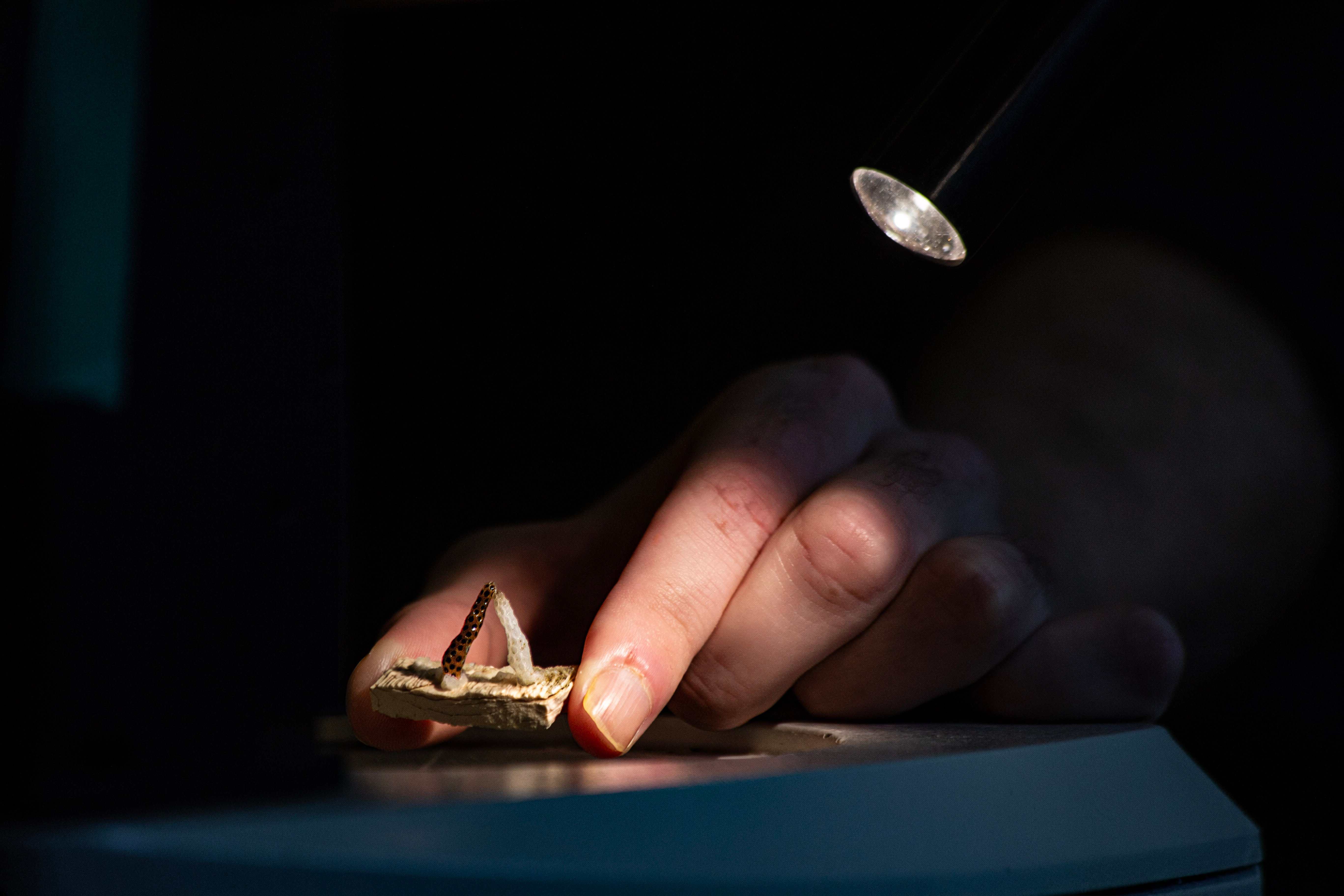
For decades, coral reefs have been under threat due to rising temperatures, pollution and human activity. While restoration has proved to be a challenge, scientists in the Department of Oceans within the Doerr School of Sustainability have recently uncovered a possible methodology for coral recovery.
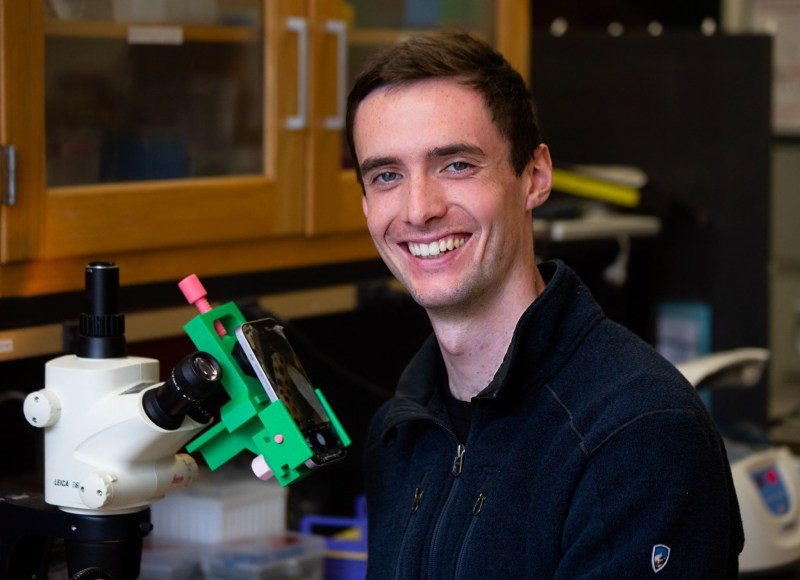
The team, led by third-year Ph.D. candidate Danny Collins, discovered that bleached corals could make a complete recovery when paired with a healthy counterpart. The team published their recent findings in “Science Advances.”
Bleached corals turn paper-white due to the expulsion of symbiotic algae living inside their tissues. The discovery represents the first time scientists have observed bleached corals completely recover through tissue contact with healthy clones. The fastest complete recovery ever recorded was just seven weeks, opening new possibilities for coral restoration.
“I’ve always been in love with the ocean ever since I was little,” Collins told The Daily. He said his love for marine life started at the New England Aquarium, where a four-story coral reef transported young Collins to another world. “Coral reefs are one of the most important and diverse ecosystems on the planet,” he said.
The rising ocean temperatures cause coral to expel the beneficial algae living within their tissue. This stress response, known as bleaching, is lethal and threatens global marine health. Reefs support one-third of all known marine species and protect coastlines and communities from storms and flooding.
“Coral bleaching is one of the largest ecological disasters facing our planet,” Collins said. “There’s amazing research on trying to prevent bleaching, since bleached corals are treated as a lost cause.” His research explored corals already affected by bleaching events.
Fiorenza Micheli, Collins’ faculty advisor and co-director of the Center for Ocean Solutions, remembered how Collins constructed his research approach. “[He was researching how] corals can get diseased through contact with plastic pollution carrying bacteria. Pathogens then get stuck on the corals and transmit diseases,” she said.
While contemplating the mechanism of disease contraction—direct contact between the corals and plastic pollution—Collins wondered, “could we use [beneficial algae] to bring back bleached corals?”
As Collins raised questions, Stephen Palumbi, professor of Oceans and Biology and former director of the Hopkins Marine Station, was breeding bleached coral to investigate bleaching mechanisms. It was during Palumbi’s research that two coral—healthy and bleached genetic clones—tipped over, initiating physical contact.
“I could see the recovery starting where they touched. Collins thought that was really, really cool,” Collins said. He called the accident a serendipitous observation. “That’s where that all started,” said Palumbi.
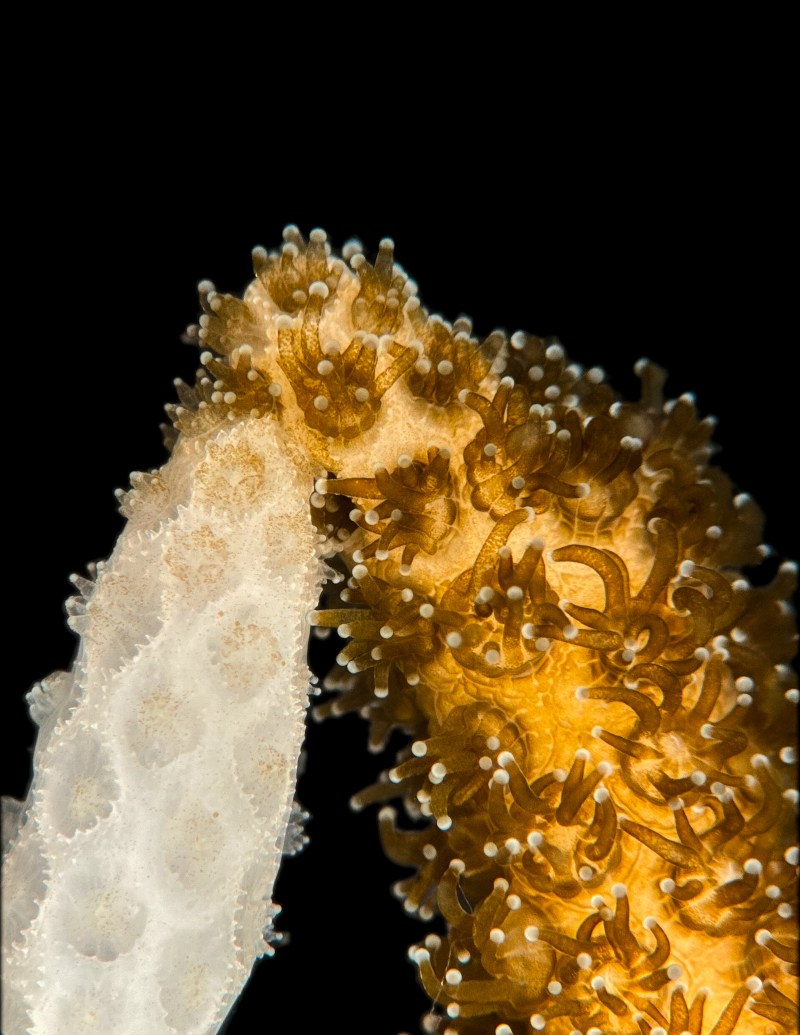
Collins used a powerful microscope that led to the discovery of microscopic channels in coral tissues. It exhibited the transfer of algae alongside the tissue bridges formed by the corals.
“They create a highway to transfer algae and nutrients,” Micheli said. Collins found that as little as three days are enough to inoculate the algae onto the bleached corals and start the recovery process.
While their discovery has brightened the marine life community, the team still has much to consider.
“When we put healthy corals just a few millimeters from bleached corals, we found no recovery,” Collins said. “We also found that this fusion and this transfer only occurred in corals with the same genetic background.”
Requiring genetic clones to be paired for coral recovery limits the scalable benefits existing reefs could gain from this discovery. “If they are from different genotypes,” Micheli said, “the coral will fight each other.”
These limitations open new avenues for future research. “The coral is not rejecting the algae. It’s rejecting the tissue of the other coral, and is what Danny is working on now,” Micheli said.
Collins and the team aim to overcome current limitations by exploring solutions in bioengineering. They hope to develop a solution that allows for the restoration of large-scale coral reefs following heatwaves.
The team’s discovery brings hope for coral health. “I feel very hopeful after these results,” Micheli said. “It’s a reminder of how much we still don’t know about ocean life. There’s so much to discover. Maybe some of these discoveries are the solution to the climate and biodiversity crisis,” Micheli said.
Palumbi, discussing present climate issues and the importance of having diverse marine life, spoke about finding purpose in future outlook. “Once we solve climate change, are there going to be corals? Is there going to be diversity in mammals and birds and insects and marine life? That’s what this is all about.”
“This is a recovery story,” Collins said. “We hope to inspire a number of other labs to explore similar interventions.”