
In her column “At the Table,” Amy Zhang ’30 shares the stories of the Chinese American people she meets around Stanford.
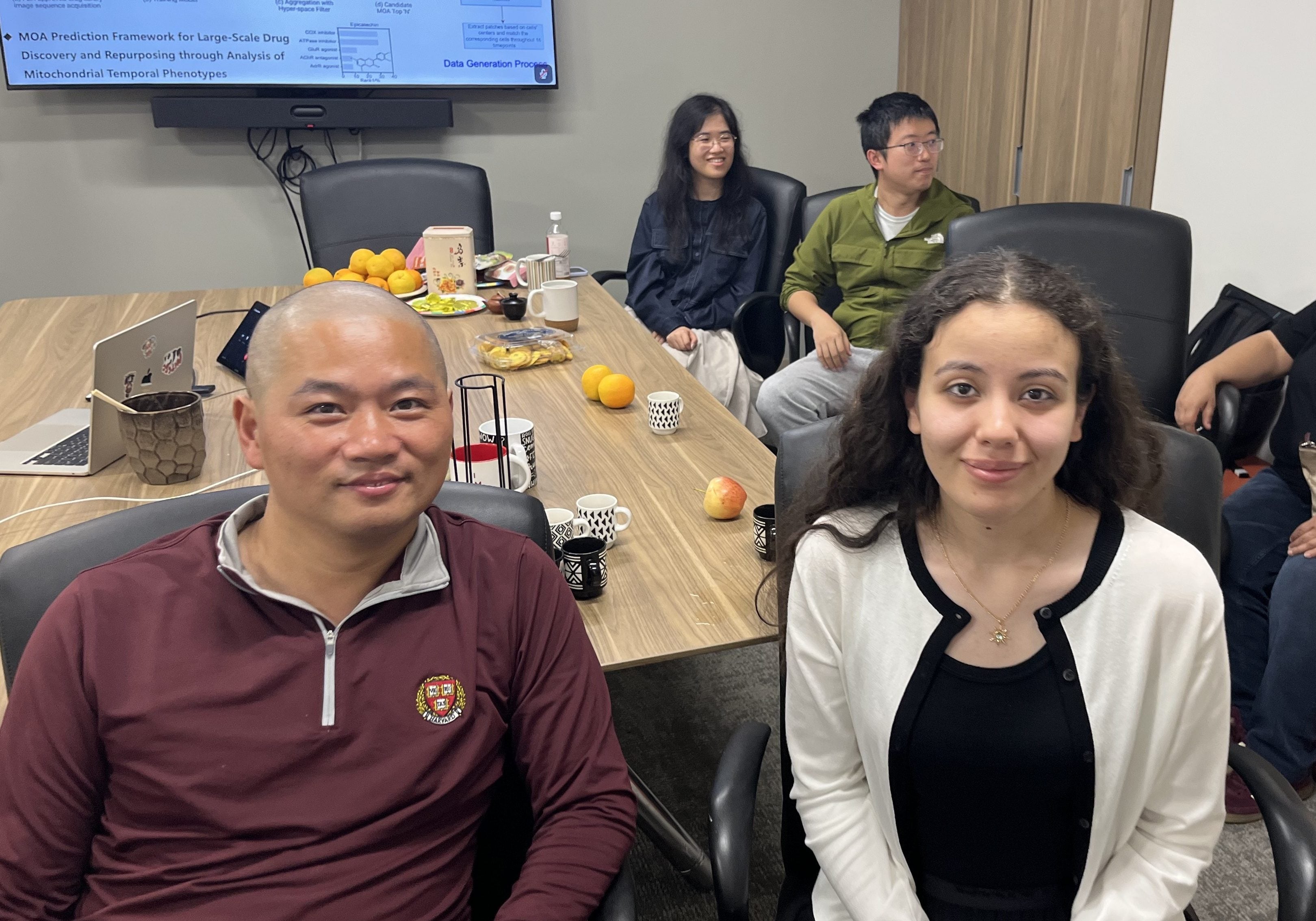
Every week at the Alway Building, Michael Xingcai Zhang, a research scientist at the School of Medicine, sets out teacups, prepares the loose-leaf teas and waits.
Born and raised in Fujian, China — a southeastern province renowned for its ancient tea-growing traditions and historical influence on the global tea trade — Zhang has another identity: Dr. Tea. According to Zhang, his family and friends often jokingly say that “tea is in his mind, heart and soul.”
“Through a cup of tea, we can warm people’s hearts,” Zhang said. “And we’ll all move forward feeling a little happier.”
For Zhang, the sentiment goes beyond a slogan. Having moved to the U.S. from China years ago, Zhang understands loneliness and the importance of community firsthand. So in 2024, he began hosting weekly Tea Talks — semi-formal gatherings to facilitate intellectual discussion and community for students and researchers interested in medicine and health.
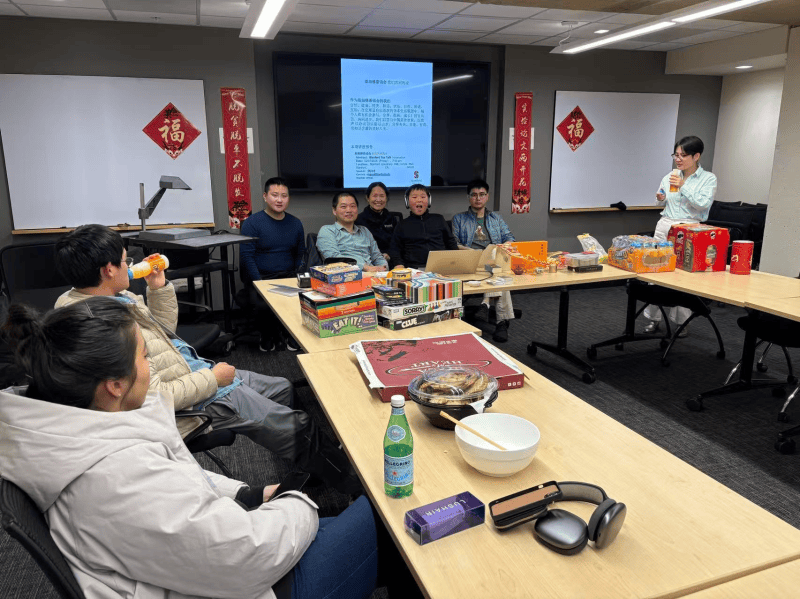
Most evenings, Zhang invites researchers and scholars from the Bay Area to talk about their work. Past Tea Talks have welcomed experts in artificial intelligence, medical research, innovation, music and more.
Juan Zhang, a visiting scholar in the department of pathology, presented her research on cellular mechanisms at a Tea Talk in July. In a message to The Daily, she wrote that the feedback she received from fellow researchers “opened new entry points in [her] research,” including ways to incorporate AI into her work.
“Over a cup of tea, there is no boundary, only a generous willingness to share and think together,” she wrote. “ The cup is small, but the conversation is boundless.”
For students, the gatherings offer an encouraging space where their curiosity is recognized.
“Tea Talks [have] been wonderfully insightful as someone so early in her academic career,” pre-med student Almas Elayyan ’29 wrote to The Daily.
Tea Talks have also helped Elayyan better understand how knowledge connects to the real world: “I have also gotten to engage one-on-one with said professionals, which sparked my curiosity,” she wrote. “It has been extremely encouraging to see my inquiries treated with respect and engaged with in every presentation.”
But according to Zhang, even when there is no scheduled speaker, many still show up to Tea Talks — sometimes just to ask a friend how they’re doing, or to share a few things about their families and everyday life. Zhang summed up the spirit of the Tea Talks in a catchphrase he invented: “Enjoy Tea, Enjoy Life, Enjoy the Moment.”
Outside the Alway Building, Zhang is earnest about spreading the value of tea. In 2015, he launched the World Tea Organization (WTO), an initiative that brings together tea enthusiasts from all over the world to promote tea culture (WTO’s slogan, of course, is Zhang’s catchphrase). Zhang currently serves as WTO president, and has helped push for United Nations recognition of May 21 as International Tea Day. He’s also hosted public International Tea Day gatherings for years in the Bay Area, Boston and more.
After the academic portion of each Tea Talk, Zhang often will introduce his twist on traditional Chinese tea rituals to the event. Attendees often participate in what he calls “My Love Tea Ceremony.” “When you are drinking tea together, you serve the person sitting next to you, in a circle,” Zhang said. “And finally… you’ll get a cup of tea full of love, joy and respect.”
For Zhang, nature is also a source of scientific inspiration. He believes a great deal of innovation is derived from what nature has already created.
For Zhang, tea is a starting point for engineering. His own scientific research focuses on AI, natural materials and their biological mechanisms during drug delivery. Zhang has also conducted research on nano-scale tea materials and their potential applications in cancer treatment and ways to build functional nanomaterials combining tea extracts with other components.
In Zhang’s opinion, science, culture and art are all different expressions of the same harmony. In his free time, he’s also a Chinese classical poetry enthusiast, having written thousands of classical Chinese poems.
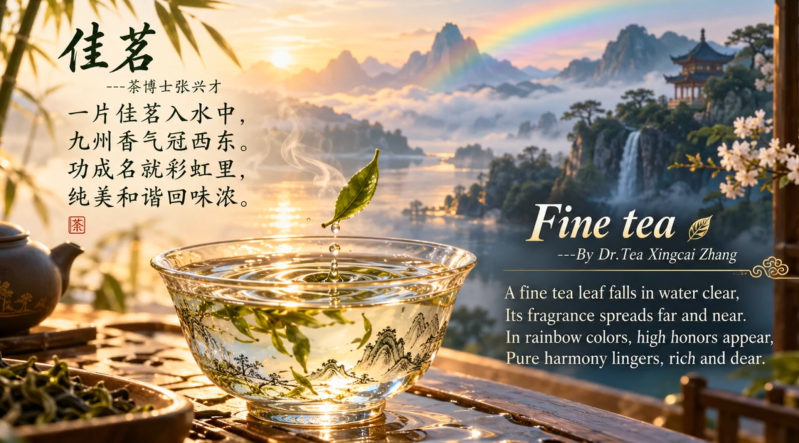
His writing often returns to themes of nature, philosophy and cultural memory. They detail the history of tea villages in Fujian province; they chronicle mid-autumn festivals spent away from home. Zhang described writing as an impulse to identify and extract the essence of life, or the Dao — a mission not dissimilar to scientific research.
“Poetry is like tea,” he said. “You cannot force it. You have to let it steep and come naturally.”
Zhang observed that through merging science, art and culture, he has “woven together Eastern intellect and Western thought, Daoist spirit and Zen enlightenment, cultural imprint and scientific pursuit … forging a unified worldview that transcends East and West.”
Sitting on Stanford’s sprawling sandstone court, he drinks tea beneath the same moon his ancestors once gazed at in China, and finds that the two worlds do not feel so far apart.