
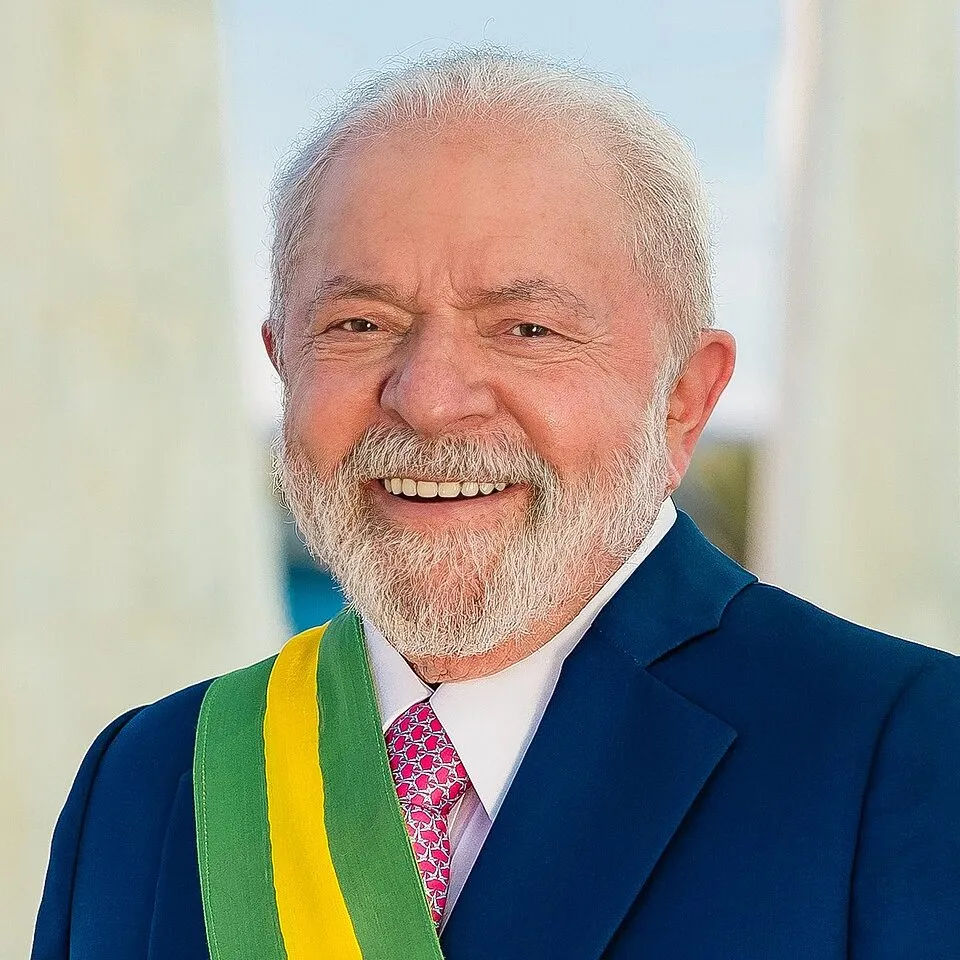
President Luiz Inácio Lula da Silva triumphed over Flávio Bolsonaro in the Brazilian presidential elections on Oct. 25, becoming the first candidate to overturn a first-round defeat in a presidential election in Brazil since its return to democracy in 1985. Stanford students and faculty attributed the comeback to mass mobilization on social media.
When Brazilian student Juliana Abreu ’28 first heard that Flávio Bolsonaro was running for president, she “thought it was a joke.” Bolsonaro is embroiled in various corruption scandals and ties to Daniel Vorcaro, a banker and businessman known as “Brazil’s Jeffrey Epstein.”
Bolsonaro is the son of former President Jair Bolsonaro who is currently serving a 27 year house arrest sentence. Jair was convicted of plotting a coup attempt following his defeat against Lula in the 2022 Brazilian elections.
The plot, named “Operation Green and Yellow Dagger” included a plan to assassinate Lula, Vice President Geraldo Alckmin and Justice Alexandre de Moraes. Eduardo Bolsonaro, Flávio Bolsonaro’s brother, moved to the U.S. to lobby the Trump administration to intervene on behalf of his father, pressing for the imposition of tariffs or sanctions on Brazil.
Despite this history, the first round of elections on Oct. 4 showed Bolsonaro with a 1.87% lead over Lula. Since no candidate received more than 50% of the votes, the election proceeded to a second round.
Luiza, a master’s student who requested a pseudonym due to her status as an international student, was shocked to see that Bolsonaro got more votes than Lula in the first round, particularly considering Jair’s arrest.
“At first, I was very hopeless that we could change things,” Luiza said, citing low polling numbers prior to the election.
When asked what makes the right appealing to voters, Luiza highlighted the role of religion, claiming that right-wing politicians in Brazil have a very strong connection with the evangelical church. Luiza said that some rural places in the country don’t have a hospital, but have a church.
Luiza is a regular church-goer, but believes many churches in Brazil are still “very corrupt.” She described how certain churches finance political leaders, and even militias of drug trafficking groups.
“These particular churches, which, although [are] a small percentage of other churches that exist in Brazil, end up having a lot of political power,” Luiza said. “The pastor will openly encourage people to vote for a specific candidate.”
Luiza characterized this move by the right as “smart” and “effective.”
“They go to these community spaces that are literally the symbol of salvation to these people, and they talk to them in a very personal way. You just say, this is what God wants, you know? This is what your pastor wants. This is why it’s better for the community,” Luiza said.
The right also found an ally in social media. Guilherme Lichand, a Brazilian assistant professor at the Stanford Graduate School of Education (GSE), said Meta had a “blatant” role in the Brazilian elections and believed it had directly interfered.
“If you would go into any Meta AI tool, and you asked it to generate a logo or a flag or a meme with Lula or 13, which was his [ballot] number, Meta would say, no, no, no, sorry, I cannot generate it,” Lichand said. “But if you asked the same for Flávio or 22, it would do it on the spot.”
Meta denied election interference, pointing to technical problems with “product functionality, not political bias.” In response, Lula supporters joined a mass digital mobilization campaign created by Brazilian federal congressman André Janones that became known as “Lula’s Army.”
“The ‘Lula Army’ was like a movement of millions and millions of people, literally playing against the algorithm,” Luiza said.
According to Luiza, commenting, putting hashtags and continuous sharing beat the algorithm. She added that she reconnected with people on Instagram who she hadn’t talked to in years, and how they shared as many Lula posts and reels as they could.
“We would constantly post about Lula,” Luiza said. “We were sending each other so many videos, because we understood that that’s what we were supposed to do. We were supposed to beat them at their own game.”
Abreu sees the Lula Army as an example of social media being used to combat misinformation. “What Janones did with the Army of Lula — it shows us a possibility of AI and social media being used for positive things,” she said. “I feel like it’s an election that not only gives hope in democracy, but also that technology can actually be used for positive purposes: for democratic accountability, democratic resilience and all of that.”
With this extra push, Lula reversed the tables during the second round of votes on Oct. 25, defeating Bolsonaro by more than 4.4 million votes.
After the results were announced, the Brazilian Supreme Court ordered Bolsonaro to surrender his passport due to his alleged connections to money laundering schemes. Bolsonaro is set to lose his parliamentary immunity after he gave up his Senate seat to run for president. In defiance of the order, he flew to Miami in a jet provided by a Trump official. The Trump administration then provided visas and humanitarian parole for him and his family.
Once in the United States, Bolsonaro declared himself the rightful winner of the election and a victim of election fraud.
When Lichand heard the news, he immediately compiled evidence to show the elections were fair. “[If] we spread the word that these lies that the far right keeps coming up with, it’s very detrimental,” he said. “How democracies die is exactly about these things; you keep kind of casting doubts on the workings of the system.”
Although Bolsonaro’s own party accepted the election results, Lichand characterized the election as “close,” and sees a reality in which Bolsonaro could have won. Lichand believes more attention should be brought to Meta’s actions.
“Putting Meta in the same spectrum as big tech is a disservice,” Lichand said. “How can you compare Meta to Google or Anthropic when Meta is trying to overturn democracies worldwide? I mean, it’s unbelievable what happened. I think they should pay for this, and I think we should talk more about that.”
In the next election, Lula will be ineligible to run. With Jair Bolsonaro under house arrest and his sons in the United States, the future of Brazilian politics is unclear. Both Abreu and Lichand mentioned that Jair’s wife, Michelle, is a senator-elect.
“She is actually very charismatic and very popular among women,” Lichand said. “She’s pretty evangelical … so it’s not obvious that the Bolsonaros are over.”
In the future, Luiza aspires to return to work in educational policy in Brazil. She hopes that countries around the world can learn from Brazil’s election, and encourages everyone, especially Americans, to read more about international politics.
“The thing that stresses me out the most about Americans when it comes to world politics, is that the U.S. is the single country that influences world politics the most,” Luiza said. “And then you think that, as an American, you don’t have to care. You think that in your little bubble, you don’t have to care about politics outside of your country, when you should.”